
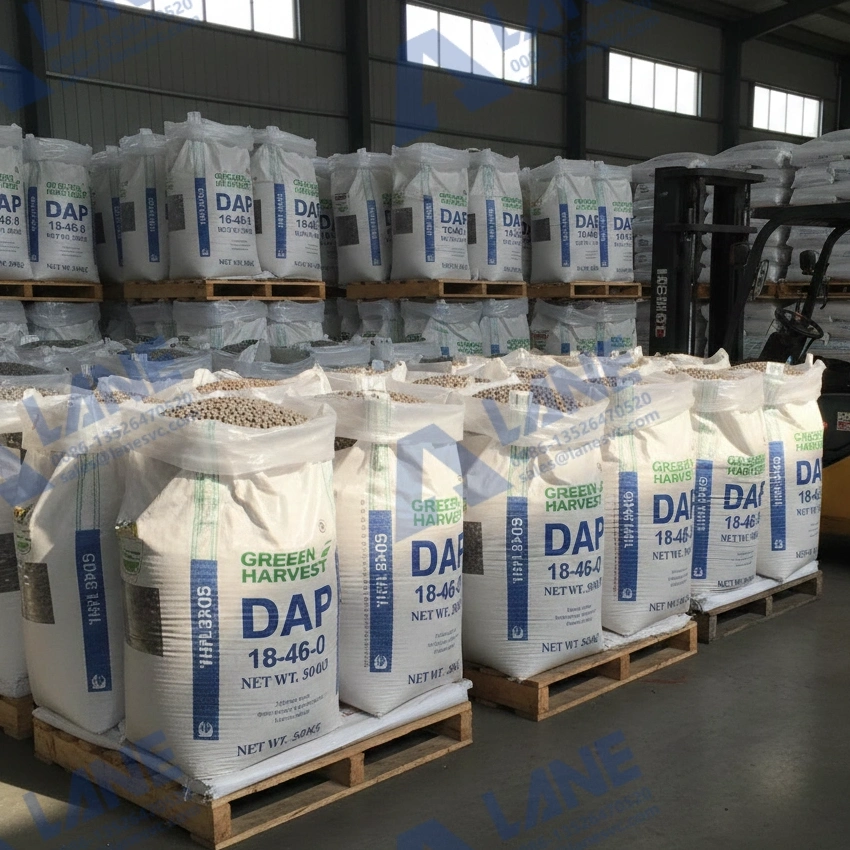
DAP is the most popular phosphate fertilizer in the world. To produce premium quality DAP fertilizer, producers will require robust machines, high quality raw materials and proper layout and design. Designing a high-performance DAP manufacturing plant layout is one of the most important factors in determining the facility’s long-term operational success. A well-designed plant layout directly determines material flow efficiency, equipment utilization rate, and operational stability. As the global demand for diammonium phosphate (DAP) continues to rise, manufacturers are under increasing pressure to deliver uniform, highnutrient granules with minimal downtime.
LANE Heavy Industry’s Machinery, a leading provider of fertilizer production solutions, integrates advanced process design and heavy-duty equipment to build a DAP line into a streamlined, futureready operation. This article deeply analyzes the core logic of DAP manufacturing plant layout, focusing on critical equipment placement and material handling strategies, and combines LANE’s professional equipment to build a high-performance DAP fertilizer production line.
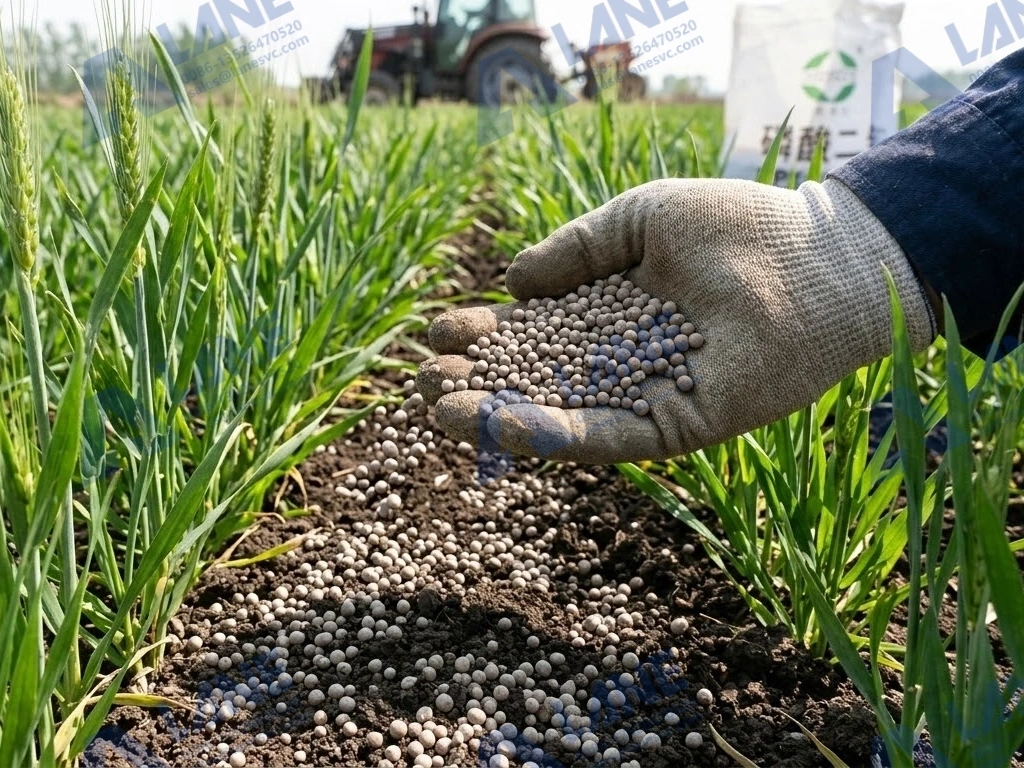
A thoughtfully designed DAP plant layout addresses the core physics and chemistry of DAP production: a hightemperature ammoniaphosphoric acid reaction that generates a sticky, corrosive slurry, followed by optional crystallization (for pharmaceutical, industrial, reagent grade), granulation, drying, cooling, and sizing steps that promote circular economy. The result of this process is a smooth, continuous flow of material with minimal recycling, dust generation, and energy loss.
Poorly conceived plant layout choices typically lead to bottlenecks, excessive material degradation, and unsafe maintenance conditions. A wellstructured layout, on the other hand, supports safe access zones, simplifies housekeeping, and accommodates future expansion without requiring a complete rebuild.
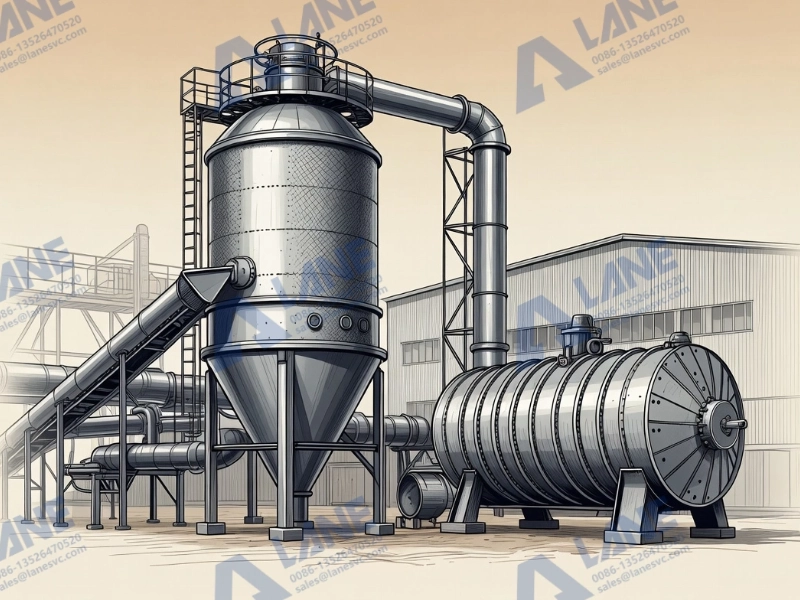
Every piece of equipment in a DAP line plays a specific role, but the spatial relationship among units often matters as much as the machines themselves. Below we explore how to place each core component for maximum benefit within the DAP plant layout.
The neutralization reactor or the pipe reactor is where phosphoric acid reacts with ammonia under controlled temperature and pressure (molar ratio N/P = 1.4–1.5). In the DAP manufacturing plant layout, the reactor should be positioned to minimize the distance that hot, corrosive slurry must travel before reaching the granulator. A short-transfer design reduces heat loss, limits slurry solidification, and lowers the risk of line blockages.
Rotary drum granulators are the most suitable technology for DAP due to their stable continuous operation. In the DAP manufacturing plant, granulators should be positioned directly adjacent to the neutralization reactor. This tight coupling ensures that the reactive slurry enters the granulation drum at the optimal temperature and consistency. Adequate clearance around the drum is essential for routine inspection, shell replacement, and trunnion maintenance, while keeping the granulator close to downstream drying reduces the risk of freshly formed granules breaking apart during long transfers.
After granulation, DAP granules must be dried to a target moisture content and then cooled to nearambient temperature to prevent caking. In a welldesigned DAP manufacturing plant layout, the dryer immediately follows the granulator, preferably via a short chute or vibrating feeder. The cooler should be placed directly after the dryer, sharing a common airflow management system where possible to recover waste heat. Positioning dryers and coolers in a straightline configuration minimizes material rehandling and conserves valuable plant headroom.
Rotary or vibrating screens are used to separate onspec granules from oversized and undersized particles. Oversized and undersized material is sent to a crusher and recycled back to the granulator. LANE Heavy Industry’s designs often incorporate multideck screens that enable simultaneous size separation, reducing the number of separate units required and freeing up floor space for other operations.
The on-spec granules are sent to the coating drum where producers can add control release, anticaking agents, or micronutrients before the product enters automated weighing and bagging stations. The packaging units require regular replenishment of consumables. A practical DAP plant layout therefore places coating and packaging near the finishedproduct warehouse, where forklift access, bag storage, and shipping docks are readily available.
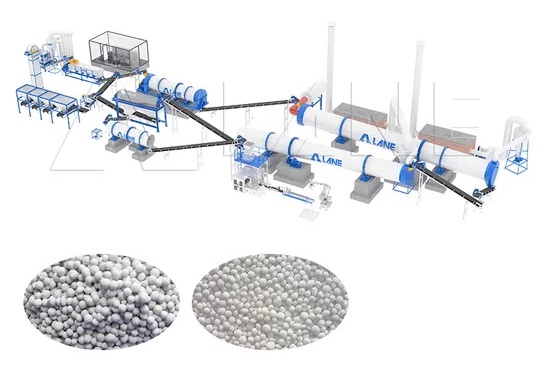
The production will hit a bottleneck if the materials cannot move efficiently between units. A carefully planned material handling strategy considers the unique challenges of DAP intermediates like stickiness, hygroscopicity, and abrasiveness and applies the right combination of conveyors, elevators, feeders, and storage solutions.
Raw Material Receiving and Storage
Phosphoric acid, ammonia, and solid additives must arrive at the reaction zone in precise proportions. Large-diameter tanks for acid and ammonia are typically located upwind of the main process building to minimize vapor exposure. In the plant layout, raw material storage is connected to the reactor via dedicated, corrosionresistant pipelines and sealed powder conveying systems. LANE Heavy Industry’s engineering team incorporates automated batching systems with load cells and flow meters to ensure consistent feed rates without manual intervention.
InterStage Conveying
The form of the materials changes every time the material goes through the reactor, granulator, dryer, cooler, and screening process. From liquid slurry to damp granules and finally to dry, freeflowing product requires different types of conveyors. Horizontal and inclined belt conveyors, bucket elevators, and vibrating feeders are the backbone of interstage transport. The manufacturers must provide straight, short conveyor runs with minimal transfer points, as every drop height increase risks granule breakage, dust generation, and moisture reabsorption. LANE provides enclosed conveyors with dust extraction ports to maintain air quality and prevent material loss.
LANE Heavy Industry brings over two decades of experience in designing and delivering complete DAP manufacturing plant layout solutions. Our machinery from highefficiency pipe reactors and rotary drum granulators to automated screening and packaging line is engineered for modular integration, allowing plant owners to begin with a core setup and expand capacity as demand grows.
A LANE DAP manufacturing plant layout emphasizes:
By choosing LANE’s turnkey approach, manufacturers receive advanced machinery and a fully validated DAP manufacturing plant layout that is being used in real operating production lines. This integration shortens commissioning time and helps achieve full production capacity faster than a piecemeal, multivendor setup.
Q1: What is the most common mistake in DAP manufacturing plant layout design?
A: Underestimating the space required for maintenance access around granulators and dryers. A layout that looks compact on paper can become a safety hazard when operators need to perform routine inspections or replace wear parts.
Q2: How does a pipe reactor influence the DAP manufacturing plant layout?
A: The pipe reactor’s position dictates the routing of hot slurry and the proximity of ammonia and acid storage. Placing it close to the granulator is essential for a cohesive DAP manufacturing plant layout that avoids long, heated transfer lines.
Q3: Can I use the same DAP manufacturing plant layout for MAP production?
A: While many process units are similar, MAP and DAP require different molar ratios and reactor conditions. A flexible DAP manufacturing plant layout can be designed with interchangeable modules to accommodate both products with minimal downtime.

For more details, please feel free to contact us.
Henan Lane Heavy Industry Machinery Technology Co., Ltd.
Email: sales@lanesvc.com
Contact number: +86 13526470520
Whatsapp: +86 13526470520
Copyright © Henan Lane Heavy Industry Machinery Technology Co., Ltd.
