
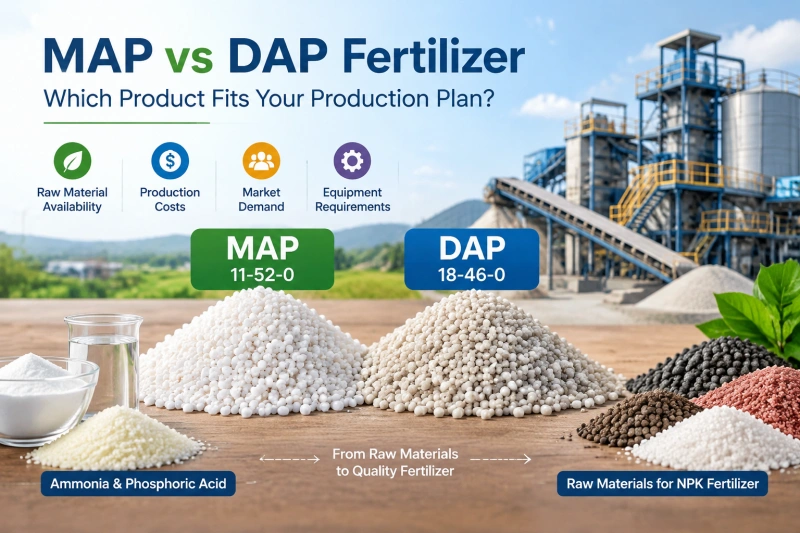
If you have raw materials available but have not decided which fertilizer to produce, you need to consider several factors, including raw material supply, customer demand, production costs, and equipment requirements. Understanding MAP vs DAP fertilizer can help you make a more suitable choice. MAP and DAP are both phosphorus fertilizers, but they have different nutrient ratios and may fit different production needs.
As a fertilizer equipment manufacturer, LANE can help you evaluate production line options based on your raw materials, target product, and required capacity. Before choosing equipment, however, you should first understand the differences between the two products and determine which production plan is right for your business.
Start by checking which raw materials you can obtain consistently and at a reasonable price. The materials available to you will influence which fertilizer you can produce and how much it will cost.For anyone planning a map vs dap fertilizer project, a reliable supply of suitable raw materials is an important starting point.
If you have ammonia and phosphoric acid, you can consider producing monoammonium phosphate (MAP) or diammonium phosphate (DAP). Both products contain nitrogen and phosphorus, but their nutrient ratios are different.When evaluating a map vs dap fertilizer production project, check the quality, quantity, and cost of your raw materials because these factors affect the final product and production process.
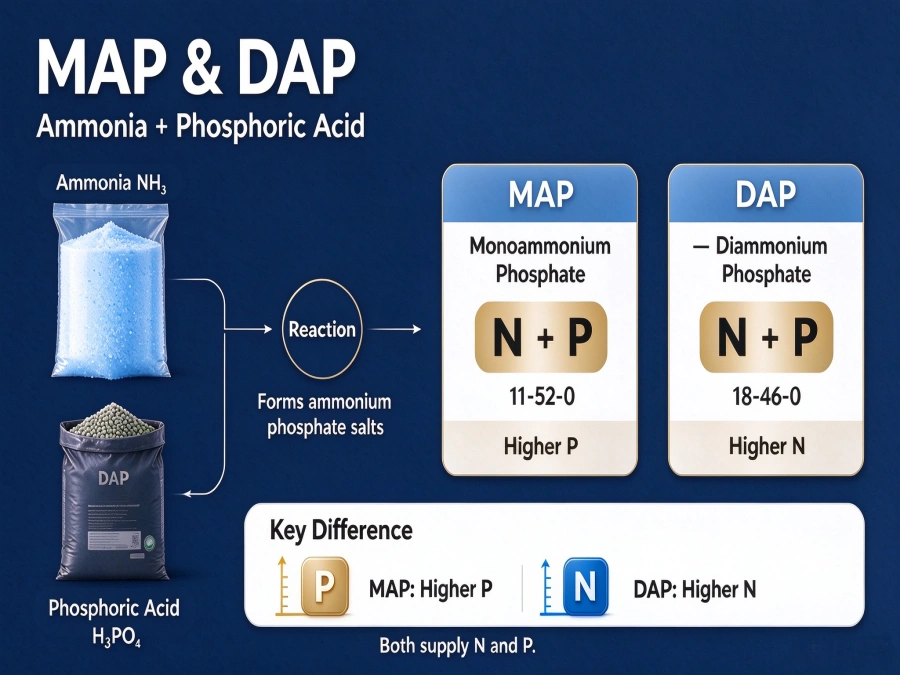
If you already purchase finished MAP or DAP, you have another option. You can use these products as ingredients to manufacture NPK fertilizer.For businesses comparing map vs dap fertilizer as raw materials, the goal may be to select the ingredient that best fits the required NPK formula. By adding other nitrogen, phosphorus, or potassium sources, you can adjust the formula to meet your customers’ requirements.
These are two different production plans. For a map vs dap fertilizer manufacturing project, producing MAP or DAP from chemical raw materials requires a suitable reaction process and related equipment. Using finished MAP or DAP to produce NPK fertilizer mainly involves ingredient proportioning, mixing, granulation, and other necessary processing stages. Understanding this difference helps you estimate the equipment and investment required.
For example, a producer with a stable supply of ammonia and phosphoric acid may investigate MAP or DAP manufacturing. However, a producer who already purchases these fertilizers in bulk may find it more practical to use them as raw materials for an NPK fertilizer production line.
Before making a decision, list your available materials, purchase prices, monthly supply, and basic specifications. For a map vs dap fertilizer project, this information helps clarify which production process may suit your business. LANE can use these details, together with your target product and production capacity, to help assess a suitable equipment configuration.
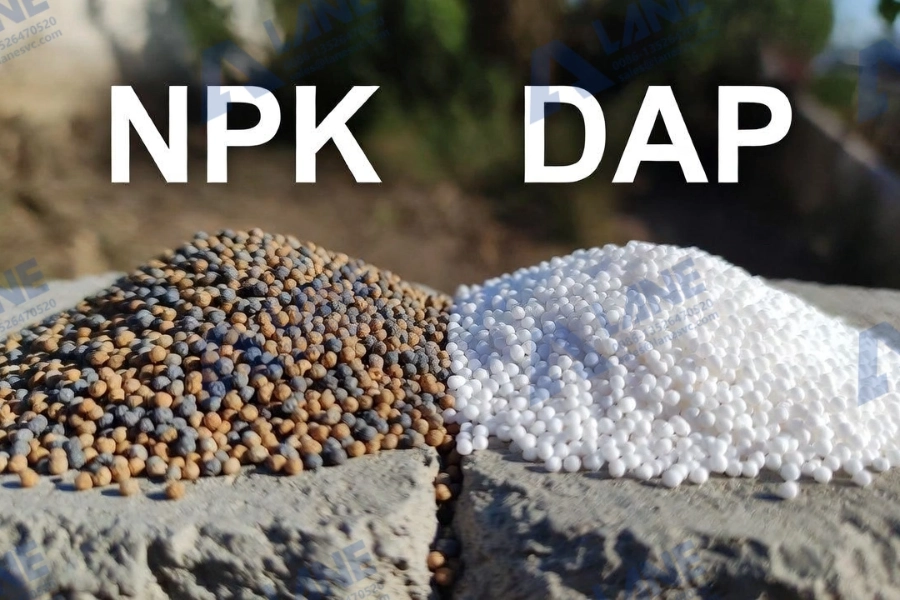
MAP and DAP are widely used phosphorus fertilizers. When evaluating map vs dap fertilizer, their main difference to consider is the balance between nitrogen and phosphate. This difference affects how much of each nutrient the product supplies and whether it matches your customers’ requirements.
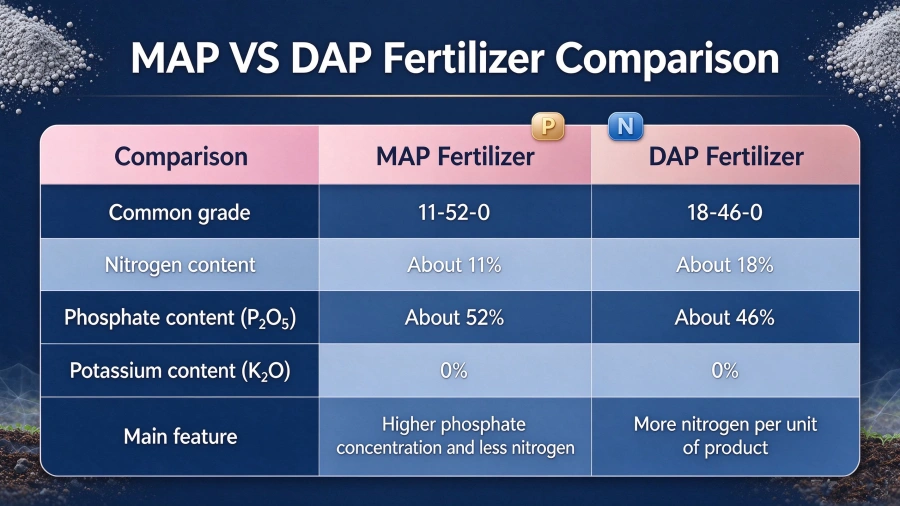
These are common commercial grades. Actual nutrient content may vary, so you should check the supplier’s product specifications before calculating a fertilizer formula.
MAP may be worth considering if your customers need a higher phosphate concentration without adding as much nitrogen. For example, some customers may already obtain nitrogen from other fertilizers and prefer a product that supplies more phosphorus relative to nitrogen. In a map vs dap fertilizer comparison, this nutrient balance is one reason a producer may choose MAP for a particular market.
DAP may be more suitable when customers want to obtain both nitrogen and phosphorus from one fertilizer product. Its common grade contains more nitrogen but slightly less phosphate than MAP. When comparing map vs dap fertilizer for your target market, consider whether customers need the additional nitrogen supplied by DAP.
However, the choice should not depend on nutrient content alone. You also need to consider local crop requirements, soil conditions, application methods, customer preferences, and market demand.
When comparing MAP vs DAP fertilizer, do not look only at the selling price per tonne. Compare raw material costs, production expenses, nutrient content, and the price customers are willing to pay. A higher selling price does not necessarily mean a higher profit if production costs are also higher.
It is also important to distinguish MAP and DAP from NPK fertilizer. MAP and DAP provide nitrogen and phosphorus but do not contain potassium in their standard grades. For producers researching map vs dap fertilizer, this distinction matters because neither standard product supplies potassium. NPK fertilizers can supply all three primary nutrients in different proportions, depending on the formula.
Once you have selected a target product, the next step is to understand how each raw material contributes to the final fertilizer formula. For a map vs dap fertilizer project, this means calculating the nitrogen and phosphate supplied by each ingredient before deciding the final proportions.
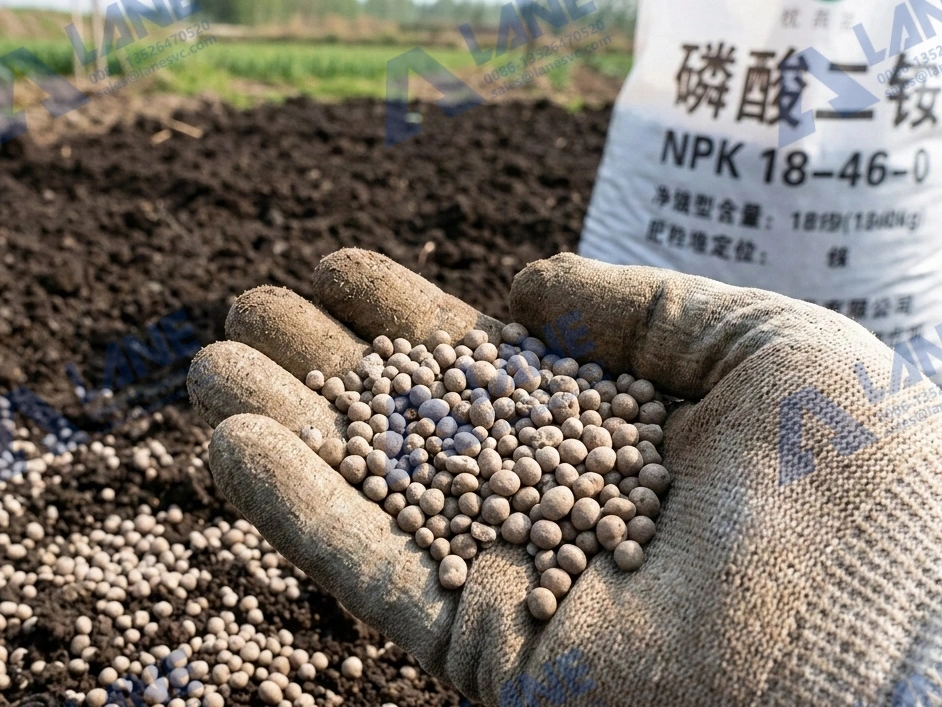
You can start with the nutrient information on the product specification sheet. For example, 100 kg of MAP 11-52-0 contains approximately 11 kg of nitrogen and 52 kg of phosphate expressed as Pâ‚‚Oâ‚…. Meanwhile, 100 kg of DAP 18-46-0 contains approximately 18 kg of nitrogen and 46 kg of Pâ‚‚Oâ‚….
Suppose you need approximately 10 kg of Pâ‚‚Oâ‚… from one fertilizer ingredient. Based on these typical grades:
These examples show that different ingredients contribute different amounts of nutrients. When comparing map vs dap fertilizer for an NPK production line, you must account for the nitrogen each ingredient provides as well as its phosphate content. Otherwise, the final nutrient ratio may not match your target formula. This calculation helps you select the right ingredient proportions before production begins.
These figures are simple examples, not fixed factory formulas. Actual calculations should consider the measured nutrient content, moisture, other ingredients, and the required finished-product grade.
You should also decide whether you want to manufacture MAP or DAP itself or use purchased MAP or DAP to make another fertilizer. The raw materials, processing steps, and equipment requirements can be very different.
For producers comparing MAP and DAP as ingredients, it is helpful to prepare a simple list showing each material, its quantity, nutrient contribution, and cost. This makes a map vs dap fertilizer cost comparison more practical because you can evaluate nutrient contribution alongside raw material expenses. You can then compare different formulas and estimate which option better fits your production goals.
LANE can help assess the equipment required for your selected product and capacity. The final formula should be based on your actual raw materials and product requirements rather than choosing a machine first and adjusting the product afterward.
The required production process depends on whether you plan to manufacture MAP or DAP from chemical raw materials or use finished MAP or DAP to produce another fertilizer. For a map vs dap fertilizer production project, confirming this difference early helps you identify the main equipment requirements and avoid comparing two different types of production line.
If you want to manufacture MAP or DAP, you need suitable raw material storage, controlled feeding, a reaction system, and equipment to handle the resulting product. Additional processing may be required to achieve the desired particle size, moisture, and product quality.
This type of project requires professional engineering. Ammonia and phosphoric acid need appropriate storage, handling, and safety systems. The reaction process and equipment should be selected according to the actual production requirements, not simply based on the product name.
If you purchase finished MAP or DAP and use it to make NPK fertilizer, the process is generally different. A typical production line may include the following equipment:
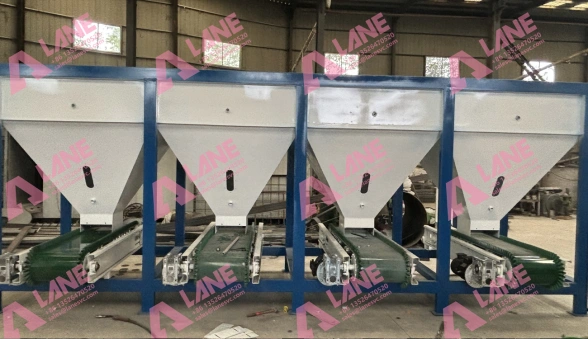
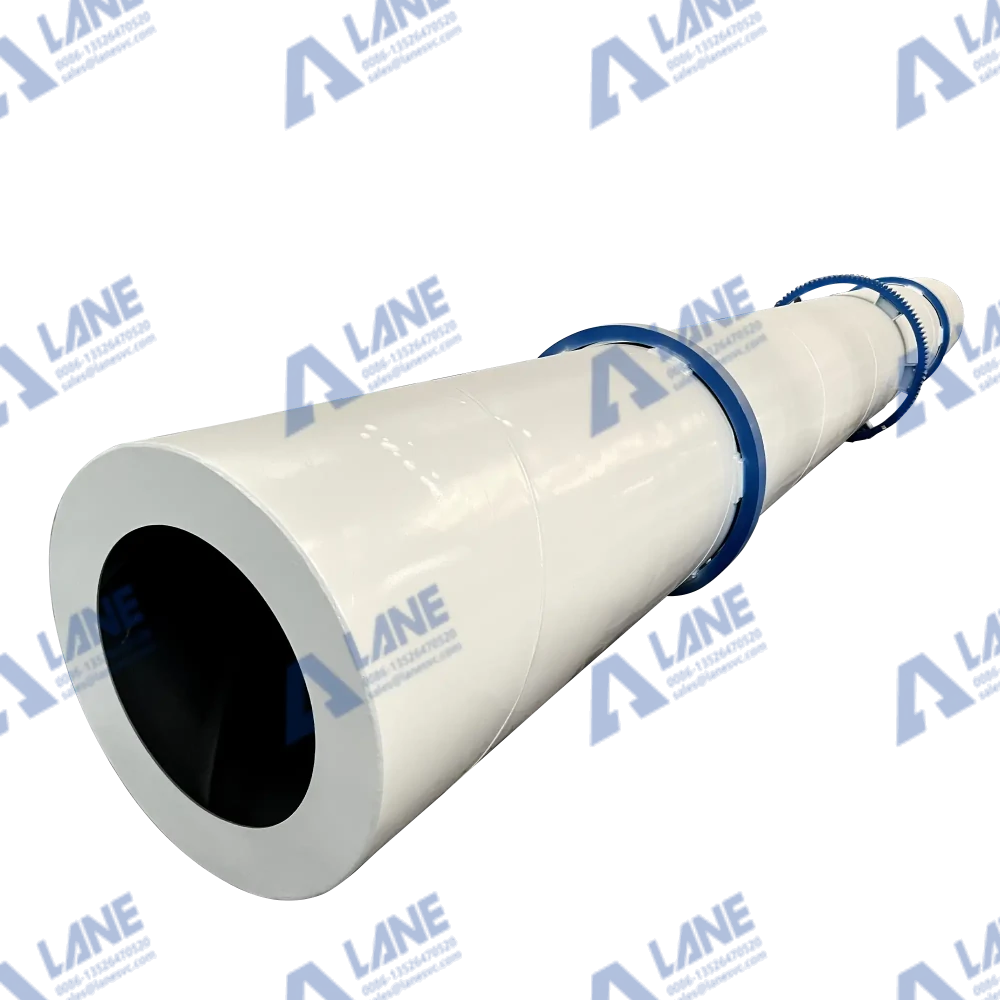
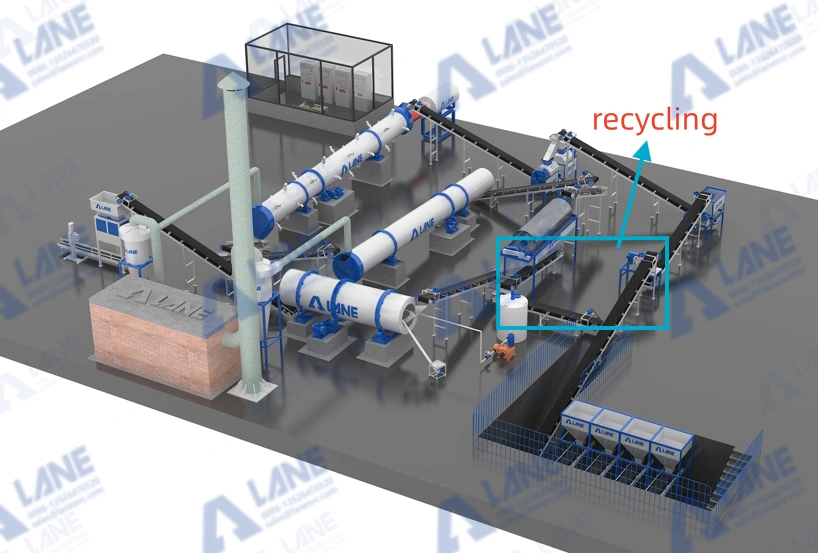
Not every production line needs exactly the same equipment. For example, the moisture content and physical properties of your raw materials can affect the granulation method and whether drying is necessary.
You should also consider the capacity of the entire production line. A granulator rated at 5 tonnes per hour does not automatically mean the factory can produce 5 tonnes of finished fertilizer every hour. The feeding, drying, cooling, screening, and conveying equipment must also handle the required output.
As a fertilizer equipment manufacturer, LANE can help assess the production line configuration based on your raw materials, target fertilizer, required capacity, and desired granule size. Providing these details makes it easier to select suitable equipment instead of choosing a machine based only on its name or rated capacity.
Before purchasing equipment, confirm several important details to avoid investing in machinery that does not meet your actual production needs. When planning a map vs dap fertilizer production line, checking these details in advance can help you make a more informed investment decision.
Raw material supply and quality
Check the nutrient content, moisture, particle size, and consistency of your raw materials. You should also confirm whether the supply is stable throughout the year. A material with a low purchase price may not be economical if its quality changes significantly between batches.
Target product and customer requirements
Decide whether you want to produce MAP, DAP, or NPK fertilizer. Check the nutrient grade customers require, the preferred granule size, packaging requirements, and applicable local product standards. Clear product specifications make equipment selection much easier.
Realistic production capacity
Estimate your daily production target and operating hours. For example, if you want to produce 40 tonnes per day over eight hours, your average target output is 5 tonnes per hour. However, this is only a planning calculation. The complete production line must be designed to achieve the required finished output under actual operating conditions.
The complete production line
Ask for a process flow and an equipment list covering the whole production process. Confirm which stages are included, what utilities are required, how materials move between machines, and whether dust collection, storage, and packaging facilities are needed. Comparing suppliers only by the price of one machine may overlook important costs elsewhere in the project.
Testing and technical confirmation
If your raw materials have unusual properties or your product specifications are demanding, discuss sample testing before finalizing the equipment. Confirm the expected product quality, granule strength, moisture, and production capacity with the supplier.
LANE can help evaluate a fertilizer production line based on your available raw materials, target product, capacity, and site conditions. For projects involving chemical manufacturing, the process design and safety requirements must also be confirmed by qualified engineers.
In conclusion, choosing MAP vs DAP fertilizer is not just about comparing nutrient content. You also need to consider your available raw materials, local market demand, production costs, and the type of fertilizer you want to manufacture. Once you have identified the right product and confirmed your production requirements, you can select suitable equipment with greater confidence. LANE can help you evaluate a fertilizer production line that fits your materials, target output, and production goals.
For more details, please feel free to contact us.
Henan Lane Heavy Industry Machinery Technology Co., Ltd.
Email: sales@lanesvc.com
Contact number: +86 13526470520
Whatsapp: +86 13526470520
Copyright © Henan Lane Heavy Industry Machinery Technology Co., Ltd.
