
In Pakistan, a 50 kg bag of DAP fertilizer averaged Rs. 17,128 in the week ended October 8, 2026. That is about Rs. 2,746 more than the same week a year earlier, when the average stood at Rs. 14,382. For farmers preparing their fields for wheat sowing, that difference is hard to ignore.
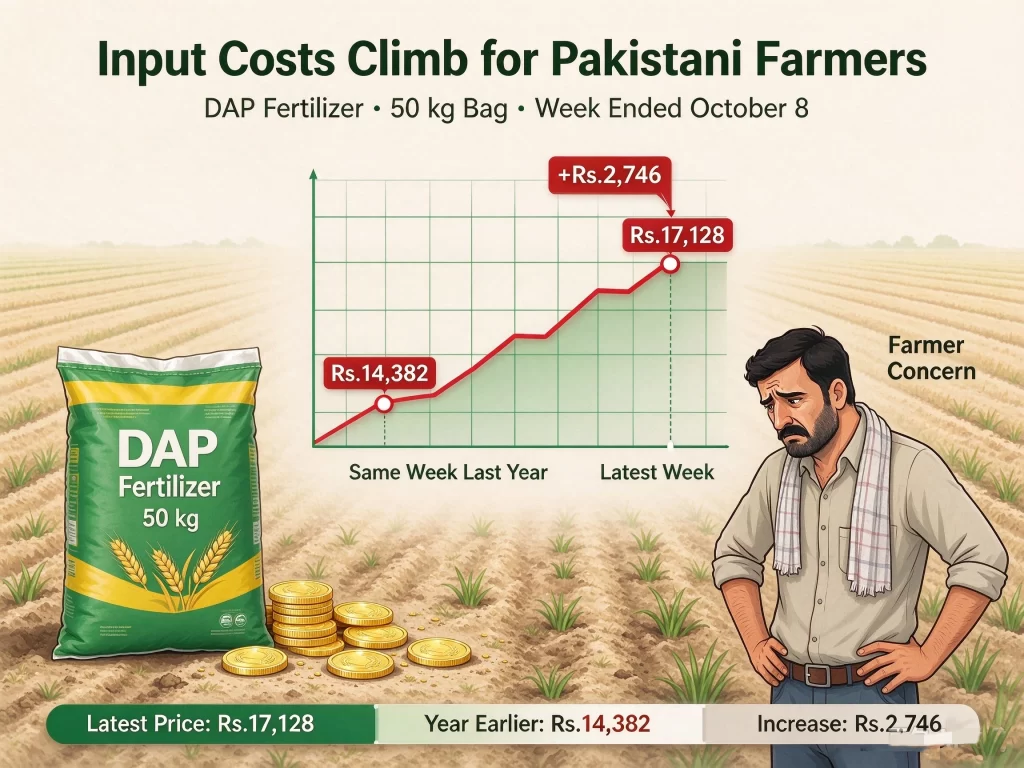
The increase is mainly related to rising international DAP prices and raw material costs. Pakistan relies heavily on imported DAP, so global price changes directly affect its domestic market. Seasonal demand during the wheat-sowing period also adds pressure.
Pakistan is not the only market affected.DAP prices are shaped by what it costs to make the fertilizer, how much is available on the market, and how far it must travel before reaching a farm. A price increase at a local dealer may reflect several of these pressures at once.
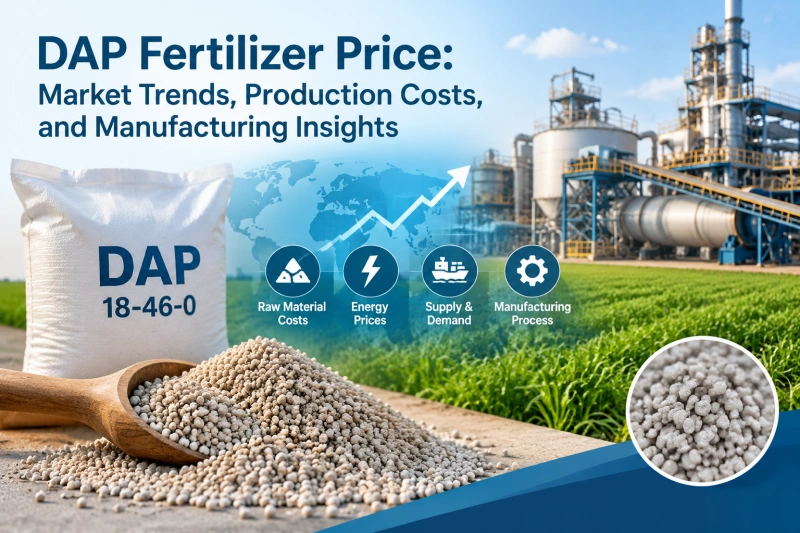
So, what actually drives the DAP fertilizer price? To understand why the dap fertilizer price changes, it helps to look at the global market, the costs behind production, and the equipment that turns raw materials into a finished fertilizer product. These factors explain why the dap fertilizer price can vary between countries and over time.
A change in fertilizer prices often starts long before a bag reaches a dealer. It can begin with the cost of raw materials, the price of energy, or a disruption in supply from a major producing region.
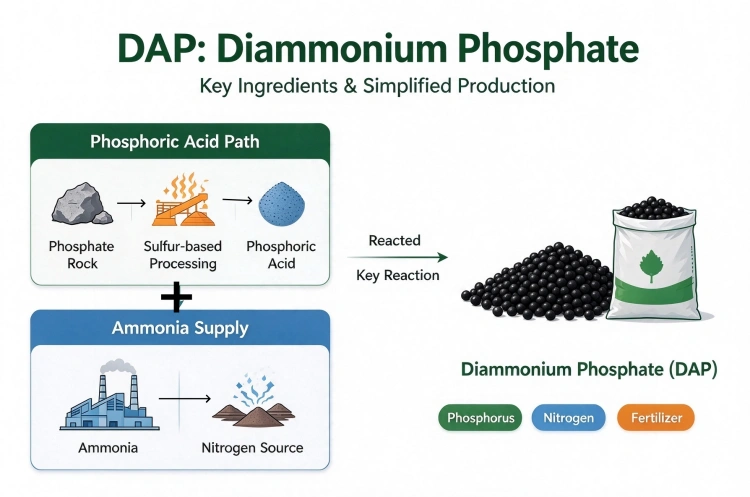
DAP, short for diammonium phosphate, is made by reacting ammonia with phosphoric acid. Producing phosphoric acid involves phosphate rock and sulfur-based processing, while ammonia supplies the nitrogen in the finished fertilizer. When these inputs become more expensive or harder to obtain, manufacturers may face higher production costs, which can push up the dap fertilizer price in international markets. For buyers, changes in raw material costs are an important factor when tracking the dap fertilizer price.
Energy is another part of the picture. Fertilizer plants need energy to process materials, run equipment, dry granules, and move products through the production line. The impact varies from one plant to another, but rising energy costs can increase the cost of every ton produced and put upward pressure on the dap fertilizer price. Energy expenses therefore matter when manufacturers assess production costs and buyers compare the dap fertilizer price across markets.
Then there is supply and demand. If a major producer cuts output, exports are restricted, or shipments arrive late, buyers may have fewer products to choose from. Demand can also rise before planting seasons, when farmers need fertilizer at roughly the same time. When supply tightens while demand increases, the dap fertilizer price may rise, especially in markets with limited alternative suppliers.
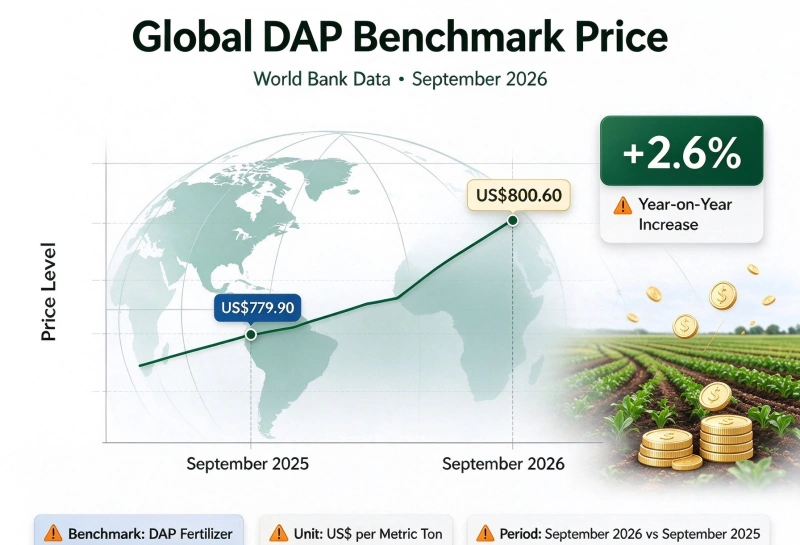
Recent global price data illustrates how quickly the market can move. The World Bank’s DAP benchmark stood at about US$800.60 per metric ton in September 2026, up 2.6% from September 2025. This benchmark provides a useful reference for understanding changes in the dap fertilizer price, although actual prices paid by buyers may differ by country and supplier.
Still, the global benchmark is only part of the story. A farmer buying DAP in Pakistan, for example, does not pay the international benchmark directly. Import costs, currency movements, local transport, and dealer margins all affect the final price.
Two farmers can buy the same type of DAP and pay very different prices. The difference often comes down to where the fertilizer is made, how it reaches the market, and what costs are added along the way.
Countries with domestic fertilizer plants may have shorter supply chains and less need to import finished DAP. That can be an advantage, but it does not automatically mean lower prices. A local plant may still depend on imported raw materials or face high energy and operating costs.
For countries that rely on imports, the journey adds more expenses. Ocean freight, insurance, port handling, customs duties, warehousing, and inland transport can all increase the price before the fertilizer reaches a dealer. If the local currency weakens against the US dollar, imported DAP can become more expensive even when the international price barely changes.
Pakistan offers a clear example of how these factors come together. Its retail prices are influenced by international supply, import availability, local inventories, distribution costs, and seasonal demand. When farmers prepare for the wheat season, demand can put extra pressure on prices.
That is why the DAP fertilizer price in one country may rise faster than the global benchmark, or remain high even after international prices begin to ease. The price paid by the farmer reflects the entire supply chain, not just the cost of manufacturing DAP.
And that brings us to an important question: what goes into making DAP in the first place?
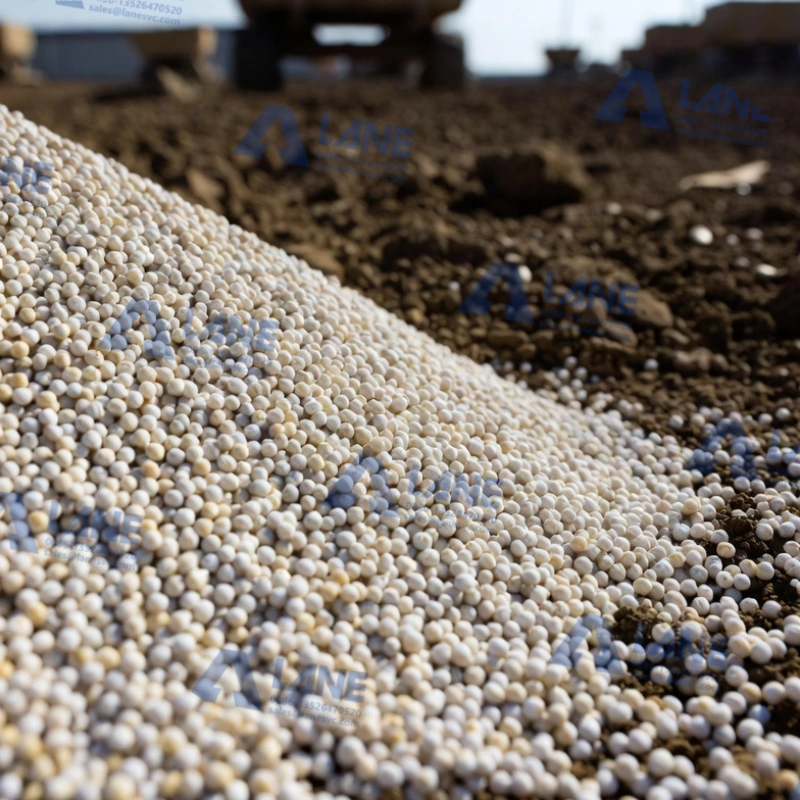
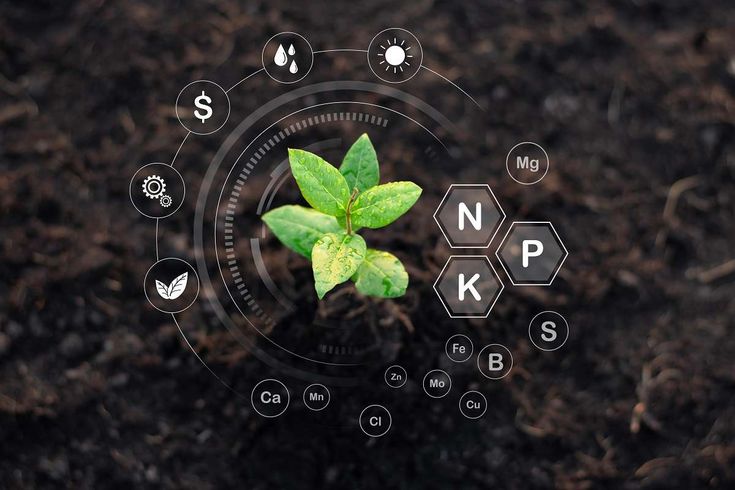
DAP is widely used because it supplies two important plant nutrients in one product: nitrogen and phosphorus. A common commercial grade is 18-46-0, meaning it contains approximately 18% nitrogen and 46% phosphate expressed as Pâ‚‚Oâ‚….
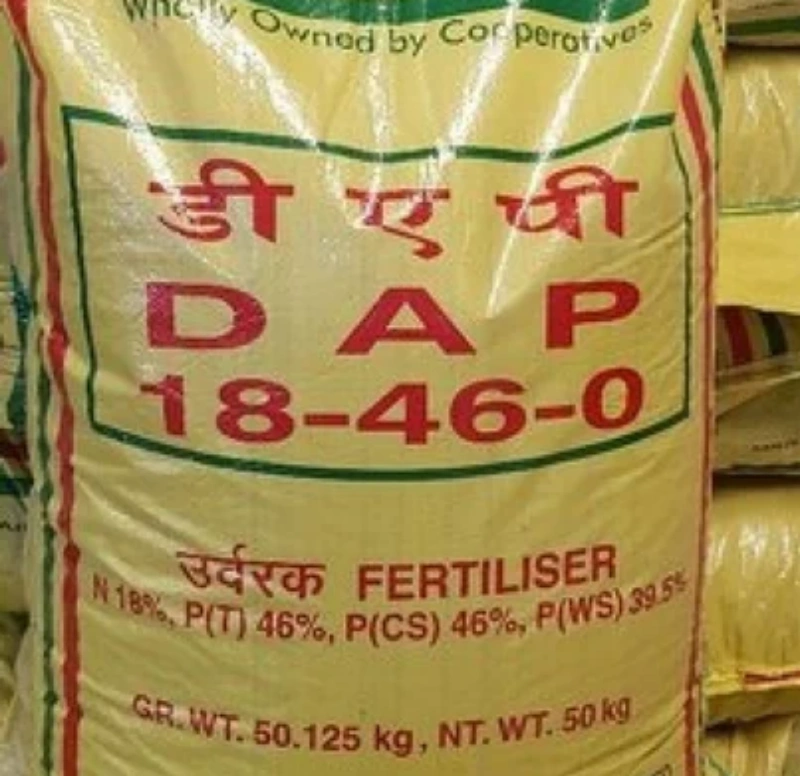
Its production begins with a chemical reaction between ammonia and phosphoric acid. This is what distinguishes DAP manufacturing from simply blending dry fertilizer powders. The reaction creates the fertilizer material, which then needs to be processed into a product that can be stored, transported, and applied evenly.
In a typical plant, the process includes several connected stages:
The exact process layout depends on the technology used and the condition of the incoming materials. A complete DAP plant also needs suitable raw material handling, emissions control, utilities, and product quality systems.
Each stage affects the next. For example, poor granulation can create too many off-size particles, while inadequate drying can leave the product with more moisture than desired. These issues can lead to extra processing, higher energy use, or inconsistent product quality.
In other words, making DAP is not just about completing a chemical reaction. The plant must also turn the reaction product into a stable, saleable fertilizer. That takes us from the production process to the costs behind it.
The cost of making DAP starts with raw materials, but it does not end there. A manufacturer must also account for energy, labor, maintenance, packaging, equipment depreciation, and other operating expenses.
Raw materials can have a major effect on production costs. If ammonia or phosphate-based inputs become more expensive, the cost of manufacturing DAP may rise. How quickly that increase reaches the market depends on purchasing contracts, existing inventories, plant efficiency, and competition between suppliers.
Day-to-day operations matter, too. Consider a plant that produces too many granules outside the required size range. Those particles may need to be screened out and returned to the process. Some recycling is normal in fertilizer production, but excessive recycling can put more load on the equipment and increase energy consumption.
Drying is another area worth watching. If the process uses more energy than necessary, the plant may spend more to produce each ton of finished DAP. Poor coordination between granulation, drying, and screening can create similar problems across the line.
There is also a difference between factory cost and the price a buyer sees. A manufacturer may still be using raw materials purchased months earlier, while distributors may be selling stock bought at a different price. Freight contracts, local inventories, and seasonal demand can all affect how quickly costs show up in retail prices.
This is why following the DAP fertilizer price alone cannot tell a manufacturer whether its own operation is cost-effective. To understand that, the plant needs to look at its production process and equipment as a whole.
The equipment required for DAP production depends on the process route, target capacity, raw materials, and finished product specifications. One point is worth making clear: a granulator alone cannot produce DAP from ammonia and phosphoric acid. The chemical reaction and the systems supporting it are essential parts of a complete manufacturing facility.
Depending on the plant design, the main equipment may include:
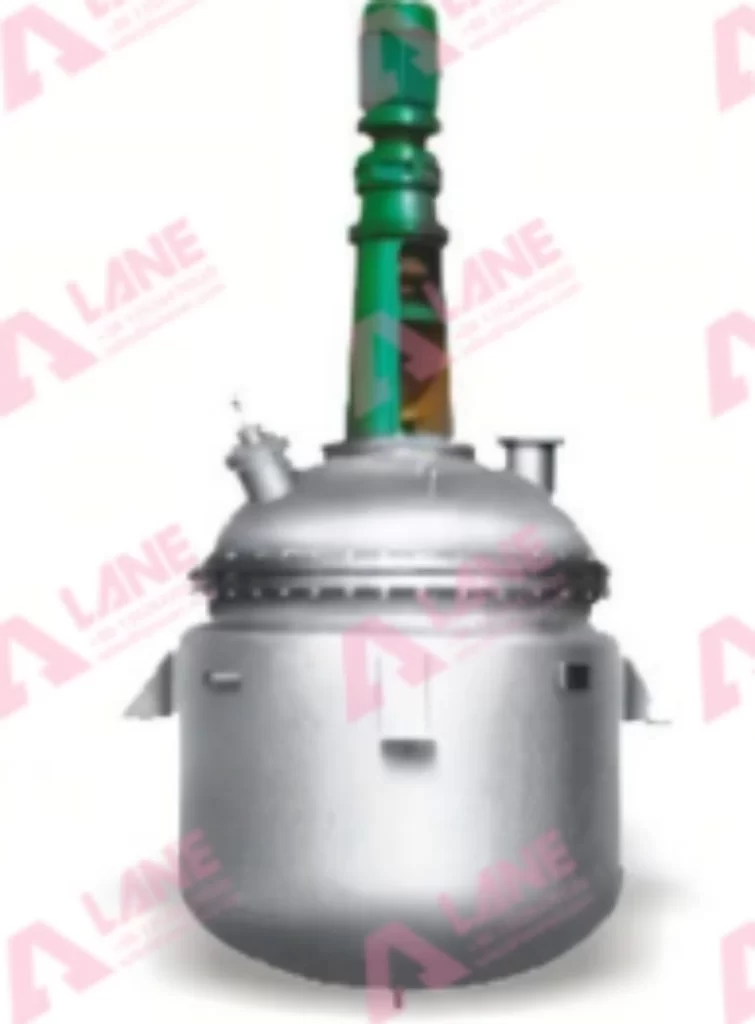
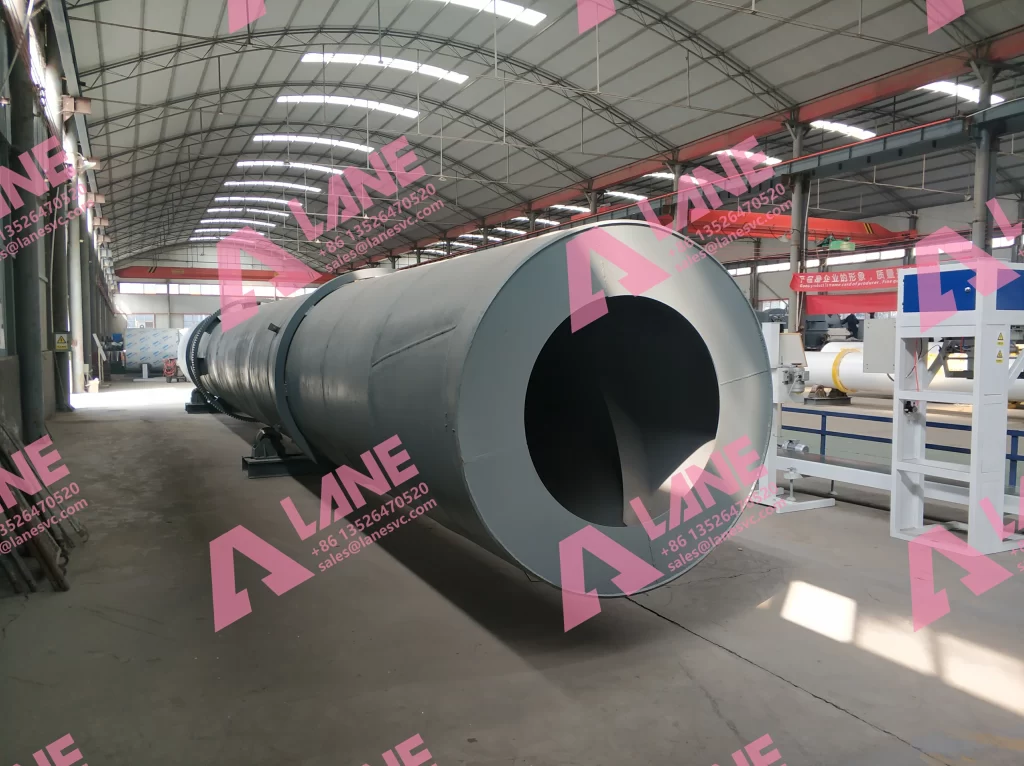
These machines must work together. A high-capacity granulator will not improve overall output if the dryer or screening system cannot handle the same throughput. Likewise, a plant that produces the right quantity but struggles to maintain granule size or moisture specifications may face extra processing costs.
It is also important to distinguish a complete chemical DAP plant from a facility that only handles further processing of an already manufactured fertilizer material. The two projects have different equipment requirements, investment levels, and operating needs.
Before choosing equipment, manufacturers should consider the entire process rather than comparing individual machines in isolation. Once the production route and capacity are clear, it becomes easier to identify where efficiency can improve and where unnecessary costs may be building up.
Improving production efficiency does not always mean buying more powerful equipment. Often, the first step is to understand where material, energy, or operating time is being lost.
Start with raw material quality and process control. Consistent inputs and stable operating conditions make it easier to maintain product quality and reduce avoidable losses. Changes in material properties may require adjustments to operating conditions, so routine monitoring is important.
Next, check whether the equipment is properly matched. If a dryer, screen, conveyor, or granulation system cannot keep pace with the rest of the line, it can become a bottleneck. Planning capacity across the complete process is more useful than focusing only on the rated output of one machine.
It also helps to track a few practical indicators: energy consumption per ton, unplanned downtime, granule size distribution, moisture levels, and the amount of material returned for reprocessing. These figures can show where the plant is spending more than necessary.
Regular maintenance matters just as much. Worn components, poorly maintained drives, and damaged screening surfaces can affect output and product consistency. Routine inspections and timely replacement of wear parts can reduce unexpected stoppages.
The wider market still plays a role. Raw material prices, trade conditions, transport costs, and seasonal demand will continue to influence the DAP fertilizer price. Manufacturers cannot control all of these factors, but they can work to make their own production process more reliable and cost-effective.
For companies planning a new DAP facility or upgrading an existing plant, the sensible starting point is to review raw material availability, production targets, process technology, environmental requirements, and equipment compatibility. A well-planned production line will not eliminate market uncertainty, but it can help control operating costs and support more consistent output.
Copyright © Henan Lane Heavy Industry Machinery Technology Co., Ltd.
