
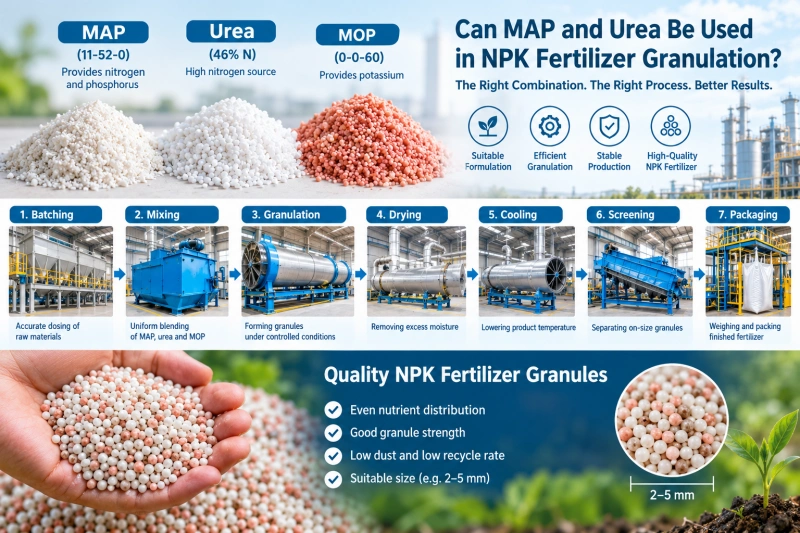
NPK fertilizer manufacturers often combine different nitrogen, phosphorus, and potassium sources to produce compound fertilizers with specific nutrient grades. Monoammonium phosphate (MAP) supplies both nitrogen and phosphorus, while urea provides a concentrated nitrogen source. When a formulation requires potassium, materials such as muriate of potash (MOP) can be added to complete the nutrient combination.
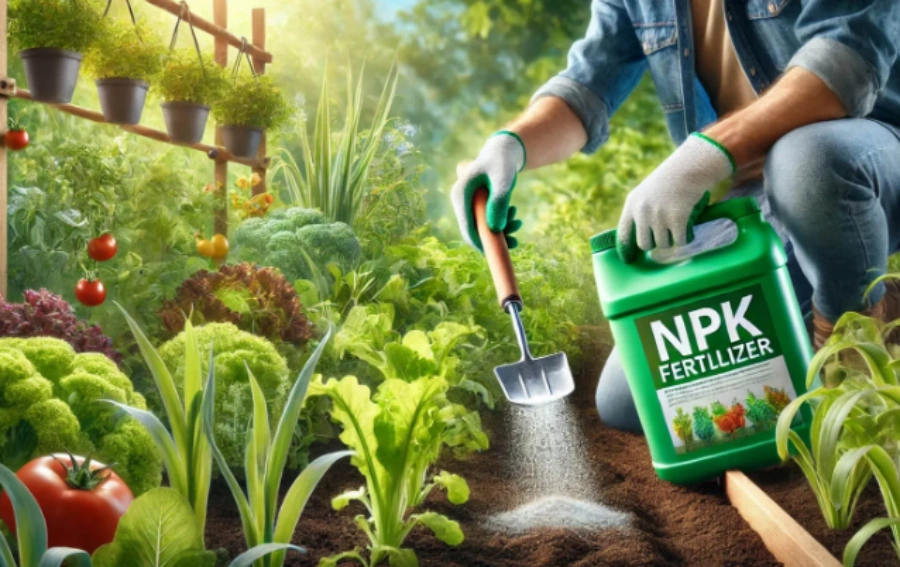
However, combining MAP and urea is not simply a matter of mixing two powders. Particle size, raw material moisture, temperature, feeding accuracy, and granulation technology can all affect production stability and finished granule quality. These factors become particularly important when manufacturers need consistent nutrient distribution, a controlled particle-size range, and a manageable recycle rate.
For fertilizer plant investors and production managers, the main question is whether the selected formulation can be processed reliably using the planned equipment. Understanding how map and urea behave during mixing, granulation, drying, and screening helps manufacturers choose an appropriate production process before investing in a complete line.
This article explains the key processing considerations, common production challenges, suitable equipment, and practical tests for evaluating an NPK fertilizer granulation project.
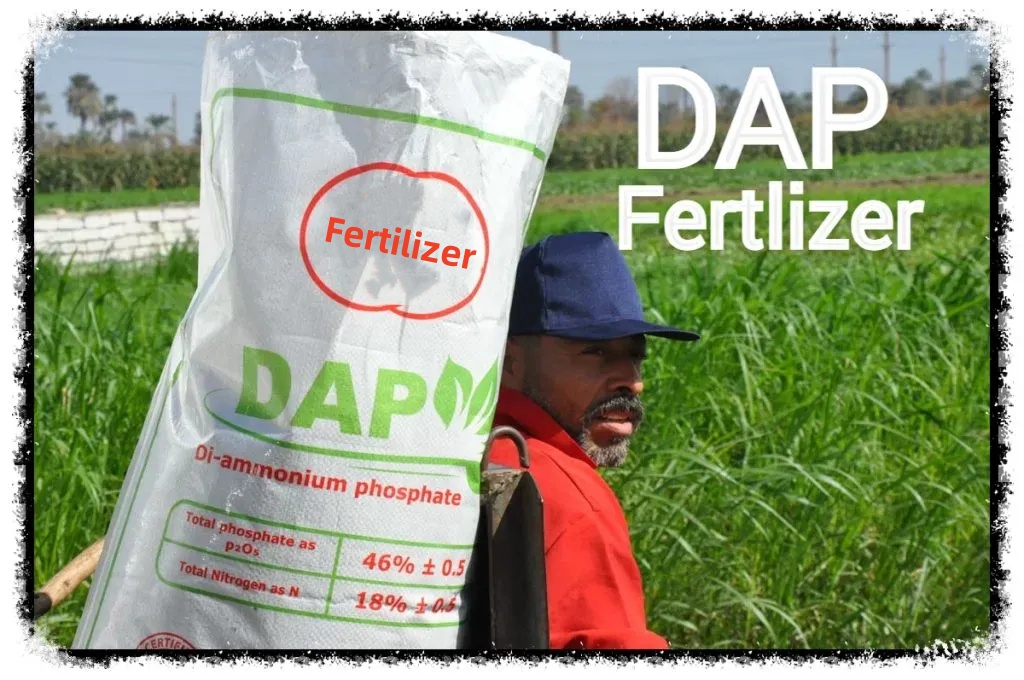
Yes. MAP and urea can be used together in NPK fertilizer manufacturing, provided the formulation and processing conditions are designed for the selected raw materials. Commercial MAP is commonly available in a grade such as 11-52-0, while agricultural urea typically contains approximately 46% nitrogen. These characteristics make the two materials useful when a fertilizer formulation requires both nitrogen and phosphorus.
MAP contributes ammonium nitrogen and phosphate. Urea increases the nitrogen content without supplying phosphorus or potassium. A potassium source, such as MOP, may be included when the target product requires all three primary nutrients.
The distinction between dry blending and granulation is important. Dry blending distributes individual particles throughout a mixture, but it does not necessarily create new granules. Granulation uses mechanical action and, depending on the process, moisture, steam, a binder, or another suitable method to form larger particles.
When map and urea are combined for granulation, manufacturers need to consider more than the target nutrient grade. They must also evaluate the physical properties of the raw materials, their behavior under the intended processing conditions, and the ability of the selected equipment to produce uniform granules.
For example, a formulation containing a high proportion of urea may behave differently from one containing more phosphate material. Even when two formulations have similar total nitrogen levels, their granulation performance may differ because their ingredient proportions and physical characteristics are not the same.
The intended production method also matters. Some NPK plants process solid raw materials through batching, mixing, and granulation. Other high-nitrogen processes may use a urea melting and spraying system. These approaches have different equipment requirements and operating conditions, so manufacturers should confirm the suitable route through technical evaluation and material trials.
For businesses planning a dedicated MAP manufacturing project rather than simply using MAP as an ingredient in NPK fertilizer, the MAP fertilizer production line provides a separate reference for understanding the equipment and processing stages involved in producing MAP itself.
Moisture and Temperature Control
Moisture management is one of the most important considerations when processing map and urea. Excessive moisture can make the material sticky, encourage unwanted agglomeration, and increase the drying load. Insufficient moisture or unsuitable granulation conditions may prevent particles from growing into stable granules.
The correct operating conditions depend on the raw material properties, granulation method, and equipment configuration. Manufacturers should therefore avoid assuming that one moisture setting will work for every NPK formulation.
Temperature also requires careful control. Urea-containing mixtures can respond differently to heating depending on their composition and moisture level. The drying process must remove the required amount of moisture without compromising the intended product characteristics.
A practical approach is to measure feed moisture, monitor material behavior inside the granulator, and evaluate the finished product after drying and cooling. If the granules are sticky, operators should investigate the material condition and process settings rather than immediately increasing drying temperature.
For map and urea formulations, it is especially useful to record the relationship between granulator settings, dryer conditions, and the proportion of acceptable finished granules. This information helps establish a repeatable operating window instead of relying on trial-and-error adjustments during full-scale production.
Particle Size and Mixing Uniformity
Raw material particle size affects both mixing quality and granule formation. If MAP contains many coarse particles while the urea feed is much finer, the mixture may become less uniform during conveying or handling. Differences in particle size can also influence how individual particles combine inside the granulator.
Before production, manufacturers should inspect the particle-size distribution of MAP, urea, and other ingredients. Screening or crushing may be needed when the feed contains oversized particles or an unsuitable size range.
Accurate dosing is equally important. MAP and urea contribute different nutrients, so fluctuations in their feeding rates can affect the composition of the final product. A reliable batching system, combined with an appropriately sized mixer, helps maintain consistent ingredient proportions.
When assessing a map and urea production process, operators should check whether the mixer can handle the planned throughput and whether the feeding system supplies a consistent stream of material. A well-designed granulator cannot fully compensate for inconsistent raw material preparation.
Granule Strength and Caking
The finished fertilizer must withstand conveying, screening, packaging, and normal handling without producing excessive fines. Weak granules can break apart during transportation, while excessive agglomeration may create oversized lumps that require crushing and recycling.
Granule strength is affected by the formulation, granulation conditions, binder use where applicable, and drying performance. Manufacturers should evaluate the particles after the complete granulation and finishing process rather than judging their quality only at the granulator discharge.
Caking is another factor to consider. Granules that appear acceptable immediately after production may develop lumps during storage if the product has unsuitable moisture characteristics or inadequate finishing conditions.
For map and urea formulations, the trial should therefore include checks on particle strength, fines generation, flowability, and visible agglomeration. These results help determine whether the selected process can produce a commercially acceptable product under realistic operating conditions.
Raw Material Preparation and Batching
The process begins with checking the quality and particle-size characteristics of each ingredient. MAP, urea, the potassium source, and any additional formulation components should meet the project’s raw material specifications.
A batching or weighing system then delivers the required quantities to the mixing stage. Its accuracy should match the planned production capacity and formulation requirements. Unstable feeding can cause nutrient variation and inconsistent granulation performance.
For map and urea processing, the raw material preparation stage should be designed around the expected feed properties. If materials arrive with different particle-size distributions or moisture levels, the plant may need additional screening, crushing, or feed conditioning before mixing.
Mixing and Granulation
After batching, the raw materials enter a mixer to achieve an even distribution. The mixture then moves to the selected granulator, where particles combine and grow under controlled operating conditions.
Depending on the formulation and plant design, manufacturers may consider a rotary drum granulator, disc granulator, or double roller granulator. The appropriate choice depends on the material characteristics, required output, target granule size, and the selected granulation method.
When map and urea are processed through a solid-feed granulation system, operators should monitor feed consistency, equipment loading, moisture addition where applicable, and the size distribution of the discharged material. Adjustments should be made systematically so the effect of each change can be evaluated.
For some high-nitrogen formulations, a melting and spraying approach may be considered. In this type of process, urea is melted and introduced into the granulation system under controlled conditions. This requires suitable melting, heating, and spraying equipment and should not be assumed to be interchangeable with every conventional solid-feed process.
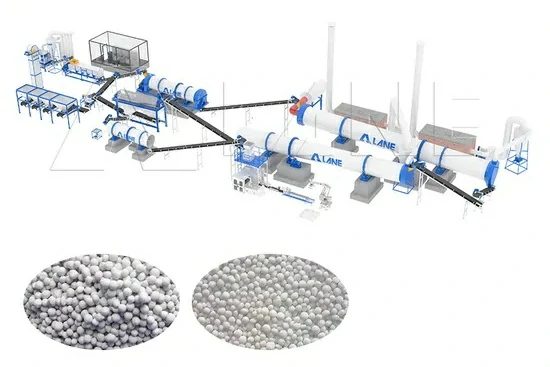
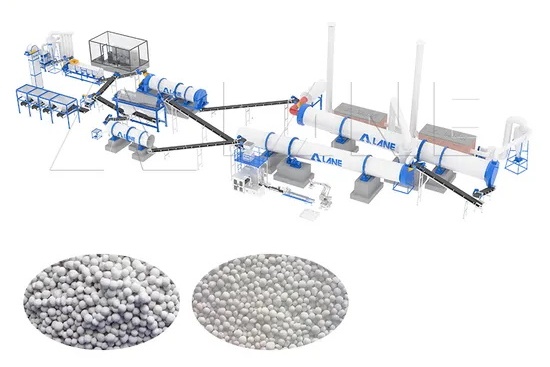
The NPK fertilizer production line provides an example of a complete equipment configuration, including batching, mixing, granulation, drying, cooling, screening, and packaging. The exact configuration should still be selected according to the project’s formulation and production requirements.
Drying, Cooling, and Screening
Fresh granules may contain more moisture than the finished product specification permits. A dryer removes excess moisture, while a cooler reduces the product temperature before screening and subsequent handling.
Drying residence time and final moisture targets vary with the raw materials, granulation method, equipment design, and product specifications. Some process designs use drying residence times of approximately 15–20 minutes and target final moisture below 1%, but these figures are only process-specific references. They should not be applied automatically to every formulation containing map and urea.
After drying and cooling, screening equipment separates the material into different size fractions. Granules within the required size range proceed to packaging or coating, while undersized and oversized particles may be returned for further processing, depending on the plant design.
A finished granule size of around 2–5 mm is a common target for many compound fertilizer applications, although the required range depends on the product and market. Manufacturers should monitor the percentage of on-size material, the amount of fines, and the quantity of oversized particles to assess overall process performance.
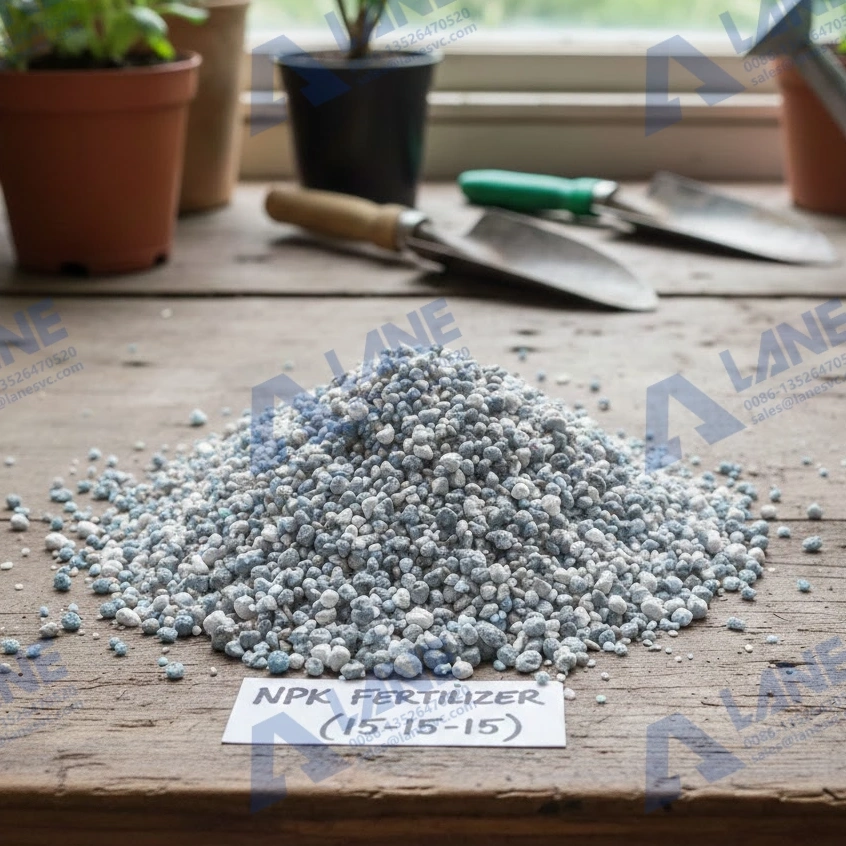
The compound fertilizer production line is another useful equipment reference because it describes a process incorporating batching, mixing, granulation, drying, cooling, screening, and packaging. For a specific NPK project, the configuration should be adapted to the actual raw materials and product requirements.
A complete NPK fertilizer production line usually consists of several connected machines. The final equipment list depends on the planned capacity, formulation, granulation method, and finished product specifications.
Raw material batching equipment: Weighing feeders or automatic batching systems control the quantities of MAP, urea, and potassium-bearing ingredients. Accurate dosing helps maintain the intended nutrient composition throughout production.
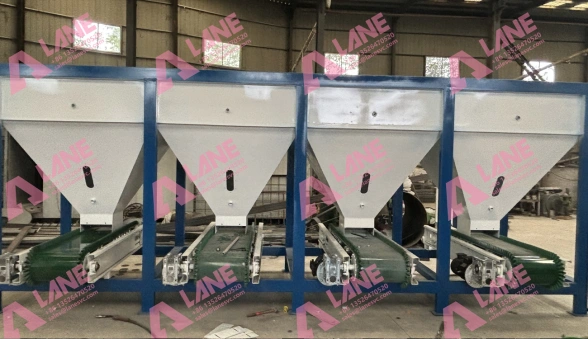
Mixing equipment: A suitable mixer distributes the raw materials evenly before granulation. Its capacity should match the batching system and granulator to avoid bottlenecks or inconsistent material flow.
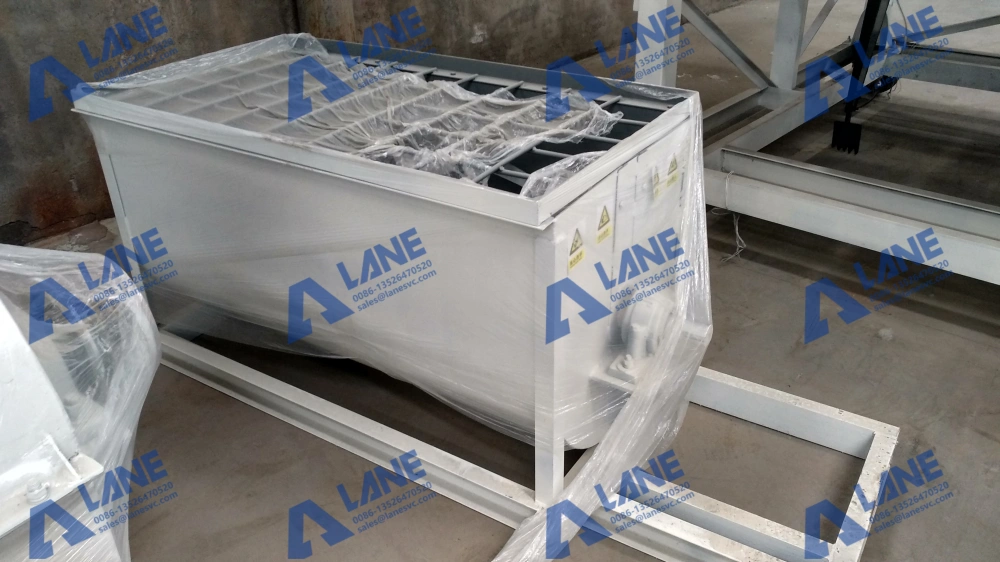
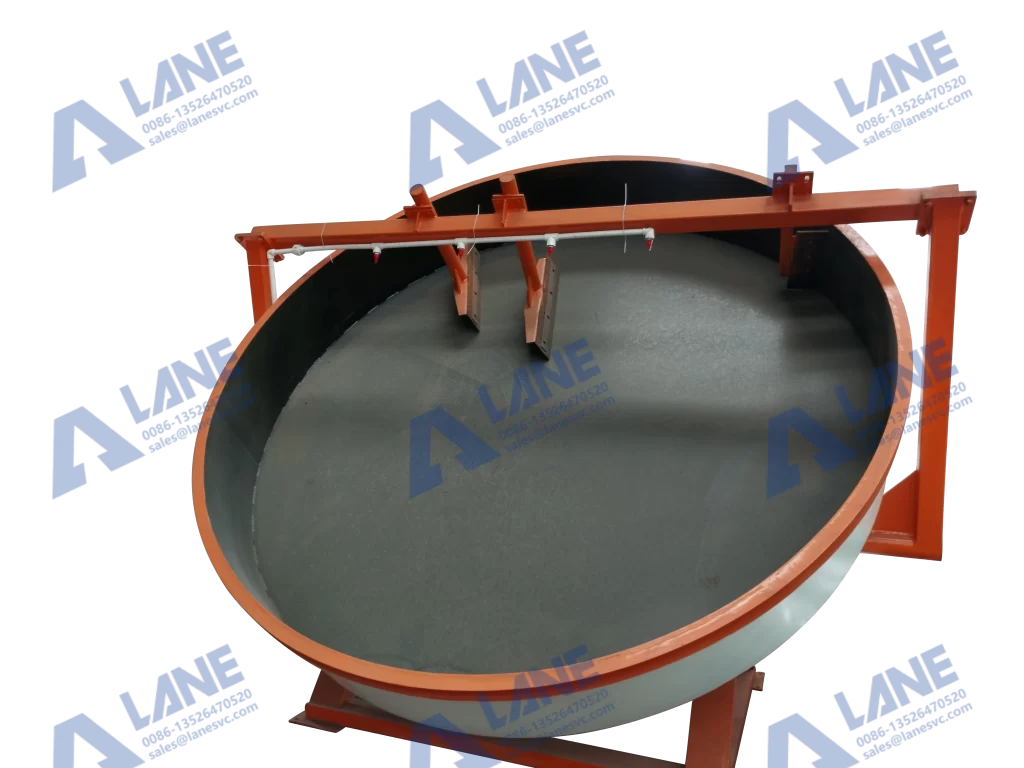
Granulation equipment: A rotary drum granulator, disc granulator, or double roller granulator may be suitable depending on the formulation and process design. Equipment selection should consider material characteristics, desired granule size, output, and the intended method of granule formation.
Melting and spraying equipment, where required: Certain high-nitrogen processes use a urea melting tank and spraying system. This option requires an appropriate process design and should only be selected after confirming that it suits the target formulation.
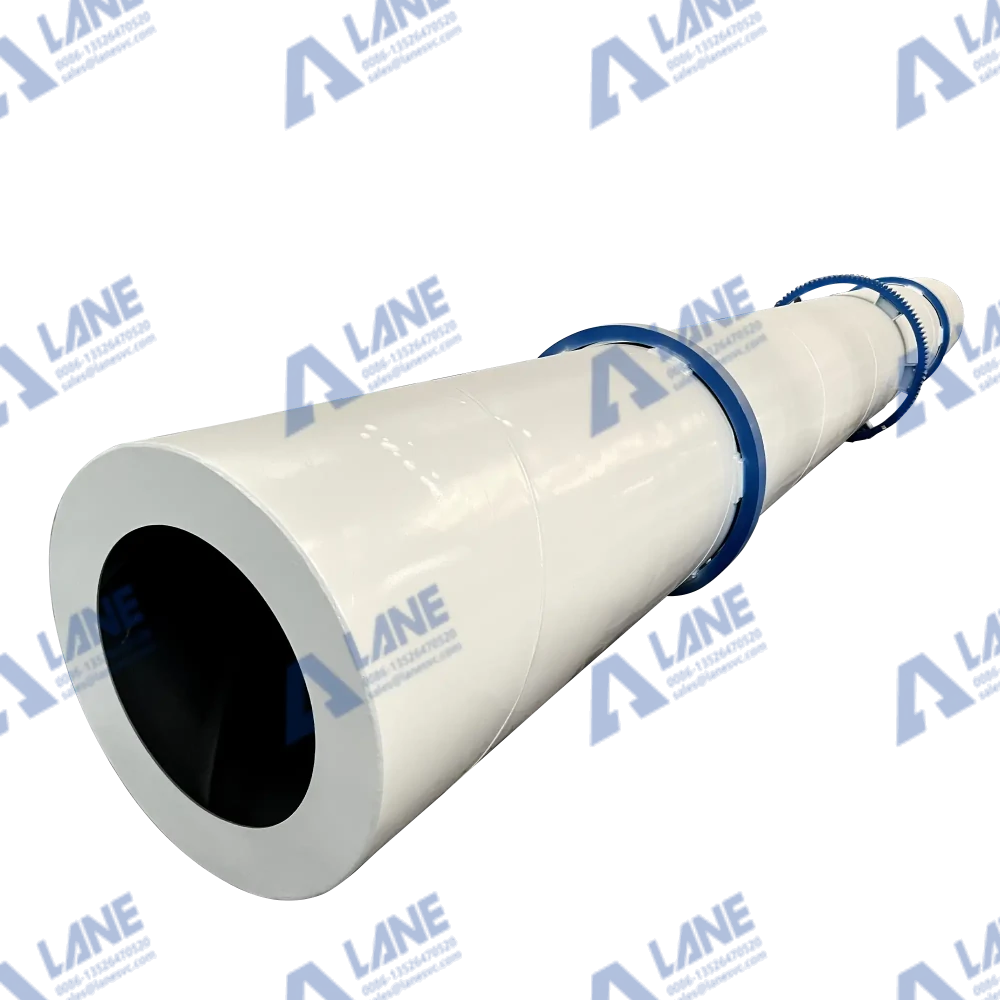
Drying and cooling equipment: A dryer removes excess moisture, while a cooler prepares the product for screening and packaging. Their capacity must match the material flow and the thermal requirements of the selected process.
Screening and crushing equipment: Screens separate acceptable granules from fines and oversized material. A crusher can reduce oversized particles to a suitable size for recycling where the process design allows it.
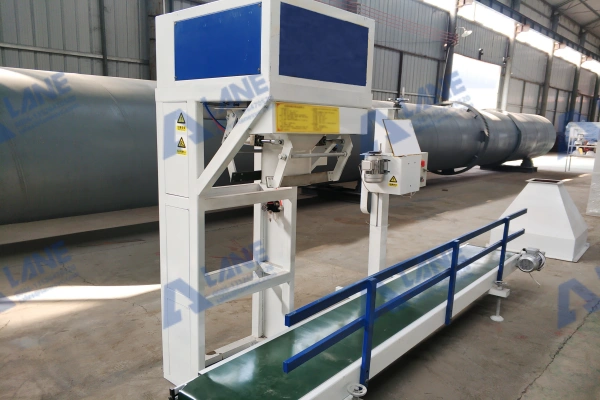
Conveying and packaging equipment: Conveyors transfer material between production stages, while the packaging system weighs and packs the finished fertilizer.
When selecting equipment for map and urea granulation, manufacturers should evaluate the complete line rather than choosing each machine independently. A granulator with a high nominal capacity cannot deliver the expected output if the batching, drying, or screening stage becomes a bottleneck.
The expected recycle rate should also be included in the capacity assessment. A high proportion of undersized or oversized particles increases the amount of material that must pass through the system again, potentially reducing effective production capacity.
A production trial should confirm whether the formulation and equipment can meet the target specifications at a stable operating rate. Before testing begins, manufacturers should define the required NPK grade, finished granule size, moisture limit, and acceptable physical quality.
During the trial, operators should record the individual raw material feed rates, granulator operating conditions, relevant moisture additions, and dryer settings. These records make it easier to identify relationships between operating conditions and finished product quality.
The finished granules should be checked using several measurements:
These checks are particularly important when evaluating map and urea together because appearance alone does not confirm that the finished product has the correct nutrient composition or physical properties. A visually uniform batch may still contain excessive fines or show variation in nutrient content.
If the first trial does not meet the target, manufacturers should investigate the likely cause before changing the process. Weak granules may be associated with unsuitable moisture conditions, particle-size distribution, or drying performance. A high recycle rate may indicate that the granulator settings, feed characteristics, or screening arrangement require adjustment.
Whenever practical, change one operating condition at a time and compare the results. This makes it easier to identify which adjustment improves granule quality without creating a new problem elsewhere in the production line.
MAP and urea can be used together in NPK fertilizer granulation, but reliable production depends on formulation design, consistent raw materials, suitable equipment, and controlled processing conditions. Manufacturers need to evaluate moisture and temperature behavior, particle-size distribution, granule strength, and the capacity of the complete production line.
Before scaling up, a production trial should verify nutrient composition, finished granule size, moisture content, physical strength, and process stability. By selecting suitable equipment and validating the operating conditions, manufacturers can determine whether map and urea are appropriate for their intended NPK fertilizer product and production targets.
Copyright © Henan Lane Heavy Industry Machinery Technology Co., Ltd.
