
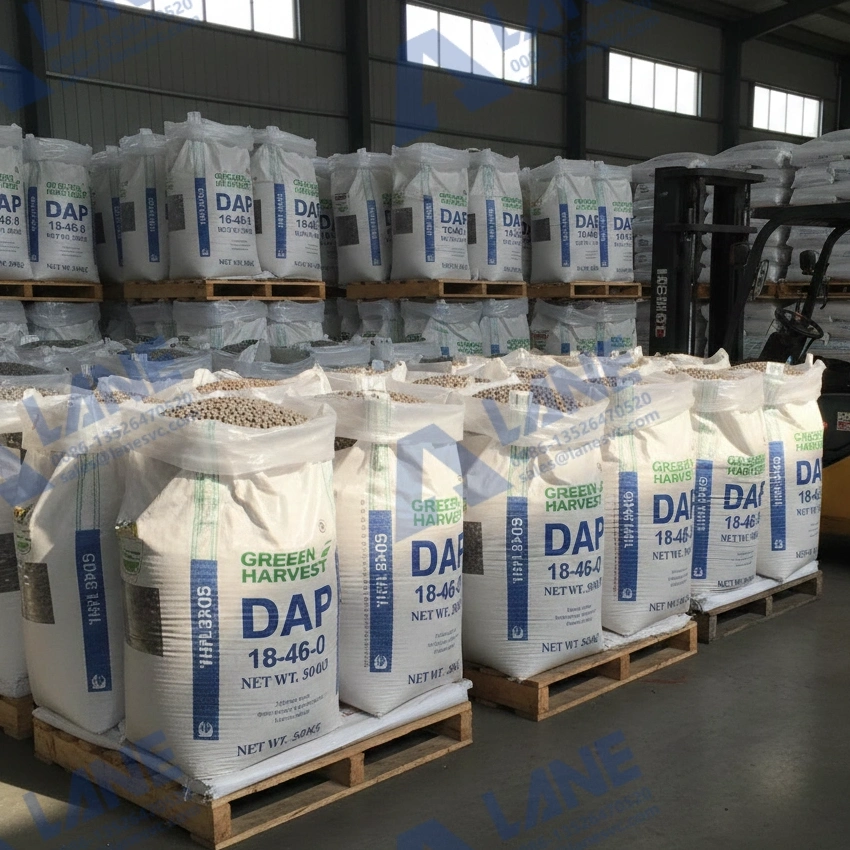
Phosphate fertilizers are one of the most essential macronutrients for improving crop yields and soil fertility. The most popular phosphate fertilizers are Di-ammonium Phosphate (DAP) and Mono-ammonium Phosphate (MAP). They both originate from phosphate rock, but their production methods, chemical reactions, and end-use applications are different. Rock phosphate to DAP production or MAP production turns mined phosphate rock into a high-value, plant-available nutrient source. For manufacturers planning to invest in phosphate fertilizer plants, understanding the distinction between DAP and MAP is crucial.
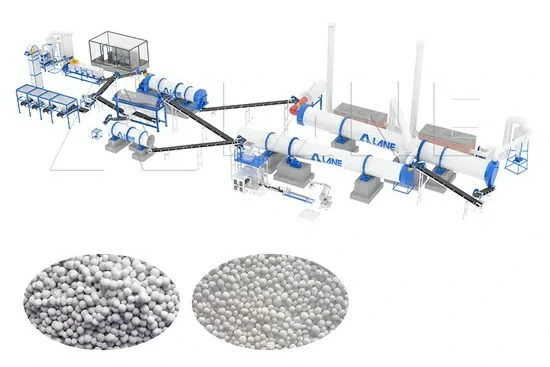
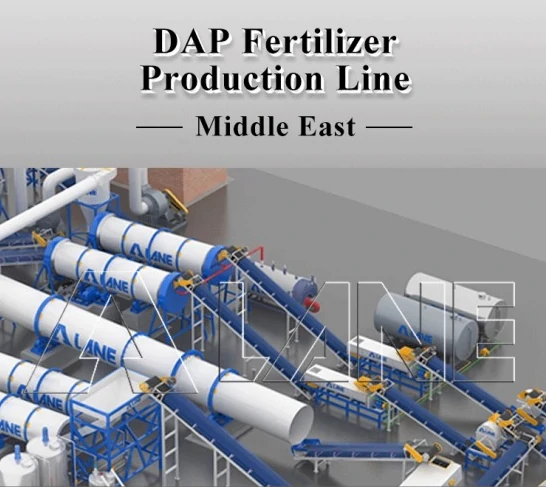
For manufacturers, the journey of rock phosphate to DAP production represents a chemical engineering feat that requires precision machinery. LANE Heavy Industry has engineered high-performance equipment that converts raw materials into high-grade granules in a cost-effective and chemically stable process. LANE Heavy Industry offers complete solutions for rock phosphate to DAP production, including crushing, granulation, drying, cooling, coating, screening, and packaging systems.
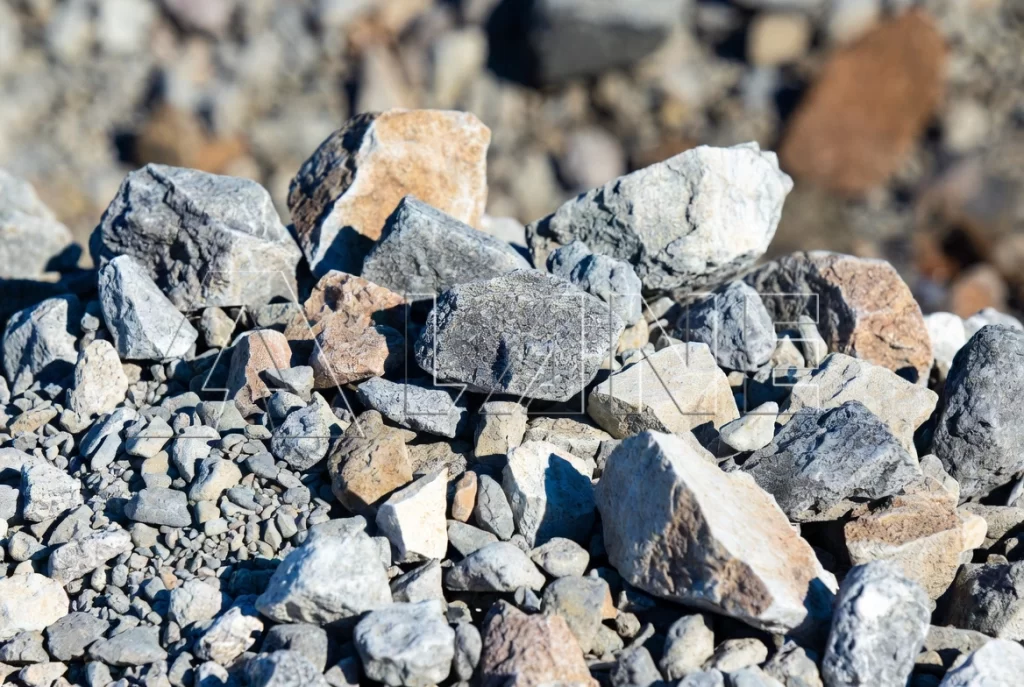
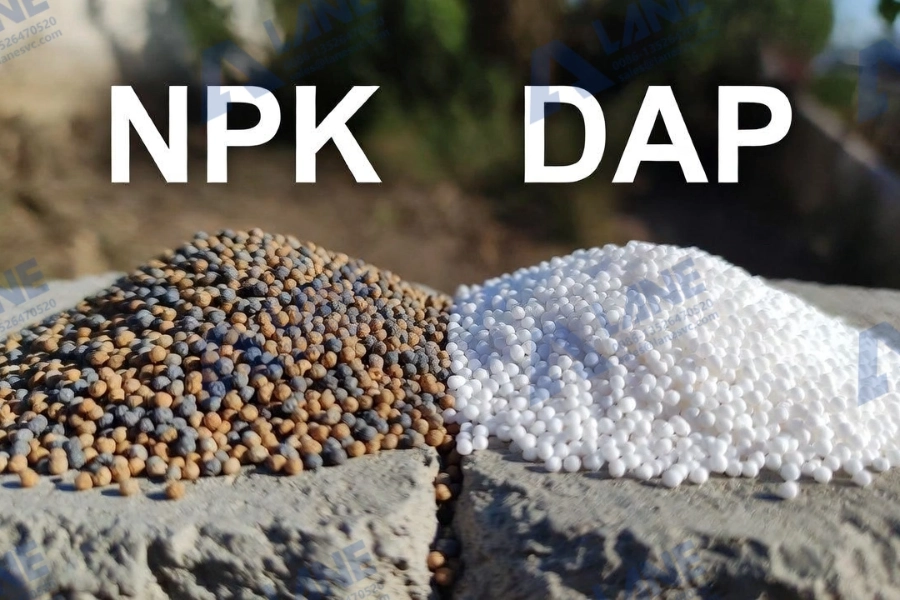
Approximately 90% of the world’s phosphorus supply is derived from rock phosphate. The rock phosphate cannot be directly used as a nutrient for plants. It must undergo chemical transformation to create phosphoric acid. This phosphoric acid is then reacted with ammonia. The process of rock phosphate to DAP production involves a higher nitrogen ratio and has a lower phosphate ratio compared to MAP. A typical DAP fertilizer contains a standard grade of 18-46-0 (Nitrogen-Phosphorus-Potassium).
Chemical Divergence: DAP vs. MAP
The fundamental production difference between these two fertilizers lies in the neutralization stage. MAP is produced when the molar ratio of ammonia to phosphoric acid is approximately 1.0, yielding an 11-52-0 grade. In contrast, rock phosphate to DAP production requires a molar ratio of roughly 2.0. This chemical shift impacts the heat of reaction, moisture management, and the design of the production line.
| Factor | DAP | MAP |
| Nitrogen Content | 18% | 11% |
| Phosphorus Content | 46% | 52% |
| Ammonia Requirement | Higher | Lower |
| Product pH | Slightly alkaline | Slightly acidic |
| Crop Suitability | Broad use | Acid-sensitive crops |
Converting an existing MAP line to DAP production is not a simple “plug-and-play” operation. It has several technical hurdles which must be addressed before the production line is functional. LANE has engineered custom reactors to help manufacturers with this process.
Ammonia Slip and Recovery
DAP production involves a higher concentration of ammonia, which leads to “ammonia slip.” Ammonia slip means gaseous ammonia that does not react and escapes the reactor. To make rock phosphate to DAP production environmentally and economically viable, LANE integrates high-efficiency Scrubbing Systems. These towers use phosphoric acid to capture the escaped ammonia, creating a “scrubber liquor” that is fed into the granulator, minimizing waste.
Moisture and Heat Management
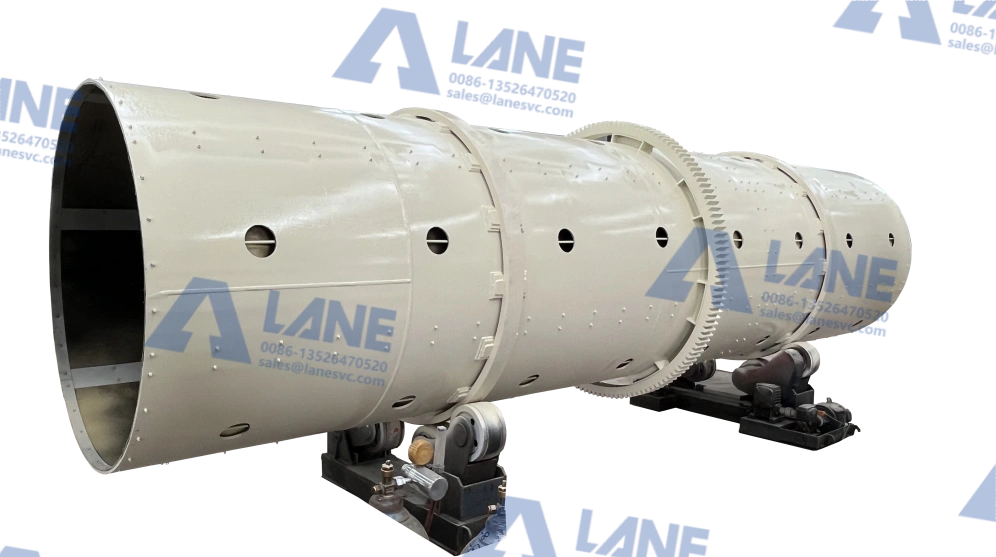
The granules emerging from the rock phosphate to DAP production process have a higher moisture content and temperature than MAP. LANE’s Rotary Dryer utilizes a heavy-duty design with adjustable speed to ensure that the granules reach the ideal 1-2% moisture level without breaking down. Following the dryer, the Rotary Cooler rapidly brings the temperature down to prevent caking during storage.
When comparing a dedicated MAP line to a rock phosphate to DAP production line, several structural differences emerge:
Optimizing the Rock Phosphate to DAP Production Line
To maximize the return on investment of a production line from LANE Heavy Industry, operators must focus on “Recycle Ratio.” In rock phosphate to DAP production, the amount of material returned to the granulator (fines and crushed oversize) helps stabilize the temperature and moisture within the drum. LANE’s automated control systems allow for real-time monitoring of this ratio, ensuring a steady-state operation that reduces energy consumption.
Key Technical Advantages of LANE Machinery:
Sustainability and Efficiency
The agriculture industry must abide by harsh regulations. LANE Heavy Industry’s approach to rock phosphate to DAP production emphasizes dust collection and wastewater recycling. By capturing dust from the dryer and cooler using cyclones and bag filters, the plant maintains a clean environment while recovering valuable product. We abide by regulations and provide sustainability and efficiency to our customers.
Rock phosphate to DAP production and MAP production are complementary processes, but they need specially engineered machines for distinct chemical and operational needs. This transition requires deep understanding of chemical molarities and mechanical endurance. From pre-neutralization reactor sizing to granulator speed and drying temperature, every component of LANE’s rock phosphate to DAP production lines is optimized for DAP’s 2:1 ammonia-phosphoric acid ratio, high viscosity, and large granule size. For producers investing in phosphate fertilizer capacity, choosing LANE’s specialized DAP production lines ensures maximum return on investment and long-term operational excellence.
DAP contains more nitrogen and slightly less phosphorus than MAP, because DAP uses a higher ammonia ratio during neutralization.
Yes, the same phosphoric-acid-based line can produce both products by adjusting ammonia addition, reaction control, and downstream granulation settings.
Phosphate rock is not usually fed directly into DAP granulation; it is first converted into phosphoric acid so the reaction with ammonia can be controlled and the product can be made uniformly.
The usual steps are rock preparation, wet-process phosphoric acid production, acid concentration, ammonia neutralization, granulation, drying, cooling, screening, and packaging.
For more details, please feel free to contact us.
Henan Lane Heavy Industry Machinery Technology Co., Ltd.
Email: sales@lanesvc.com
Contact number: +86 13526470520
Whatsapp: +86 13526470520
Copyright © Henan Lane Heavy Industry Machinery Technology Co., Ltd.
