
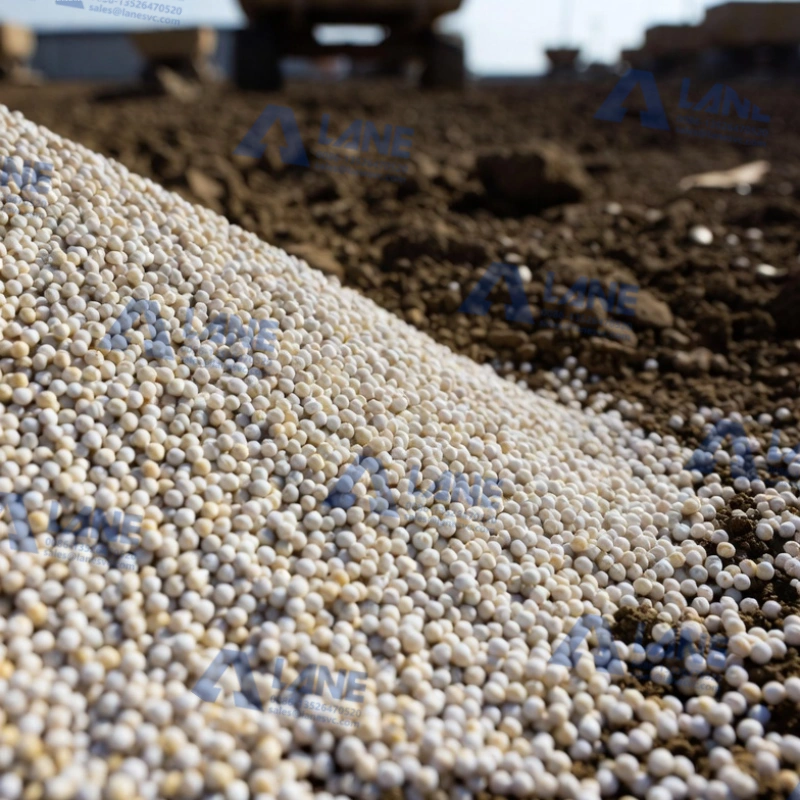
To a normal farmer or investors who wants to produce potassium fertilizer, Monoammonium Phosphate (MAP) and Diammonium Phosphate (DAP) looks identical with nutrient difference. Treating these two fertilizers as interchangeable is one of the expensive mistake agribusinesses can make. They both are effective fertilizer but they behave differently when they are applied on field. Understanding the difference between MAP and DAP fertilizer can save business from making these mistakes.
Difference between MAP and DAP fertilizer is not just limited to application and nutrient compositions. It also affects how they are stored and produced. The fundamental difference between MAP and DAP fertilizer lies in their molecular behavior and chemical reactions in the soil. LANE heavy industry has engineered a production system that can effectively produce both fertilizer in the same production facility. Below we explore why these two fertilizers cannot be mixed and how producers can smoothly manufacture them with the production line from LANE Heavy Industry.
The most fundamental difference between MAP and DAP fertilizer boils down to the ratio of ammonia to phosphoric acid during chemical reaction stage.
| Property | MAP | DAP |
| Chemical Formula | NHâ‚„Hâ‚‚POâ‚„ | (NHâ‚„)â‚‚HPOâ‚„ |
| Nitrogen Content | 11–12% | 18% |
| Phosphorus Content | 52–61% P₂O₅ | 46% P₂O₅ |
| pH of Dissolution | Acidic (4–5) | Alkaline (7–8) |
| Best Soil Type | Alkaline/high-pH soils | Acidic/low-pH soils |
| Ammonia Toxicity Risk | Lower | Higher (300% more free ammonia) |
| Seed Placement Safety | Safer for seed placement | Higher risk of germination damage |
| Salt Index | ~30 | ~34 |
| Solubility (20°C) | 35–40 kg/100L | 65–70 kg/100L |
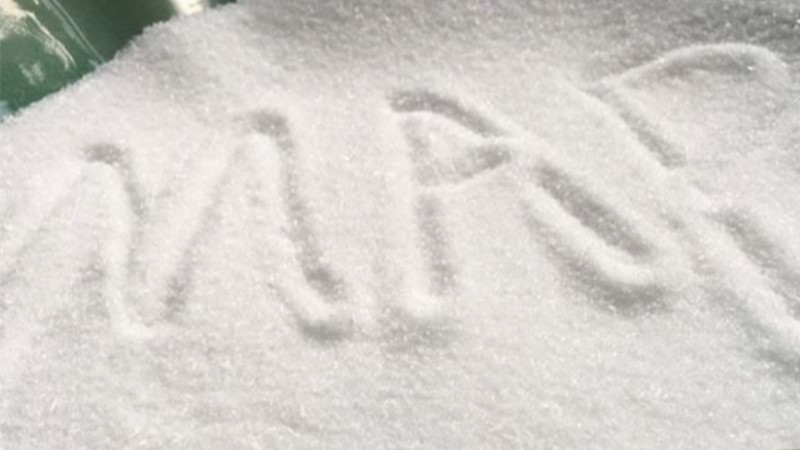
Monoammonium Phosphate (MAP):Â MAP is chemically expressed as NH4H2PO4. It is manufactured by reacting one mole of ammonia (NH3) with one mole of phosphoric acid H3PO4. A standard commercial MAP contains 11% nitrogen and 52% phosphorus. It has a salt index of 30.
Diammonium Phosphate (DAP):Â DAP is chemically expressed as (NHâ‚„) â‚‚ HPOâ‚„. It is produced by reacting two moles of ammonia with one mole of phosphoric acid. This extra input of ammonia changes its standard commercial nutrient grade to 18-46-0. It provides 18% nitrogen and 46% phosphorus.
DAP carriers more ammonia which results in more nitrogen delivery. However, this process must be carefully managed so that no chemical shift occurs.
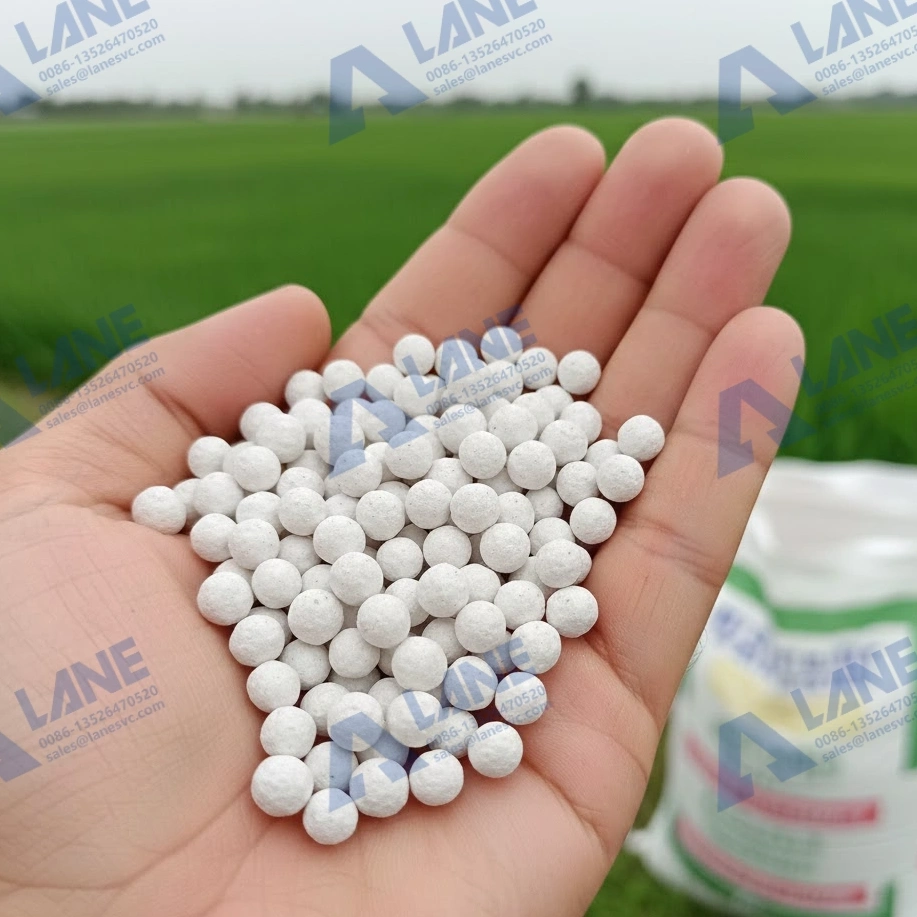
The practical difference between MAP and DAP fertilizer appears right after its implementation.
The Alkaline Trap of DAP
As DAP granules are applied in the soil, it absorbs moisture and create a chemical zone in the soil. The zone becomes alkaline and has a pH range between 7.5 and 8.5. In a soil with high pH, this spike can trigger damaging reaction. It converts ammonium ion into free ammonia gas. This ammonia gas is toxic to young root systems and can cause seedling injury if the DAP fertilizer is placed too close to the seed during planting. Furthermore, in high-pH soils, the phosphorus in DAP can bind with calcium which locks away this nutrient from plants.
The Acidic Advantage of MAP
When a MAP granule dissolve it creates acidic micro-zone with pH between 3.5 and 4.5. For alkaline or calcareous soils, this acidity is a massive benefit. It keeps the phosphorus highly soluble and prevents it from binding with calcium. This ensures roots can get the nutrient effectively. MAP release less ammonia gas compared to DAP which makes it safer for seed-row placement and early root development.
LANE Heavy Industry MAP and DAP Production Solutions
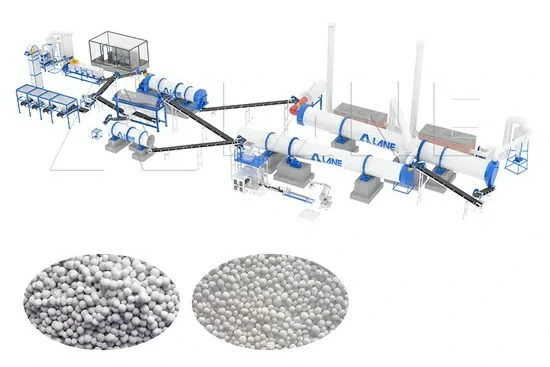
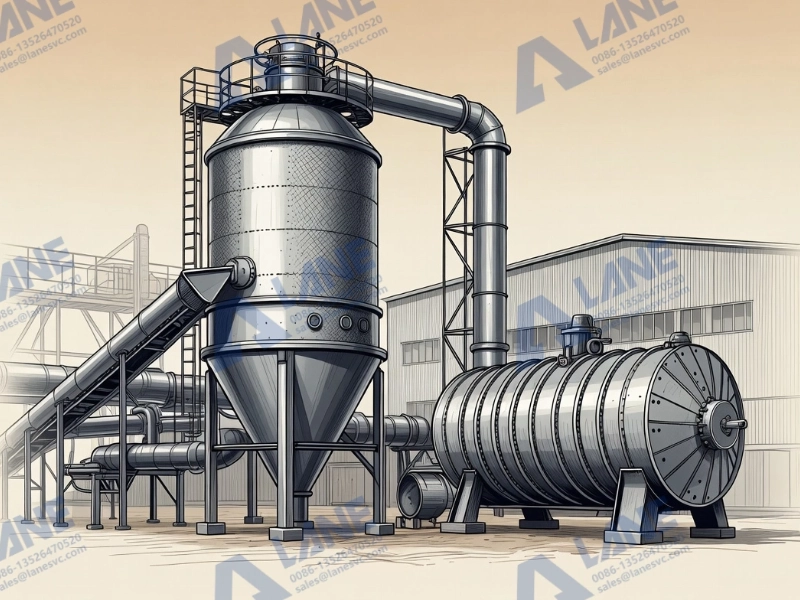
LANE understands the difference between MAP and DAP fertilizer. We have over two decades of experience in manufacturing heavy industry and agriculture machineries. We have engineered and designed production system for both MAP and DAP fertilizer. Our technology delivers consistent product quality, operational efficiency, and long-term reliability.
Advanced Neutralization Technology:Â The neutralization process is the most critical stage in the phosphate fertilizer production. This stage directly influences the nutrient composition and product quality of the fertilizer.
The reaction for MAP production is: NH₃ + H₃PO₄ → NH4H2PO4+ Heat
The reaction for DAP production is: 2NH₃ + H₃PO₄ → (NH₄)₂HPO₄ + Heat
LANE Heavy Industry uses fully automatic neutralization system that control the reaction between phosphoric acid and ammonia. Through accurate ammonia dosing, stable temperature regulation, and continuous monitoring, manufacturer can maintain optimal reaction conditions. Our advance engineering helps manufacturer to create premium quality phosphorus fertilizer with reduced raw material waste and consistent fertilizer quality.
High-Performance Granulation Systems:Â Granulation determines the physical quality and commercial value of the phosphate fertilizers. LANE Heavy Industry has engineered granulation technology that can handle the corrosive nature of the MAP and DAP slurry. Our Rotary Drum granulator and Disk granulator creates strong, uniform fertilizer particles with excellent handling characteristics. The granulation equipment can be customized according to the specific requirements of MAP or DAP manufacturing.
Drying and Cooling Solutions: After granulation, the wet granules must be dried and cooled to maintain stability and prevent caking. LANE Heavy Industry provides rotary dryers and cooling systems to the manufacture for this stage. Our production line ensures optimal moisture control while minimizing energy consumption.
Automated Packaging and Screening Systems:Â After drying the granules are sent to the screening system. Our Rotary screener, separates on-size granules from the fine and oversize granules. Oversize and on-size granules are sent to a crusher and recycled back the granulator. The on-size granules are sent to the packing machine. LANE Heavy Industry offers fully automated packaging solutions capable of handling various bag sizes and packaging specifications. This system combines accurate weighing, high-speed filling, and reliable sealing technologies to maximize productivity.
So, which one is better? After understanding the difference between MAP and DAP fertilizer, it can be said that each fertilizer has their own uses. Depending on the crop requirements, soil conditions, and application methods, the choice changes.
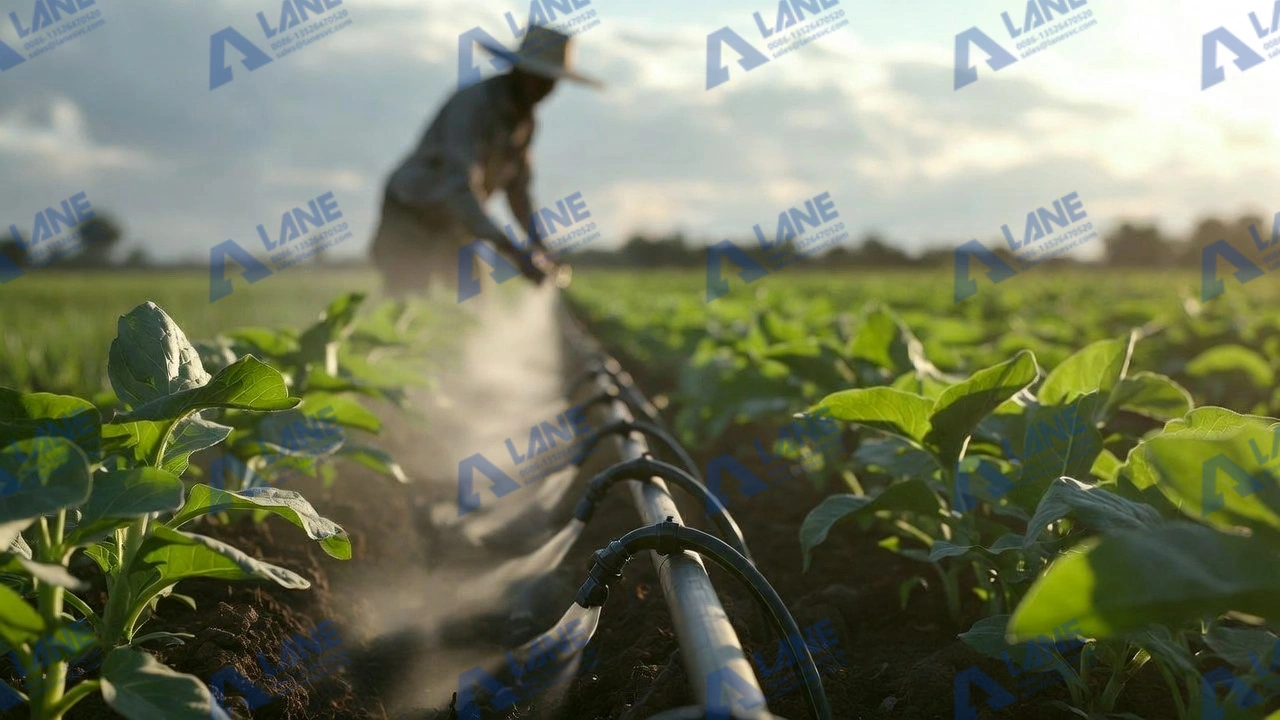
MAP fertilizer is preferred in situations where high phosphorus availability is required, particularly for fertigation systems, and greenhouse production. Its slightly acidic nature also makes it suitable for alkaline soils where phosphorus availability can be limited.
DAP provides higher amount of nitrogen and is used in wide scale field crop farming. It is often used when growers need an economical source of both nitrogen and phosphorus for crops.
Rather than viewing one product as superior, manufacturers and farmers should focus on understanding the Difference between MAP and DAP fertilizer and select the fertilizer based on the objective.
Q1: What is the main difference between MAP and DAP fertilizer?
A:Â MAP (11-52-0) has lower nitrogen (11%) and higher phosphorus (52%), with acidic pH. DAP (18-46-0) has higher nitrogen (18%), lower phosphorus (46%), and alkaline pH.
Q2: Which fertilizer is better for alkaline soils?
A:Â MAP is better for alkaline soils (pH > 7.5) because its acidity solubilizes phosphorus, making it more available to plants.
Q3: Which fertilizer is safer for seed placement?
A:Â MAP is significantly safer for seed placement due to lower ammonia toxicity risk. DAP can damage germinating seeds, especially in sensitive crops like canola and soybean.
Q4: Can I use DAP instead of MAP?
A:Â Only if your soil is acidic (pH < 7). In alkaline soils, DAP causes phosphorus fixation and reduces efficiency.
For more details, please feel free to contact us.
Henan Lane Heavy Industry Machinery Technology Co., Ltd.
Email: sales@lanesvc.com
Contact number: +86 13526470520
Whatsapp: +86 13526470520
Copyright © Henan Lane Heavy Industry Machinery Technology Co., Ltd.
