
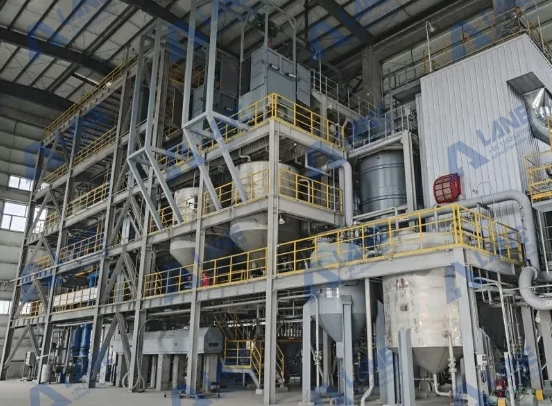
Can a legacy Single Superphosphate (SSP) factory be used to manufacture Complex fertilizer like MAP and DAP without tearing down the factory? The short answer is yes. By systematically modifying your single superphosphate plant infrastructure for MAP and DAP fertilizer production, you can reuse over half of your existing facility assets. The fertilizer industry is shifting from single-nutrient fertilizers toward high-efficiency compound fertilizers such as MAP (Monoammonium Phosphate) and DAP (Diammonium Phosphate). To survive, fertilizer producers must diversify. If your facility is currently locked into Single Superphosphate (SSP) production, you can reuse your underutilized structural assets.
Traditional Single Superphosphate (SSP) manufacturing process relies on static, slow-curing den process, where Monoammonium Phosphate (MAP) and Diammonium Phosphate (DAP) requires continuous, highly exothermic neutralization reactions. This article explains how this transformation work, what can be reused, what must be replaced, and how Advance machinery from LANE Heavy Industry can support a full or partial upgrade of your production line.
Before upgrading your SSP production line, it is essential to understand the chemical process differences between both fertilizers.
This means the single superphosphate plant infrastructure for MAP and DAP fertilizer production requires a shift from an acidulation-based system to an ammoniation-based system. This changes the whole reaction process philosophy of the production line.
Evaluating the Structural Foundations of an SSP Facility
Traditional SSP facilities are built to withstand corrosive sulfuric acid mist. This feature robust concrete basements and protective polymer coatings. However, when upgrading to your single superphosphate plant infrastructure for MAP and DAP fertilizer production, you must re-evaluate your material storage and fluid piping systems to match the chemical profile of DAP and MAP fertilizer.
Ammoniation reactions requires integration of a safe, high-pressure ammonia storage and delivery station. To update your single superphosphate plant infrastructure for MAP and DAP fertilizer production, you must integrate:
By adding these components in your current production line, you establish a system capable of hosting a multi-product fertilizer production line.
Upgrading single superphosphate plant infrastructure for MAP and DAP fertilizer production comes with several challenges:
Process Compatibility Issues:Â Not all SSP equipment is compatible with ammonia-based chemistry. this requires integrating for ammoniation.
Corrosion and Material Stress:Â New chemical reactions increase equipment wear. Industrial grade heavy equipment can be used to delay this wear or modular equipment can be used.
Safety Regulations:Â Ammonia requires strict handling of gas contamination systems. LANE provide scrubbing tower for recycling gas to hydrochloric acid.
Production Downtime: Retrofit projects require time to complete the restructuring. LANE provide modular machines which can easily be placed and fitted in the existing production system.
Upgrading single superphosphate plant infrastructure for MAP and DAP fertilizer production requires more than replacing individual machines. It demands a fully automated, modular, and process-optimized system. Modern fertilizer manufacturers rely on advanced engineering solutions to ensure stable performance, efficiency and long-term reliability.
A key upgrade step in transforming single superphosphate plant infrastructure for MAP and DAP fertilizer production is the installation of customized granulation technology designed for both acid and ammoniation-based reactions.
LANE Heavy Industry engineer’s flexible granulation solutions, including:
These systems are critical for converting traditional SSP facilities into high-efficiency MAP and DAP production lines. They can produce stable granule size, improved nutrient uniformity, and higher product quality.
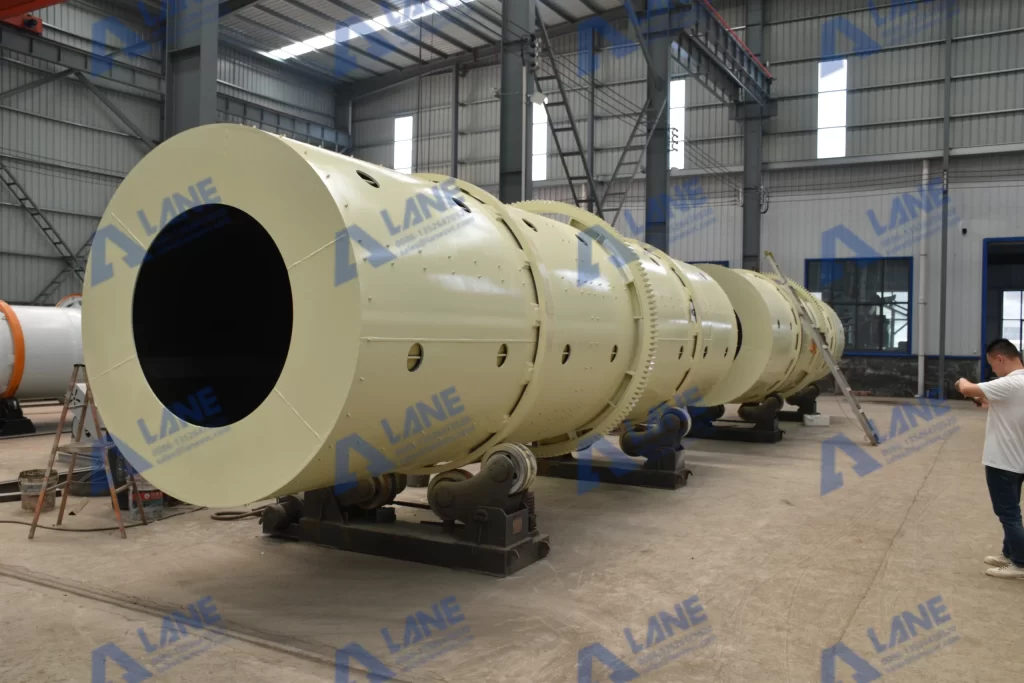
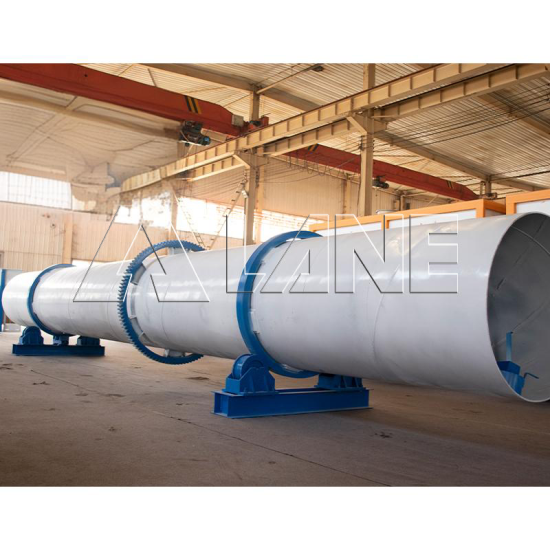
Efficient drying and cooling are essential for optimizing single superphosphate plant infrastructure for MAP and DAP fertilizer production. LANE Heavy Industry designs and manufactures advanced thermal processing units designed to reduce moisture content while preserving granule strength and nutritional value.
Key systems include:
These integrated systems improve production efficiency, reduce energy consumption, and enhance final fertilizer storage stability.
To modernize single superphosphate plant infrastructure for MAP and DAP fertilizer production, automation plays a crucial role in ensuring precision and safety in chemical reactions.
LANE intelligent control systems include:
This level of automation reduces human error, improves product consistency, and enhances plant safety.
A successful transformation of single superphosphate plant infrastructure for MAP and DAP fertilizer production requires complete engineering support. LANE Heavy Industry provides full turnkey solutions. This includes
With this comprehensive support, fertilizer producers can efficiently upgrade existing SSP facilities into modern MAP and DAP production plants with minimal downtime and maximum operational efficiency.
Both SSP and MAP/DAP has different initial process flow. This requires redesigning partial or whole production line.
Old SSP Flow:
Phosphate rock → sulfuric acid reaction → curing → granulation → drying → screening → coating → packing
New MAP/DAP Flow:
Phosphoric acid → ammonia neutralization → granulation → drying → screening → coating → packing
You can create both fertilizer by adding a separate reaction and storage section for new MAP/DAP flow and changing the granulation system. This shift is the heart of upgrading single superphosphate plant infrastructure for MAP and DAP fertilizer production.
| Process Metric | Traditional SSP Configuration | Upgraded MAP/DAP Production Line |
| Primary Reactant Acid | Sulfuric Acid (93% – 98% concentration) | Phosphoric Acid (40% – 54% P2O5Â slurry) |
| Chemical Reaction | Rock acidulation inside a continuous den | Exothermic neutralization in a pipe reactor |
| Granulation Profile | Moisture-driven agglomeration | Slurry layering with simultaneous ammoniation |
| Drying Thermal Load | Low to moderate | High thermal load requirement |
Recommended Upgrade Strategy
We experience shows that there are three main upgrade paths for converting single superphosphate plant infrastructure for MAP and DAP fertilizer production.
Option 1: Full Conversion
In this system the whole production line is transformed into new DAP/MAP fertilizer production line. This is suitable when SSP market demand has declined in your region.
Option 2: Hybrid Expansion (Recommended)
This is method we recommend the most. In this path you Maintain your existing SSP production line and add MAP/DAP production module to your existing factory. This will give you the ability to produce both fertilizers.
Option 3: Phased Upgrade
In this method you change your equipment over time to change your production line from SSP to MAP/DAP fertilizer production line. This has lower financial risk as you are not changing the whole production line together.
Each method applies differently to single superphosphate plant infrastructure for MAP and DAP fertilizer production, depending on investment capacity.
FAQ
What is the main advantage of upgrading SSP plants?
The main advantage is producing higher-value MAP and DAP fertilizers using existing infrastructure.
Is LANE Heavy Industry suitable for turnkey projects?
Yes, LANE provides complete solutions for upgrading single superphosphate plant infrastructure for MAP and DAP fertilizer production, including design, equipment, and installation.
How long does the upgrade take?
Typically, between 2 and 6 months depending on plant size.
Can existing granulators be reused?
In some cases, yes, but upgrading to LANE granulators improves efficiency and product quality.
For more details, please feel free to contact us.
Henan Lane Heavy Industry Machinery Technology Co., Ltd.
Email: sales@lanesvc.com
Contact number: +86 13526470520
Whatsapp: +86 13526470520


Copyright © Henan Lane Heavy Industry Machinery Technology Co., Ltd.
