
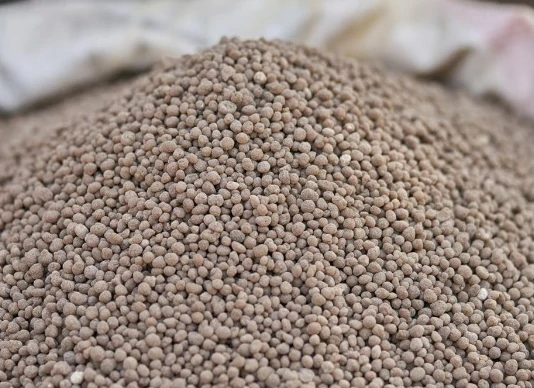
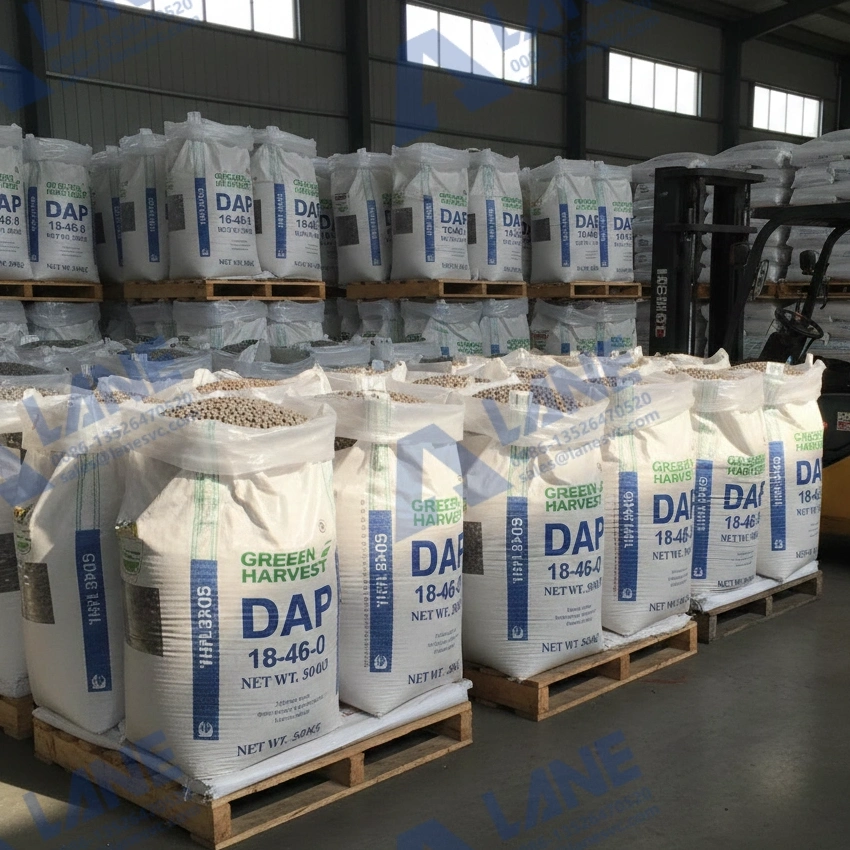
Diammonium phosphate (DAP) is one of the most widely used phosphate fertilizers in the world due to its high phosphorus and nitrogen content. However, when manufacturing this fertilizer, the producers have to manage its complex chemicals. Even when the granulation loop is running perfectly, the product leaving the plant can still be brittle and soft. This is because the invisible chemical enemy. The phosphoric acid impurities effect on DAP granule strength acts as a silent assassin during ammonization process. They turn the raw materials into thick, unmanageable sludges that ruin your pellet structure.
You cannot always buy high quality pristine, pure acid but you can control how your production line handles it. In this guide, we dive into the mechanisms behind the phosphoric acid impurities effect on DAP granule strength, discusses predictive modelling approaches and how upgrading your fertilizer production line with specialized engineering from LANE Heavy Industry’s Machinery can neutralize bad acid and deliver rock-solid DAP every single time.
Manufacturing Diammonium Phosphate (DAP) fertilizer is a straightforward process. You combine gaseous ammonia with liquid phosphoric acid to create this compound fertilizer.
The standard textbook chemical equation looks like this:
H₃PO₄ + 2NH₃ → (NH₄)₂HPO₄
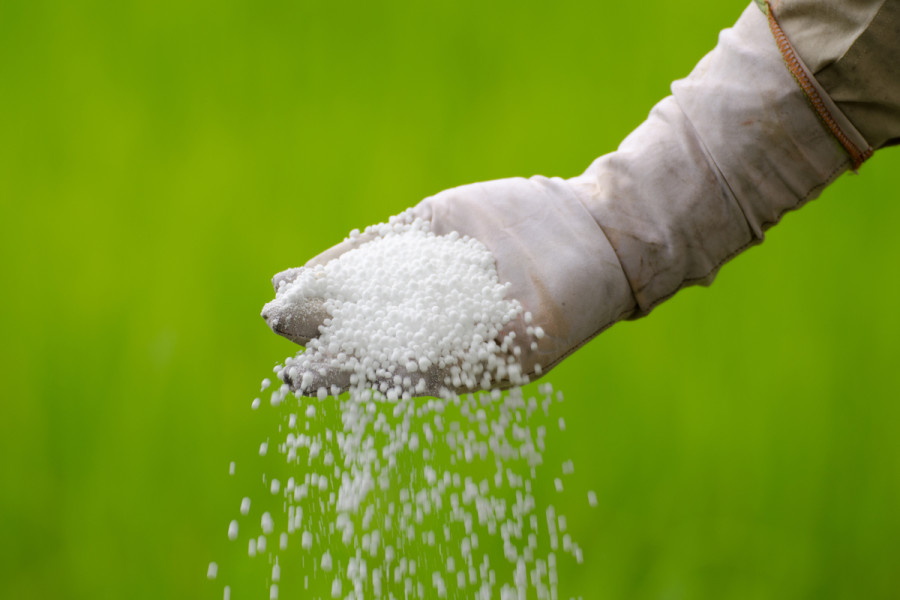
Inside an industrial fertilizer production line, this reaction happens rapidly inside a specialized mixing tank and a rotary granulator. The raw ingredients turn into a hot, bubbling liquid slurry. This slurry is sprayed into the rotary drum granulator. As the drum rotates, the wet slurry agglomerates into granules.
The 5 Pillars of Pellet Hardness
Getting the shape is only the half the battle; The granules should have strength to withstand transportation and storage. The hardness of your granules depends on five critical pillars.
All these factors can be affected by the phosphoric acid impurities effect on DAP granule strength. It has become one of the most critical issues for modern plants.
When manufacturer make Diammonium Phosphate (DAP) fertilizer, they use phosphoric acid for we-process reaction. If this acid isn’t pure, it will contain small amounts of metals like iron, aluminum, and magnesium, along with chemicals like fluorine.
The phosphoric acid impurities effect on DAP granule strength happens during the mixing stage when ammonia is added. As the mix reacts, these hidden impurities turn into thick, gooey gels.
Ultimately, this phosphoric acid impurities effect on DAP granule strength means your final product cannot handle being piled up in trucks or storage bins without shattering into dust.
The primary impurities affecting DAP granulation include:
| Impurity | Primary Mechanism | Impact on Granule Strength |
| Calcium (Ca) | Forms insoluble Ca-phosphate salts that reduce available Pâ‚‚Oâ‚… | Major cause of grade deficiency; weakens granule structure |
| Iron (Fe₂O₃) | Increases slurry viscosity; alters crystal morphology | Reduces hardness and increases caking tendency |
| Aluminum (Al) | Similar to iron; increases viscosity and reduces flowability | Decreases granule strength and spherical uniformity |
| Fluorine (F) | Forms Fe-F complexes; affects crystal size | Critical when F:Fe₂O₃ ratio < 2.3:1; lowers strength |
| Magnesium (Mg) | Less severe than Ca/Fe but affects viscosity | Moderate reduction in granule strength |
The phosphoric acid impurities effect on DAP granule strength is noticed mostly when calcium levels exceed 0.5% in the acid. Calcium precipitates as insoluble salts during ammonization, this creates weak points within the granule matrix. Similarly, iron and aluminum increase the viscosity of the ammonium phosphate slurry.
Predicting the Damage Before It Happens
To keep a factory running smoothly, manufacturer can use simple mathematical formulas to track the phosphoric acid impurities effect on DAP granule strength. By measuring how much iron or aluminum is in the incoming acid, you can predict exactly how weak the fertilizer pellets will be before they even enter the drying drums.
If the incoming acid has too many impurities, plant operators can immediately adjust their recipe. They can blend them in cleaner acid or change the mixing ratio to protect the final product.
Industrial Mitigation Strategies
Acid Clarification and Filtration: Partial clarification of phosphoric acid before reaction process can reduce calcium and suspended solids. Maintaining filter cloths and operating the acid unit at lower temperatures improves filtration efficiency. This directly mitigates the phosphoric acid impurities effect on DAP granule strength by removing the primary source of grade deficiency.
Optimizing Fluorine-doped hematite (F:Fe₂O₃) Ratio: Ensuring the
Ensuring the Fluorine-doped hematite (F:Fe₂O₃) weight ratio exceeds 2.3:1 promotes coarse crystal formation and enhances granule strength. When fertilizer ratios fall below 2.0:1, additives like ammonium fluoride (NH₄F) can be introduced to adjust fluorine levels. This strategy is essential for controlling the phosphoric acid impurities effect on DAP granule strength in high-iron acid streams.
Retention Time Control: Reducing retention times in the pre-neutralizer and ammoniator-granulator at lower Fluorine-doped hematite (F:Fe₂O₃) ratios minimizes the formation of weak, fine crystals. This approach is effective when N:P mole ratios are maintained at 1.4:1 or higher. Proper retention time management directly addresses the phosphoric acid impurities effect on DAP granule strength.
Pipe Reactor Replacement: Replacing the pre neutralizer with a pipe reactor discharges the viscous slurry directly onto the granulator bed. This improves granule uniformity and strength. This modification reduces the phosphoric acid impurities effect on DAP granule strength by minimizing slurry aging and viscosity buildup.
Iron and Aluminum Removal Purification: Purification processes using Kâ‚‚SOâ‚„ for iron removal and NHâ‚„F for aluminum/magnesium removal can achieve removal rates of 30%, 31%, and 18%, respectively. Purified acid meets premium grade DAP production requirements.
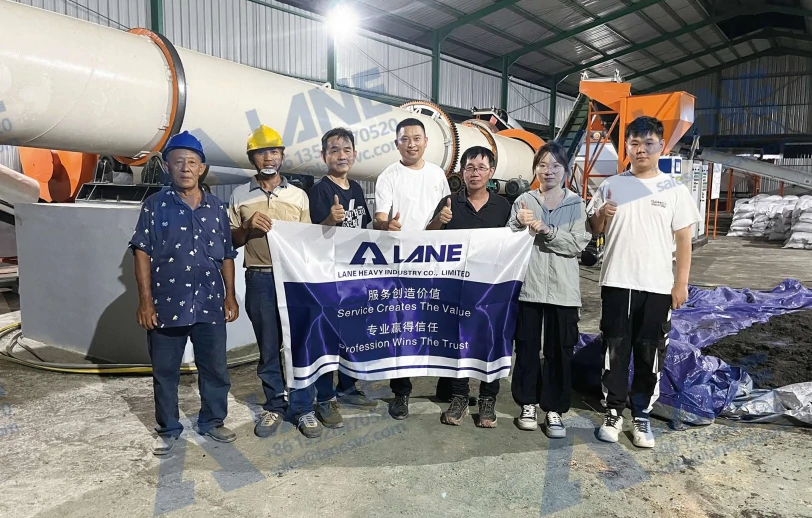
The fertilizer production line from LANE Heavy Industry’s incorporates pipe reactor which can be attached to rotary drum granulator. The automated pre neutralizer system is designed to handle impure phosphoric acid properly. The key feature include:
These technologies directly mitigate the phosphoric acid impurities effect on DAP granule strength by maintaining optimal process conditions despite raw acid variability. Our automation platform ensures that the Fluorine-doped hematite (F:Fe₂O₃) ratio and N:P mole ratio remain within target ranges. This preserves mechanical integrity.
Q1: What is the most critical impurity affecting DAP granule strength?
Answer: Calcium is the major source of grade deficiency and weakens granule structure, making it the most critical impurity affecting the phosphoric acid impurities effect on DAP granule strength.
Q2: How does the F:Fe₂O₃ ratio influence granule strength?
Answer: When the F:Fe₂O₃ weight ratio exceeds 2.3:1, coarse Fe-F crystals form, improving strength. Below 2.0:1, fine crystals create weak granules, intensifying the phosphoric acid impurities effect on DAP granule strength.
Q3: Can purification remove impurities effectively?
Answer: Yes, purification processes achieve 30% iron removal, 31% aluminum removal, and 18% magnesium removal, eliminating the phosphoric acid impurities effect on DAP granule strength for high-class DAP production.
For more details, please feel free to contact us.
Henan Lane Heavy Industry Machinery Technology Co., Ltd.
Email: sales@lanesvc.com
Contact number: +86 13526470520
Whatsapp: +86 13526470520
Copyright © Henan Lane Heavy Industry Machinery Technology Co., Ltd.
