
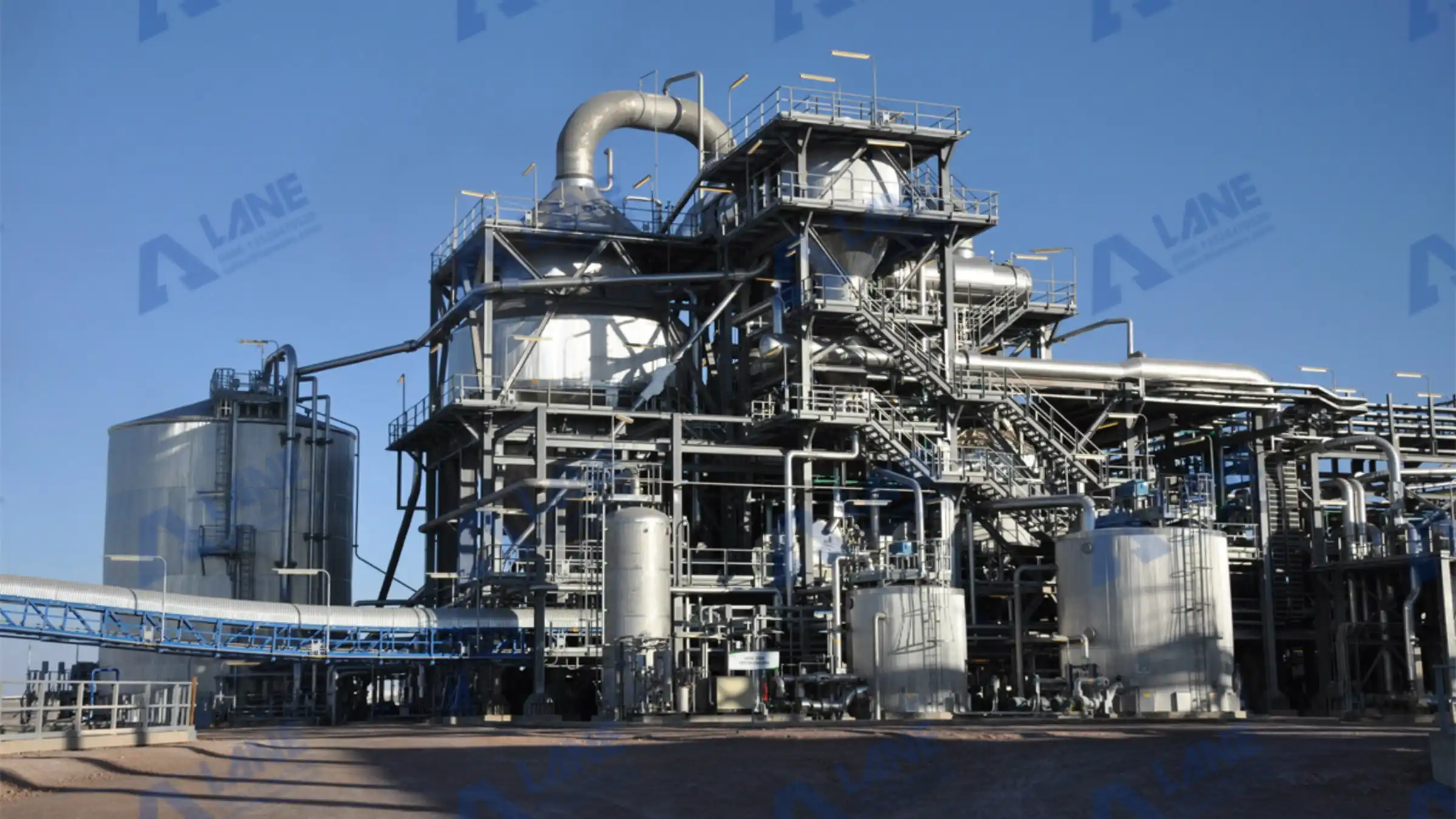
The demand for the fertilizer is getting higher as the agriculture industry is intensifying the use of fertilizers. Among the most popular fertilizer, Monoammonium Phosphate (MAP) and Diammonium Phosphate (DAP) is consider the backbone of modern crop nutrition. Entering the Monoammonium Phosphate (MAP) and Diammonium Phosphate (DAP) markets was viewed exclusively for billionaires. Entering the market meant confronting intimidating multi-million-dollar chemical towers and capital risks. With modern production lines you don’t need a mega complex to capture high-margin fertilizer markets. A low investment MAP and DAP plant offers an attractive opportunity for investors who wants to enter this market.
By utilizing smart engineering, modular designs, and optimized equipment’s from LANE Heavy Industry, investors can build a low investment MAP and DAP plant. This article explains everything from production processes, equipment requirements, investment considerations of low investment MAP and DAP plant.
MAP and DAP both have the similar production process. They are made by reacting phosphoric acid with ammonia. The differenced between them is in nutrient ratio and agronomic use. Monoammonium Phosphate (MAP) contains more phosphorus and less nitrogen, while DAP contains a higher nitrogen content. They are favored for base fertilization and crop establishment. Because both products are in constant demand, a plant capable of producing both are commercially attractive.
MAP is often used when crops need less nitrogen and more phosphorus, while DAP is valued for strong early effect and broad field application. This versatility makes a combined low investment MAP and DAP plant appealing for investors who are seeking flexibility and diversification.
Why Low Investment Matters
Low investment doesn’t mean low quality or compromising product. A low investment MAP and DAP plant is built around simpler more modern layout, reduced civil work, optimized utility systems, and customized equipment with efficiency as core value. This approach lowers the barrier to entry while delivering consistent granules that meet commercial standards.
Lower capital spending also improves financial resilience. Investors can start with small production line, validate demand, build relationships with distributors, and expand later. This strategy reduces risk for new manufacturer more effectively than launching a large plant immediately.
Achieving a low-cost setup does not mean buying cheap, unreliable machinery that breaks down every few months. In manufacturing, downtime is the ultimate profit killer.
Instead, a low investment MAP and DAP plant achieves cost efficiency through:
This is where low investment MAP and DAP plant from LANE Heavy Industry excels. We offer tailored machinery that balances affordability with industrial-grade durability.
A seamless production line relies on a synchronized sequence of material preparation, reaction, granulation, and post-processing. Here is how LANE engineers and designs a low investment MAP and DAP plant.
The production line begins with the preparation of the raw materials. phosphoric acid and ammonia are first reacted in pipe reactor systems or localized pre-neutralization tanks. They effectively reacted into MAP fertilizer. This slurry can be further refined into DAP by adding more ammonia in a controlled process.
Granulation is necessary to maintain the quality and get premium price for the MAP and DAP fertilizer. LANE Heavy Industry’s Rotary Drum Granulator is the ideal choice for MAP and DAP production.
The chemical slurry or melt is sprayed on to the rotary drum. The materials agglomerate into dense, spherical granules as it rotates. LANE’s drum granulator features specialized rubber liners or acid-resistant stainless-steel interiors. It reduces internal wear from acidic compounds.
The granules are wet when they come out from the granulator. It must be dried to less that 2% moisture to prevent caking and dust formation. The rotary drum uses hot air from blast furnace, to dry the granules gently without damaging the nutrient. After that the granules are sent to the Rotary cooler, where ambient air is used to reduce the temperature to the room temperature. This step increases the hardness and prepares the granules for packaging.
LANE vibrating screen that separates the granules according to the size. The on-size granules are sent to the coating machine. the oversized and fines are crushed and sent back to the granulator.
The manufacturer can use this stage to implement slow release, micronutrient, or anticaking coating to the granules. LANE Rotary Coating Machine can apply micro-layer of oil and water-soluble powder. This process seals the pores of the MAP and DAP granules. The final stage of the NOP Fertilizer Granulator production plant is the automated packaging section. LANE Heavy Industry supplies integrated Automatic Quantitative Packaging Scales equipped with pneumatic bag-clamping systems, precise PLC controls, and automated sewing/heat-sealing units.
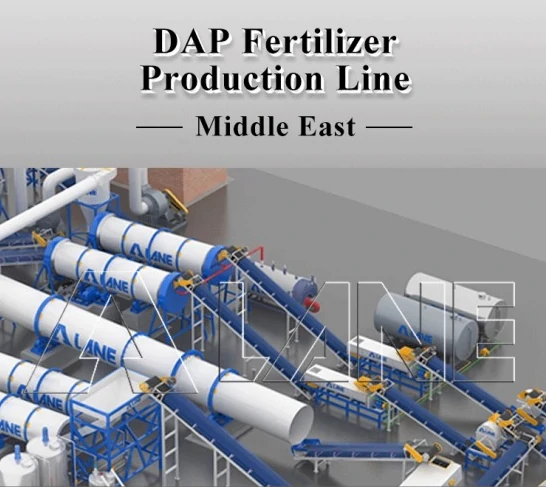
If you are ready to move forward with a low investment MAP and DAP plant, follow the strategic roadmap to avoid regulatory and operational roadblocks:
Step 1: Secure Raw Material Channels
The profitability of the plant relies heavily on the price spread between your raw material and finished granules. You must ensure stable, local or import channel for pure Phosphoric Acid (P2O5) and Ammonia (NH3). If you can’t find acid source, consider a line configuration that utilize solid monoammonium phosphate powder as a base for compound NPK re-granulation.
Step 2: Plan Environmental Compliance
Phosphate processing generates fluorine gases, ammonium vapors, and airborne dust. LANE Heavy industry designs and implement machines made to solve these environmental problems. We integrate cyclonic dust collectors, water scrubbers, and tail-gas absorption towers into the production line. We ensure that your local zoning allows for a chemical processing footprint.
Step 3: Optimize Your Civil Engineering Footprint
A massive hidden cost of factory setup is your construction cost. Our production line requires less vertical clearance and heavy structural framework than vertical tower systems. This cuts your initial construction costs.
Step 4: Choose the Right Machinery Partner
Do not just buy standalone machines from vendors. Work with manufacturer like LANE Heavy Industry. We provide complete, end-to-end technical support, from process flow layout designs to final equipment commissioning and trial runs.
A low investment MAP and DAP plant is a phosphate fertilizer production facility designed to minimize initial capital expenditures while maintaining efficient production and product quality.
Yes. With appropriate process control and adjustments to the ammonia-to-phosphoric acid ratio, a single production line can produce both MAP and DAP fertilizers.
Many investors begin with capacities ranging from 30,000 to 50,000 tons per year to balance investment cost and production efficiency.
Key equipment includes reactors, granulators, rotary dryers, coolers, screening machines, conveyors, and packaging systems.
For more details, please feel free to contact us.
Henan Lane Heavy Industry Machinery Technology Co., Ltd.
Email: sales@lanesvc.com
Contact number: +86 13526470520
Whatsapp: +86 13526470520
Copyright © Henan Lane Heavy Industry Machinery Technology Co., Ltd.
