
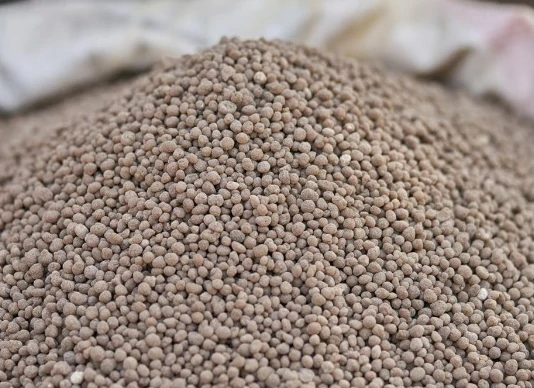
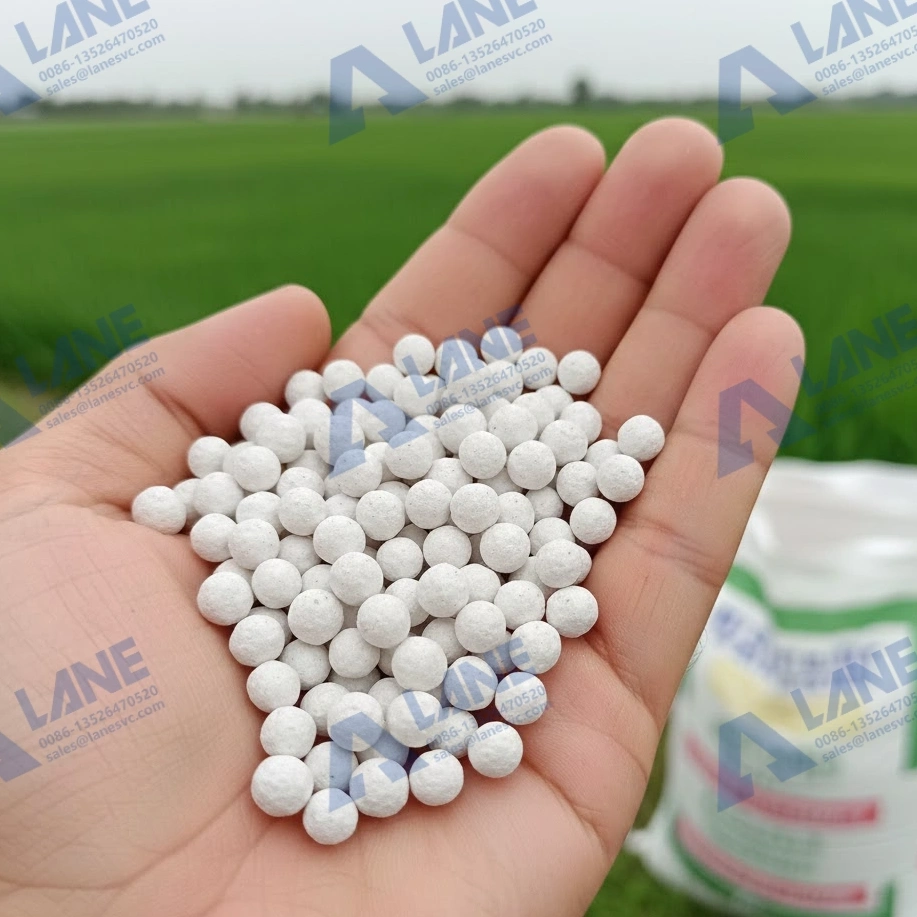
Monoammonium Phosphate (MAP) is one of the most popular fertilizers which provides both Nitrogen (N) and Phosphorus (P). This fertilizer has excellent physical properties and water solubility, and is compatible with different soil type and properties. Profitability of this fertilizer depended on the machinery and efficient MAP fertilizer manufacturing plant layout. A well-structured layout directly effects the operational costs, energy consumption, operational safety, and product quality.
Monoammonium phosphate (MAP) fertilizer production involves chemical reactions, granulation, drying, cooling, screening, and packaging processes. It requires proper machinery and workflow that can handle the process. An optimized MAP fertilizer manufacturing plant layout ensures proper flow of solid and fluid raw materials through chemical reaction, granulating, drying, screening, and packaging stages. With the advance production machinery from LANE Heavy Industry, fertilizer manufacturers can build intelligent, scalable, and cost-effective production lines.
An industry scale production line requires proper handling of logistics and thermodynamic efficiency. To design an industry-leading MAP fertilizer manufacturing plant layout, engineers has to consider several principles. The goal of the layout is to move tons of raw materials efficiently through the production line in shortest physical distance while consuming minimal electrical energy.
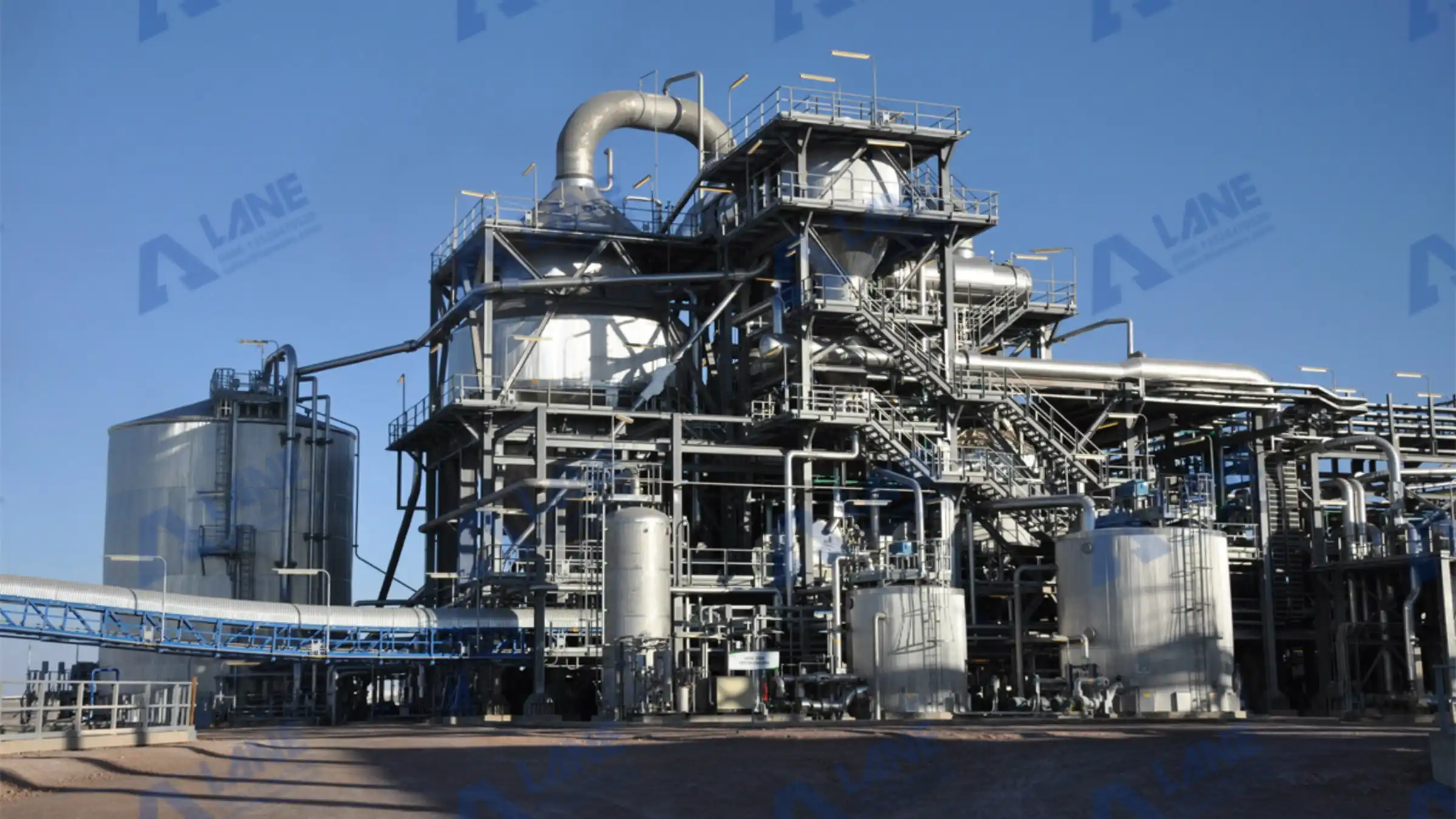
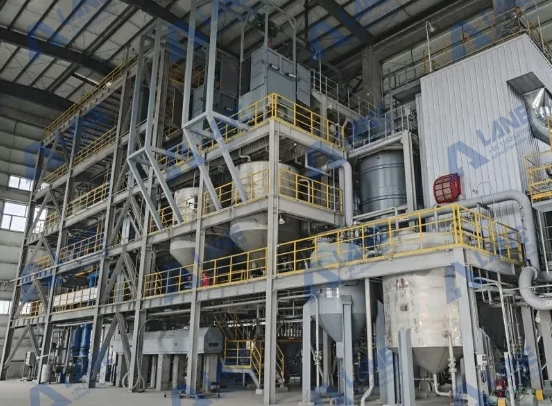
A standard MAP fertilizer manufacturing plant layout by LANE Heavy Industry is designed to ensure smooth material flow, production efficiency, and energy savings in mind. The entire production plant is logically designed and follows a planned flow diagram. From raw material intake to packaging system everything is a controlled process.
Storage Section: The raw materials area is positioned near the factory entrance. This will help faster unloading and storage of the raw material. This area will include phosphoric acid storage tanks, ammonia storage systems, and feeding pumps with precise metering devices. This ensures that raw materials are safe and free from contamination and can be safely delivered into the production system without delay.
Reaction and Mixing Section: This stage is the core of the MAP production line. This area needs proper spacing and cleanliness. This area contains, neutralization reactor, mixing tanks, and a centralized control system. The raw materials go through controlled chemical reaction to form uniform slurry in this stage. Our advance reaction systems are equipped with sensors, heating, and high sheer variable stirring system which ensure stable operation, accurate chemical balance, and consistent product quality.
Granulation Section: After reaction the reacted slurry is sent to the granulation section. This is placed on the center of the MAP fertilizer manufacturing plant layout. This section includes disc or drum granulators, feeding systems, and binder spray systems.
Drying and Cooling Section: The wet granules enter drying and cooling section after granulation. This area consumes most energy of the MAP fertilizer manufacturing plant layout. The machines in this area are thermally insulated and isolated from other production areas to prevent heat interference. This section consists of rotary dryers, rotary coolers, and heat source systems like gas stove or burner. The heater reduces the moister of the granules and stabilize the hardness, ensuring the final product meets the quality standards.
Screening and Coating Section: The cooled granules go through the screening process where vibrating screening machine or Rotary screening machine are used to separate the granules depending on the particle size. The oversized and fines are sent to crusher and recycle back to the granulation line. The on-size granules move through the coating machine where producer can add extra micronutrient or improve product storage stability.
Packaging Section: Finally, the last section of the production line is the packaging section. It is located near the end of the Wearhouse or dispatch area. This area includes fully automatic packaging machine with weighting system and palletizing systems.
This arrangement allows finished MAP fertilizer to be efficiently packaged, stored, and prepared for shipment, completing the production cycle in a streamlined and organized manner.
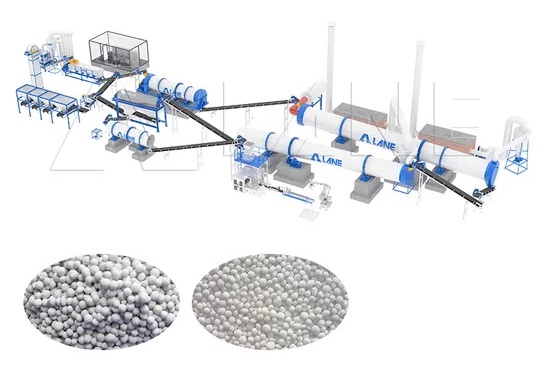
Henan Lane Heavy Industry Machinery Technology Co., Ltd is a leader in the heavy industry and agricultural machinery sector. We have over 20 years of experience in the industry. Our product includes complete organic, NPK, compound, and BB fertilizer production lines, all backed by ISO9001-2000 international quality certification.
For MAP production, LANE delivers fully integrated systems that covers everything from plant layout design and 2D engineering drawings to equipment manufacturing, overseas installation guidance, and after-sales training. Our key advantage include:
Whether you are building a new facility or upgrading an existing one, LANE’s engineering team provides the expertise and equipment needed to create a high-performance, future-ready MAP production line.
Ammonia (anhydrous NH₃) and phosphoric acid (H₃PO₄, 40–55% P₂O₅).
Double roller granulation and disc granulation are most common, achieving 90–95% granulation rates.
Yes—2–5 mm is standard, but LANE can customize granule size based on market needs (e.g., Brazil prefers 2–4 mm).
Yes, LANE offers both on-site installation guidance and remote technical support.
For more details, please feel free to contact us.
Henan Lane Heavy Industry Machinery Technology Co., Ltd.
Email: sales@lanesvc.com
Contact number: +86 13526470520
Whatsapp: +86 13526470520
Copyright © Henan Lane Heavy Industry Machinery Technology Co., Ltd.
