
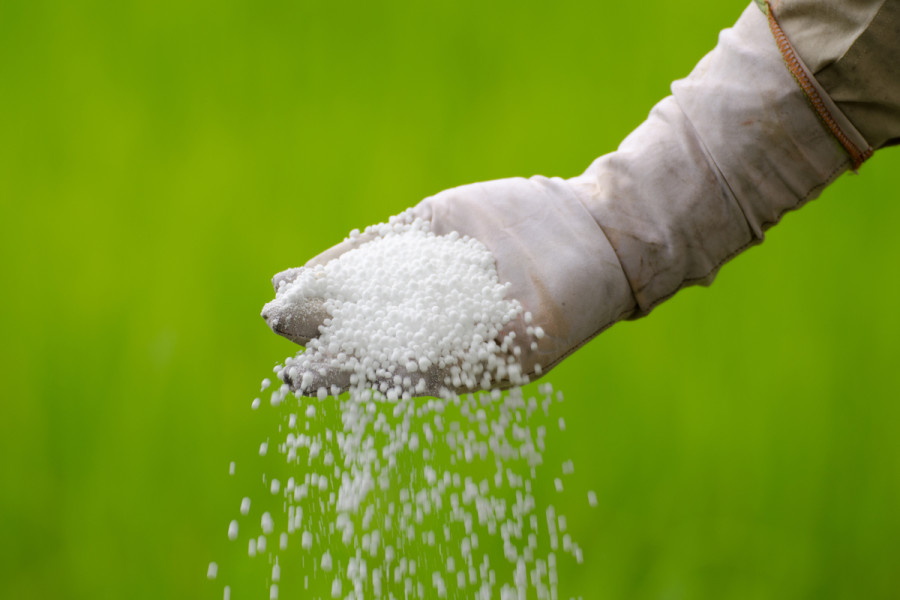
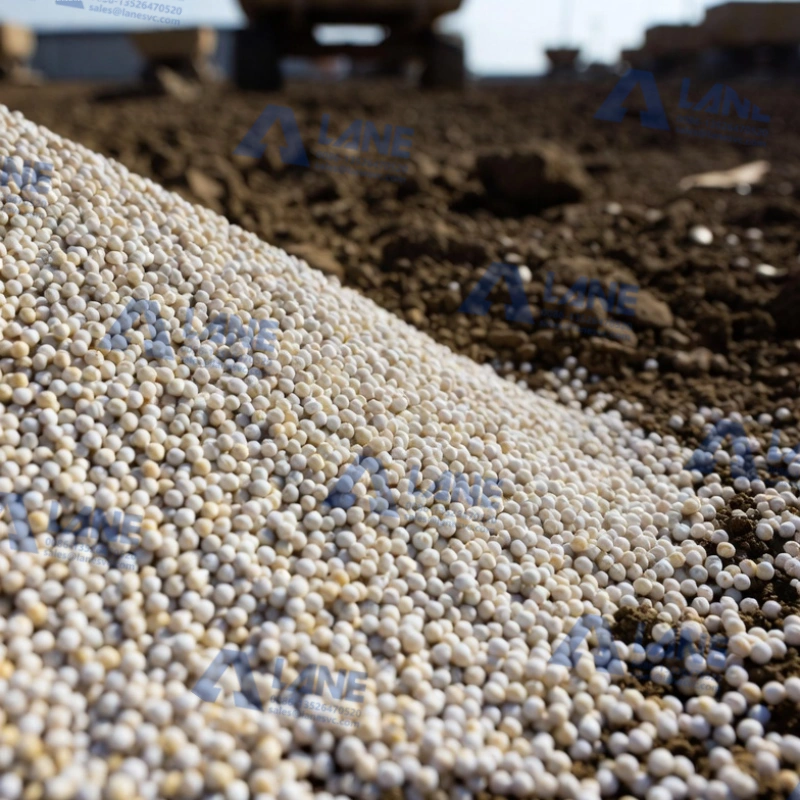
Monoammonium Phosphate (MAP) stands as a cornerstone of high-efficiency fertilization because of its high concentration of phosphorus and nitrogen. The quality of MAP is directly dictated by the inputs used during its synthesis. However, producing premium-grade MAP is not just about having the right machinery; it’s about synergy between technical specifications and the hardware that processes them. Raw materials for MAP production are the single most important factor that determines the final granule quality. Understanding their purity, chemical composition, and specification is not just a technical requirement. It is the chemical backbone of successful fertilizer manufacturing.
Understanding the raw materials for MAP production is the first step in ensuring a high-value end product that meets international standards. Manufacturers using an advanced MAP production line from LANE Heavy Industry Machinery can control the raw materials for MAP production to ensure optimal reaction efficiency, product quality, and long-term operational stability.

The production of MAP involves the neutralization of phosphoric acid with anhydrous ammonia. The simplified reaction of phosphoric acid (H₃PO₄) with ammonia (NH₃) is:
NH₃ + H₃PO₄ → NH₄H₂PO₄
This reaction highlights why the raw materials for MAP production must meet strict chemical standards. Any impurities or inconsistency directly affect:
Therefore, it is essential to select high-quality raw materials for MAP production to produce premium-grade fertilizers.
2.1 Phosphoric Acid
Phosphoric acid is the primary phosphorus source and is the primary raw material for MAP production.
Key specifications:
Impact on production:
Low-purity phosphoric acid introduces impurities such as iron (Fe), aluminum (Al), magnesium (Mg), and fluorine (F) which can:
LANE’s reaction system and production lines are designed to handle varying acid qualities, but premium-grade granules still depend on high-grade raw materials for MAP production.
2.2 Ammonia (NH₃)
As the nitrogen source, ammonia must be handled with precision. High-purity anhydrous ammonia (99.5% or higher) is preferred.
Key specifications:
Impact on production:
Impure ammonia can:
Maintaining ammonia quality is one of the major priorities when storing and using raw materials for MAP production in continuous production systems.
2.3 Additives and Fillers
While not always required, additives are often used to improve product quality.
Examples include:
Although they are not in the main production of MAP fertilizer, these materials still fall under the broader category of raw materials for MAP production. These materials influence handling and storage properties.
3.1 Chemical Purity
The presence of heavy metals, organic matter, or insoluble solids in raw materials for MAP production can have cascading negative effects. High chemical purity ensures:
Impurities such as iron, aluminum, and magnesium can interfere with crystallization and granulation.
3.2 Physical Purity
Physical characteristics of the raw materials for MAP production also matter. Technicians must always carefully check:
Poor physical quality can lead to:
Producers must also put strict limits on Fluorine (<2%) and Silica to prevent scaling in heat exchangers and pipework.
3.3 Environmental Compliance
Modern fertilizer plants must comply with environmental regulations. By implementing a LANE MAP production line and sourcing high-quality raw materials for MAP production helps:
LANE’s systems integrate dust collection and waste treatment, but raw material quality remains the first line of environmental control.
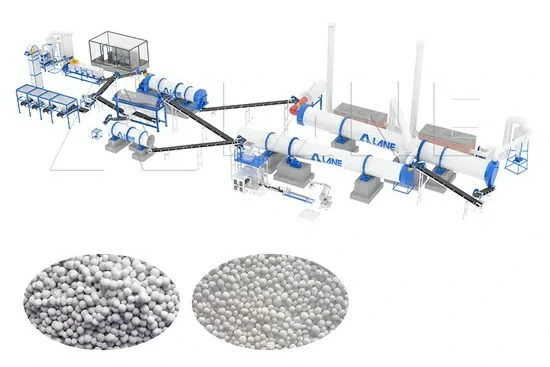
LANE Heavy Industry Machinery offers advanced MAP fertilizer production lines designed to maximize the efficiency of raw materials for MAP production.
4.1 Intelligent Feeding Systems
Accurate dosing systems ensure:
4.2 Efficient Reactor Design
The reactor is the heart of MAP production. LANE’s reactors:
Granulation transforms slurry into uniform fertilizer granules. LANE provides rotary drum granulators, double roller granulators, and disc granulators for granulation. High-quality raw materials for MAP production enable:
4.4 Drying and Cooling Systems
LANE rotary dryers and coolers ensure:
Even the best equipment cannot compensate for poor raw materials.
Always try to get the raw material from the same supplier. Different suppliers produce raw materials of different quality which cause formulation changes.
5.1 Variability in Phosphoric Acid Supply
Different suppliers produce varying acid qualities, leading to:
5.2 Impurities in Ammonia
Different trace contaminants can:
5.3 Supply Chain Issues
Try to get your raw materials from local sources. Unstable supply of high-quality raw materials for MAP production can disrupt production schedules.
To ensure optimal performance:
By following these practices, manufacturers can fully leverage their raw materials for MAP production.
7.1 Cleaner Production Inputs
There is a growing shift toward:
7.2 Digital Quality Monitoring
Smart factories now use:
This allows better management of raw materials for MAP production.
7.3 Resource Efficiency
Manufacturers are focusing on:
The success of MAP fertilizer production depends on the chemistry of the raw materials for MAP production and the engineering of the machinery that processes them. From phosphoric acid purity to ammonia consistency, every input plays a critical role in determining the final product’s quality, efficiency, and environmental impact. With advanced equipment from LANE Heavy Industry Machinery and a strong focus on raw material optimization, manufacturers can achieve superior product quality and maintain sustainable operations.
Q: Can I use low-grade phosphoric acid for MAP production?
A: Yes, but it requires a robust granulation system. Lower-grade raw materials for MAP production often result in higher sludge and viscosity, which requires the specialized handling capabilities found in LANE Heavy Industry’s rotary drum systems.
Q: What are the main raw materials for MAP production?
A: The primary raw materials for MAP production are phosphoric acid and ammonia, with optional additives for improving product quality.
Q: Why is purity important in MAP production?
A: Purity ensures complete chemical reactions, stable nutrient content, and high-quality fertilizer granules.
Q: Can low-quality raw materials affect production?
A: Yes, poor-quality raw materials for MAP production can lead to inefficiency, equipment damage, and off-spec products.
For more details, please feel free to contact us.
Henan Lane Heavy Industry Machinery Technology Co., Ltd.
Email: sales@lanesvc.com
Contact number: +86 13526470520
Whatsapp: +86 13526470520
Copyright © Henan Lane Heavy Industry Machinery Technology Co., Ltd.
