
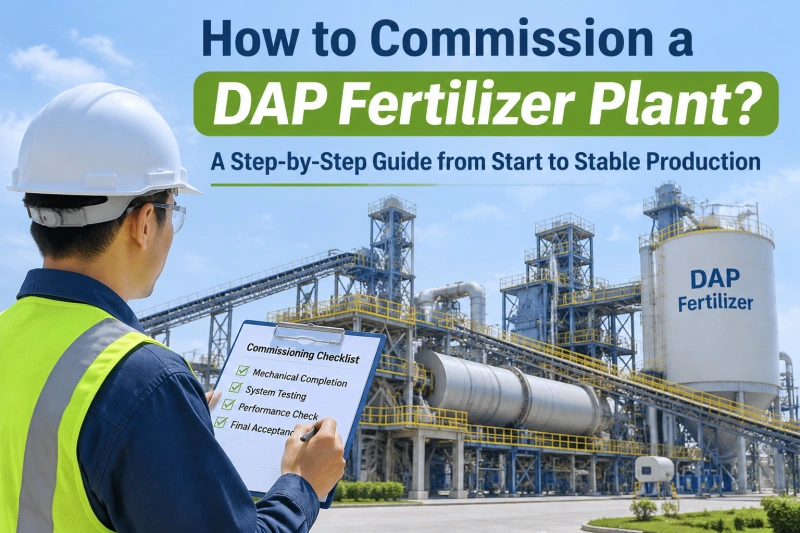
Completing the installation of a DAP fertilizer plant does not mean the factory is ready to produce. A motor may run, a rotary drum may turn, and a conveyor may move, but these individual results do not prove that the complete process can operate safely and continuously. In a DAP plant, the reaction section, slurry transfer, granulation, drying, cooling, screening, recycle, and environmental-control systems must work together.
From an engineering perspective, DAP fertilizer plant commissioning is a controlled process of confirming that the plant has been installed correctly, that each system performs as designed, and that the complete production line can meet its operating and product requirements. The work should move through defined stages. Each stage has its own checks, records, and release conditions. Moving too quickly can transfer unresolved problems into the next stage, where they are often harder and more expensive to correct.
This guide explains how engineers organize DAP fertilizer plant commissioning, from the first engineering handover to the final performance test. The exact procedures must always be adapted to the approved design, process route, equipment manuals, and site safety requirements. A well-organized commissioning process begins long before the first production material enters the plant.
Before field testing begins, the engineering and construction teams need to establish a common understanding of what has been built. Before field testing begins, the first task in DAP fertilizer plant commissioning is to confirm that the latest approved documents are available and consistent with the installation.
The commissioning team should review the process flow diagram (PFD), piping and instrumentation diagrams (P&IDs), equipment data sheets, electrical drawings, instrument list, control descriptions, and relevant vendor manuals. These documents should reflect the installed plant, including approved changes made during construction. If a field modification is missing from the drawings, the team may test the wrong line, overlook an isolation point, or misunderstand an interlock.
Next, divide the plant into practical systems and define their boundaries. Typical systems include raw-material storage and feeding, acid and ammonia handling, reaction and slurry transfer, granulation and recycle, drying and cooling, screening and product handling, and dust collection or gas treatment. The division should follow the actual process connections and control logic, not simply the names of individual machines.
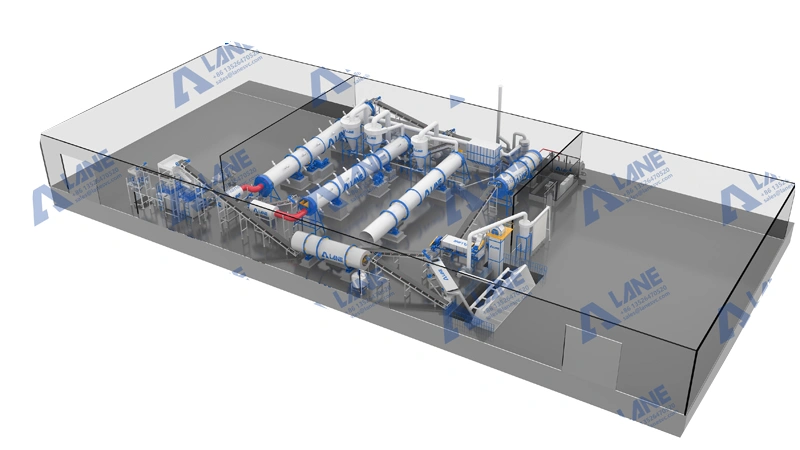
A commissioning plan for DAP fertilizer plant commissioning should identify the responsible person for each system, the required tests, the work sequence, safety controls, acceptance criteria, and the method for recording outstanding issues. A system checklist is useful only when it states what evidence is required for completion. “Checked� is not enough; the record should show the test performed, the result, any defect found, and how it was closed.
For DAP fertilizer plant commissioning, this preparation also helps identify interfaces between different engineering disciplines. A process line may be mechanically complete while its control logic, electrical connections, or supporting utilities are not yet ready. These dependencies should be identified before the team schedules integrated testing.
Release condition: The team has agreed on system boundaries, current engineering documents, assigned responsibilities, approved test procedures, and a clear list of prerequisites. These agreed documents and responsibilities give DAP fertilizer plant commissioning a traceable basis and help the team decide when each system is ready for testing.
During DAP fertilizer plant commissioning, mechanical completion means that construction work on a defined system has reached the condition required for pre-commissioning. It should be verified systematically rather than assumed from a visual walk-through.
Start with the civil and structural interfaces. Check that foundations, support structures, access platforms, anchor bolts, and equipment elevations match the approved drawings. Rotating equipment needs particular attention to alignment, coupling connections, base condition, and the freedom of movement specified by the manufacturer. For rotary equipment, inspect the installation of riding rings, support rollers, and thrust rollers, together with the relevant clearances and lubrication arrangements.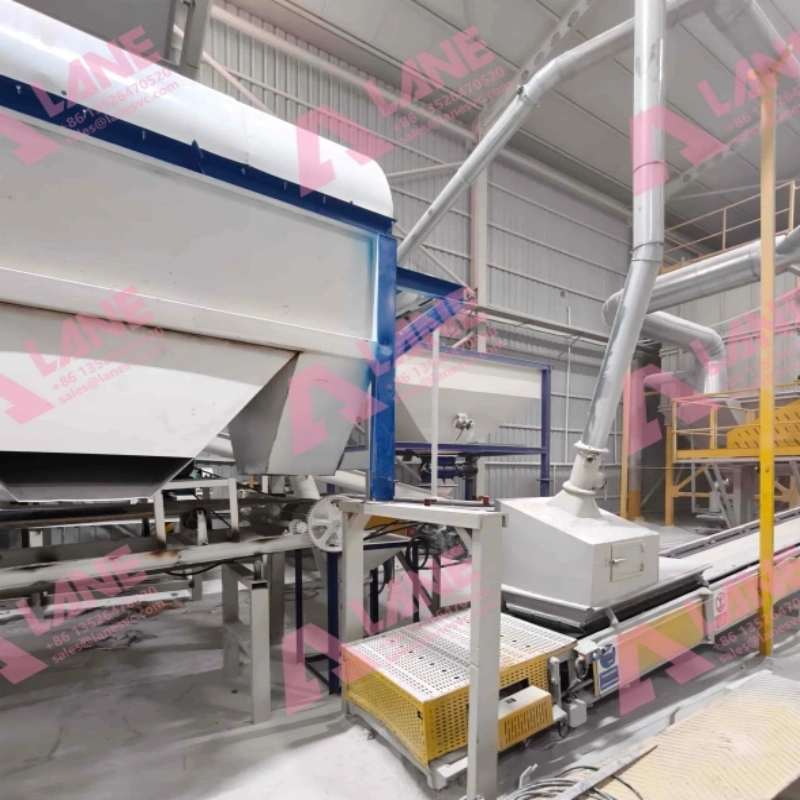
As part of DAP fertilizer plant commissioning, check the process piping as a connected system rather than treating each pipe section as an isolated item. Confirm line identification, flow direction, supports, valves, flange connections, and accessibility for operation and maintenance. Pressure testing, flushing, cleaning, and reinstatement must follow the approved test package and the requirements for the particular service. Acid and ammonia lines must not be treated as ordinary water lines: their inspection, testing, isolation, and cleaning requirements need to follow the project design and applicable safety procedures.
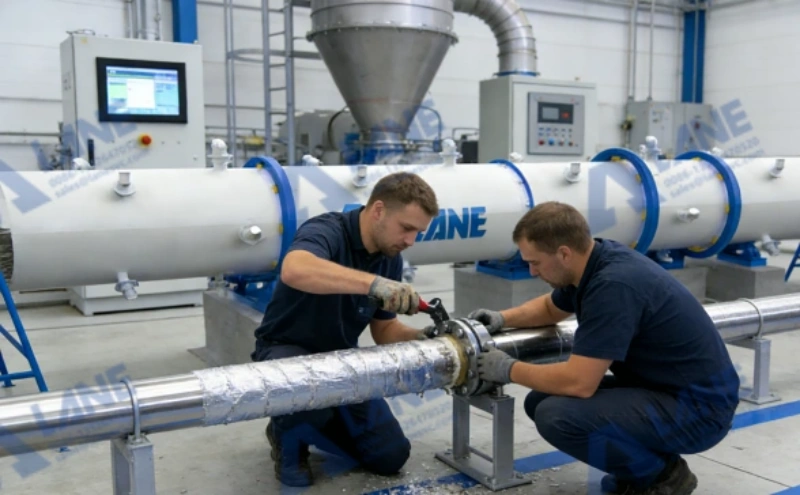
Mechanical completion also depends on the interfaces with electrical, instrumentation, and safety systems. Motors should be correctly installed and connected; cables, earthing, local isolators, control panels, and instrument connections should be checked against the drawings. Guards, emergency stops, alarms, access routes, fire protection, and any specified gas-detection equipment must be in place before the relevant tests begin.
A mechanical completion checklist helps engineers control DAP fertilizer plant commissioning by recording system defects, corrective actions, and release status. Classify findings by severity. Items that affect safety, equipment integrity, or the ability to test must be closed before release. Minor outstanding work may be recorded for later completion only when it does not compromise the next activity and is formally accepted by the responsible team.
In DAP fertilizer plant commissioning, this stage is particularly important because the reaction and material-handling sections contain different process and safety requirements. Treating the whole factory as one general installation checklist can make it easy to miss an incomplete interface between two systems.
Release condition: Construction checks are signed off, required test records are available, safety-critical defects are closed, and the system is formally released for pre-commissioning.
Pre-commissioning is an essential stage of DAP fertilizer plant commissioning because it turns a mechanically complete installation into a system ready for controlled operation.It includes cleaning, electrical checks, instrument verification, control-loop tests, and individual equipment runs. The order matters: do not energize or operate equipment until the required mechanical, electrical, and safety prerequisites have been confirmed.
First, remove construction debris and foreign material from equipment, hoppers, ducts, tanks, and accessible pipework. Depending on the service and design, cleaning may involve vacuuming, flushing, blowing, or another approved method. Water must not be introduced automatically into every line or item of equipment. The method must be compatible with the material, process medium, lining, and downstream system. Temporary strainers and blinds should be managed through a controlled register so that temporary items are removed or reinstated correctly before operation.
During DAP fertilizer plant commissioning, electrical and instrumentation tests should follow the approved inspection and test plans. Typical checks include motor insulation and earthing, cable termination, instrument calibration, signal continuity, control-panel function, and verification of alarms and trips. The team should confirm that field readings are correctly displayed in the control system and that the control-room indication corresponds to the actual field instrument.
Where the equipment design permits, DAP fertilizer plant commissioning should include individual no-load runs before integrated system testing begins. Record relevant observations such as motor current, bearing temperature, vibration, unusual noise, and direction of rotation.
For a granulation drum, for example, the engineering check is not simply whether the drum turns. The team should verify smooth drive operation, the condition and contact of the support components, abnormal movement, and any temperature or vibration trend that requires investigation. The manufacturer’s instructions determine the permitted test duration and operating limits.
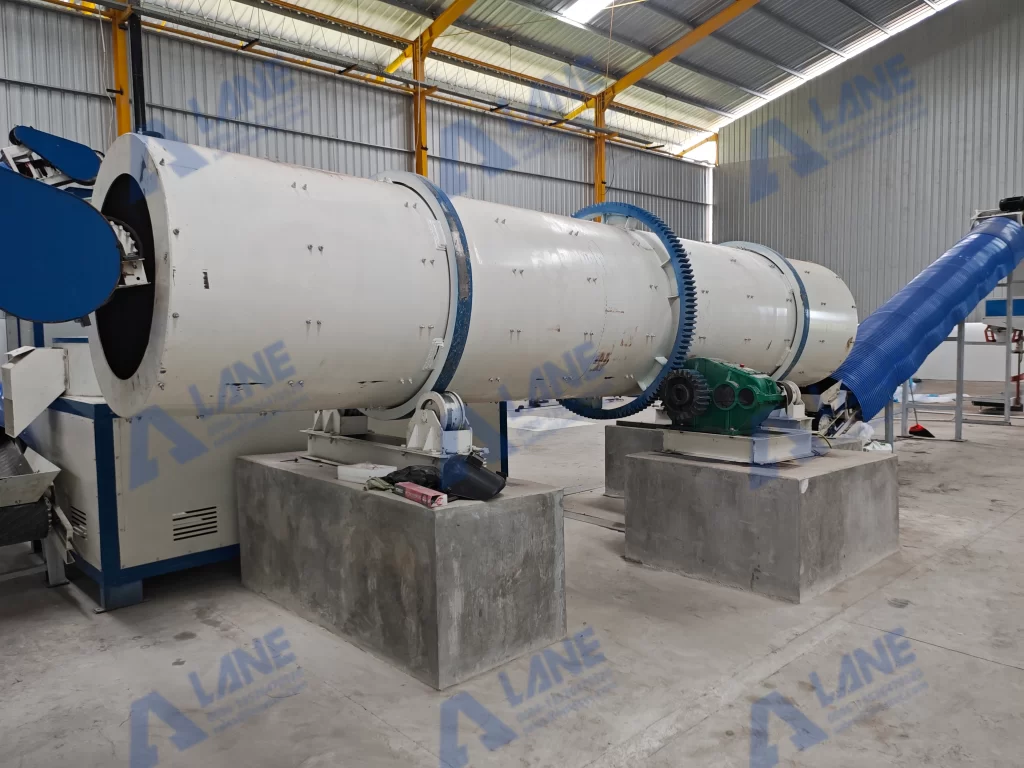
The same principle applies to instruments and protection functions: a signal appearing on a screen does not prove that the complete control action works. Where required, test the full loop from field device to controller and final element, including the alarm, trip, or interlock response.
During DAP fertilizer plant commissioning, individual equipment tests should produce records that can be checked before the next stage. If a motor shows abnormal current or a rotating component develops unusual vibration, the cause should be investigated rather than allowing the issue to carry forward into integrated operation.
Release condition: Cleaning and inspection records are complete, individual equipment tests are accepted, instrument and control-loop checks are documented, and required protection functions have passed their approved tests.
Cold commissioning checks whether the plant’s systems can work together before the process is started with production chemicals. This is one of the most important stages because many problems are not visible during individual equipment tests.
A conveyor can run correctly on its own but fail to receive material from an upstream feeder. A screen can operate normally while the recycle route is incorrectly connected or unable to handle the returning load.
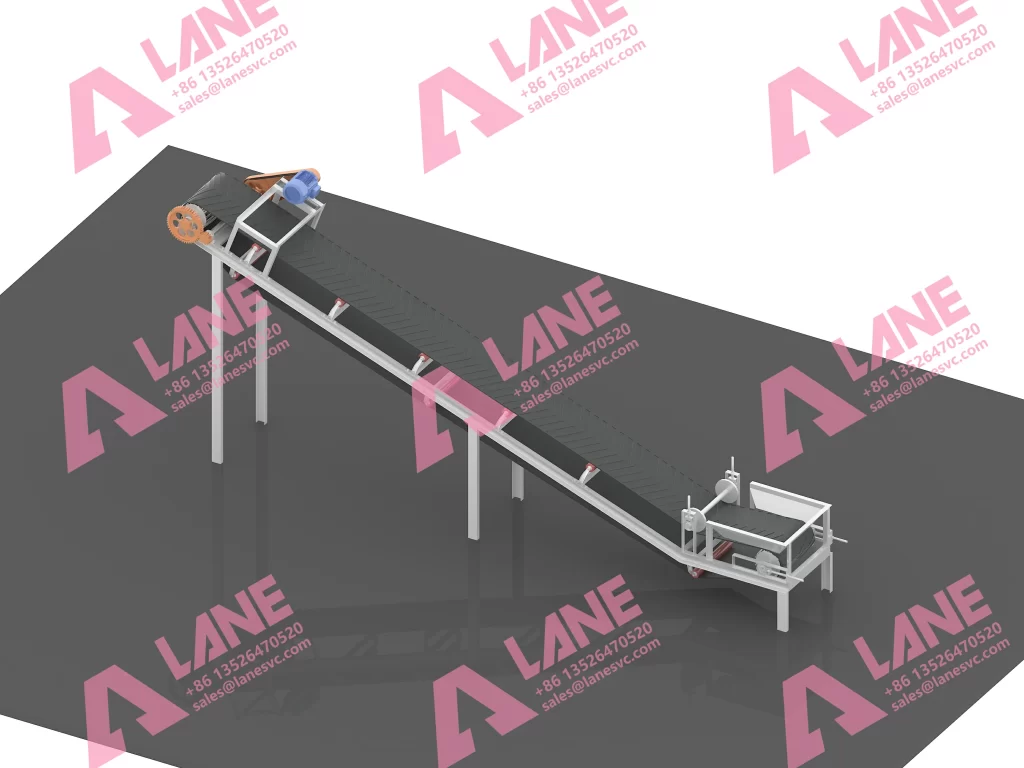
Testing should follow the actual material flow and control sequence. Begin with the raw-material receiving and feeding route, then verify the relevant transfer points and downstream connections. Continue through the reaction-area interfaces and slurry-transfer route, granulation, drying, cooling, screening, product handling, and recycle. The exact sequence depends on the plant configuration. Some DAP plants use different reaction arrangements, such as a pre-neutralizer or a pipe reactor, so the test plan must follow the project’s selected process route rather than assume that every plant is identical.
Pay close attention to the interfaces between systems. Confirm that upstream and downstream equipment can start and stop in the intended sequence, that permissives and interlocks work as designed, and that alarms identify the correct condition. Check transfer chutes, gates, diverters, and recycle connections for correct routing.
The recycle circuit deserves particular attention: undersize and oversize material may follow different paths depending on the design, and the system must return material to the intended point without creating an uncontrolled accumulation.
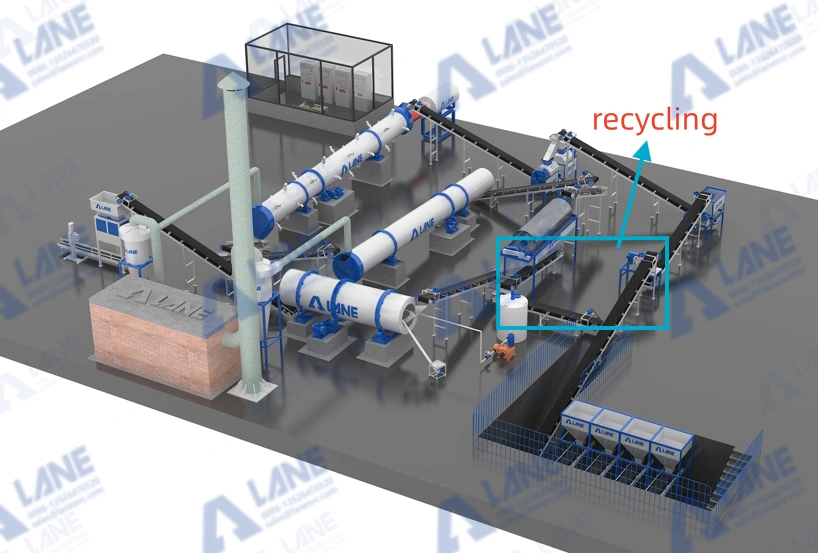
Auxiliary systems must be included in DAP fertilizer plant commissioning whenever they are required to support safe and reliable operation.Dust collection, gas scrubbing, ventilation, cooling utilities, compressed air, and other services cannot be treated as optional simply because they do not directly produce granules. Their availability may determine whether the process can be started.
Cold testing may use dry runs or an approved test medium, depending on the equipment and project procedure. Do not assume that water or another substitute is suitable for every process line. The responsible process and commissioning engineers must approve the test medium, operating sequence, and safeguards.
A key objective of DAP fertilizer plant commissioning at this stage is to verify the whole process route, not just confirm that every machine can be switched on. For example, if screened material cannot return smoothly through the designed recycle route, the line may experience unstable material circulation once production begins.
Release condition: The material route, equipment sequence, control logic, recycle path, and required auxiliary systems have been tested and accepted as an integrated system. Outstanding issues that could affect safe chemical startup must be closed.
Chemical startup is a controlled transition from system testing to actual production. It is not simply another equipment run.
DAP production involves the reaction of phosphoric acid and ammonia, and the reaction is exothermic. Chemical handling, process conditions, startup rates, and emergency arrangements must therefore be governed by the project’s approved operating procedures and the instructions of the responsible site engineers. Generic ratios, temperatures, or pressures should never be substituted for project-specific operating limits.
Before introducing chemicals, conduct a formal readiness review. Confirm that the relevant raw-material storage and transfer systems are accepted, instruments and control functions are available, the reaction section is ready, and downstream equipment can receive and process material. Verify that dust collection and gas-treatment systems required for startup are operating. Confirm communication arrangements, operating personnel, personal protective equipment, emergency response provisions, and the approved startup procedure.
The startup sequence in DAP fertilizer plant commissioning must respect the dependency between upstream and downstream systems. The team needs to establish that downstream sections are ready before increasing feed from upstream sections. Otherwise, wet process material may accumulate, transfer points may become overloaded, or the granulation and drying sections may be unable to handle the incoming flow. The actual sequence for establishing reaction, slurry transfer, granulation, drying, cooling, screening, and recycle must be defined by the process design and approved startup procedure.
During the first production period, avoid judging performance from a short moment of operation. Record process trends and observations at defined intervals. Depending on the project, these may include raw-material feed rates, relevant process temperatures and pressures, equipment loads, slurry behavior, granule formation, product moisture, particle-size distribution, and the performance of the recycle circuit. Sampling and laboratory testing should follow the agreed quality-control plan.
If the product is outside specification, investigate the process as a connected system. For example, an unstable particle-size distribution may involve feed consistency, granulation conditions, drying behavior, screening efficiency, or recycle balance. Changing several operating variables at once makes it difficult to identify the cause. Adjustments should be made only within approved operating limits and recorded so that the effect can be evaluated.
The first acceptable batch is an important milestone, but it does not prove that the plant is ready for routine production. The line must demonstrate repeatable product quality and stable operation over the agreed trial period. This is a central distinction in DAP fertilizer plant commissioning: producing granules is not the same as proving that the plant can produce them consistently.
Release condition: Chemical startup records are complete, the plant has produced material that meets the agreed initial quality requirements, operating trends are understood, and the team has approval to proceed to the performance test.
The final stage of DAP fertilizer plant commissioning determines whether the plant can meet the performance requirements agreed for the project. A commissioning team should not define success by output tonnage alone. A plant may reach a target rate temporarily while producing off-specification granules or consuming more utilities than expected.
Performance acceptance should use the contract and approved test protocol as the reference. Depending on the project, the test may cover production capacity, product nutrient content, particle-size distribution, moisture, raw-material and utility consumption, operating stability, and environmental performance. The test conditions, sampling method, calculation basis, duration, and permitted exclusions should be agreed before the test begins. This prevents disagreements caused by comparing results collected under different conditions.
During optimization, review the process balance rather than making isolated adjustments. Feed consistency affects the reaction and granulation sections; granule formation influences the load on drying and screening; screening results affect the recycle quantity and therefore the upstream load. The goal is to find a stable operating range in which product quality, capacity, and resource consumption meet the agreed requirements together.
Once the performance test is accepted, complete the handover package. It normally includes commissioning and performance-test reports, approved as-built drawings, equipment and instrument records, operating procedures, maintenance schedules, spare-parts information, training records, and a list of any accepted outstanding items. Operators should understand normal operating conditions, startup and shutdown procedures, alarms, routine checks, and the escalation process for abnormal conditions.
For DAP fertilizer plant commissioning, formal handover is not just an administrative step. It transfers the information needed to operate and maintain the plant after the commissioning team has completed its work. Missing drawings, incomplete maintenance instructions, or unclear operating procedures can undermine the results achieved during startup.
Release condition: Performance results are reviewed against the agreed acceptance criteria, required documents and training are handed over, and remaining items are formally recorded with responsibility and close-out dates.
A successful DAP fertilizer plant commissioning process is not defined by how quickly the first granules come off the line. It is defined by whether the plant moves through each stage with verified results, whether system interfaces work as intended, and whether the final production performance meets the agreed requirements.
A reliable DAP fertilizer plant commissioning process keeps clear boundaries between mechanical completion, pre-commissioning, cold commissioning, chemical startup, and performance acceptance. Each stage should have documented evidence and a formal release decision. This prevents unresolved construction or control issues from being carried into chemical operation, where troubleshooting can become more complex and costly.
For a new project, the commissioning plan should be considered during process design and equipment selection, not prepared only after installation. Layout, transfer routes, access for maintenance, recycle arrangement, instrumentation, and environmental-control systems all influence how smoothly the plant can be tested and operated.
A well-integrated DAP fertilizer production line is therefore more than a collection of machines: it is a coordinated process system designed around the required raw materials, capacity, product specification, and operating conditions.
At LANE, our engineering approach to DAP and MAP production lines focuses on matching process design, equipment configuration, and system integration to the project requirements. If you are planning a new DAP plant or upgrading an existing facility, sharing your target capacity, raw-material conditions, product specification, and project status is a practical starting point for discussing a suitable production-line solution.
Copyright © Henan Lane Heavy Industry Machinery Technology Co., Ltd.
