
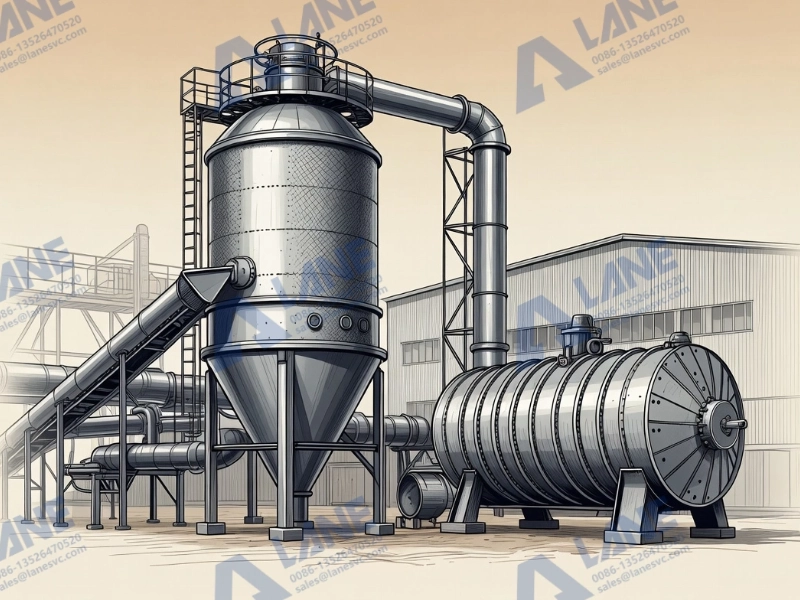
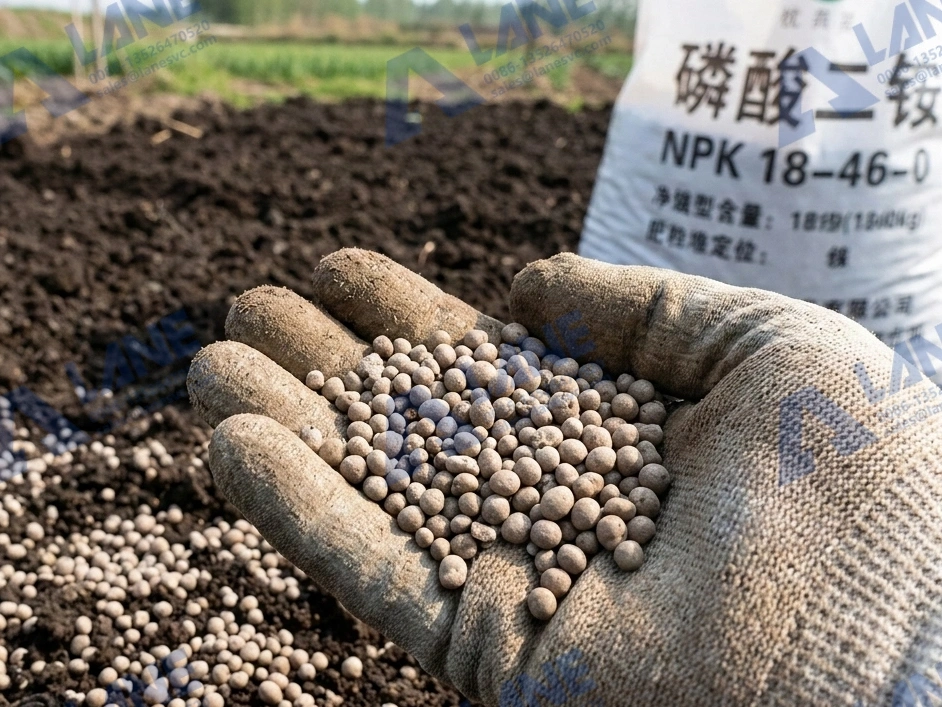
Performance of Monoammonium phosphate (MAP) and diammonium phosphate (DAP) production plant depends on the harmony of the multiple processing stages. Among these stages, screening equipment for MAP and DAP fertilizer is responsible for classifying the granules according to the size specifications. The market value of your product value is dependent on the seamless integration between reaction, granulation and screening. Without proper screening, fertilizer products will fail to meet the premium market standards
Screening stage no only determines the size it also helps recycling the off-spec granules by sending them back to the crusher where they are pulverized and recycled back to the granulator. as a leader of the fertilizer manufacturing industry, LANE Heavy Industry provides our customers with Durable screening equipment for MAP and DAP fertilizer. Our rotary screening and vibratory screen are customized for handling the raw materials of the MAP and DAP production line.
The MAP/DAP production line follows the process of neutralization, granulation, drying, cooling, screening, coating, and packaging. Among these screening determines the uniformity and strength of the granules. Us at LANE classifies the screening into three separate sections. We can increase or decrease according to our customers wishes.
Without highly accurate screening equipment for MAP and DAP fertilizer, Off-spec particles contaminate the final yield. Fines cause dusting and caking during storage and oversize granules can jam commercial fertilizer spreaders.
There two types of screening equipment for MAP and DAP fertilizer that are dominating the fertilizer manufacturing plants. They are selected based on capacity, plant layout, and plant size.
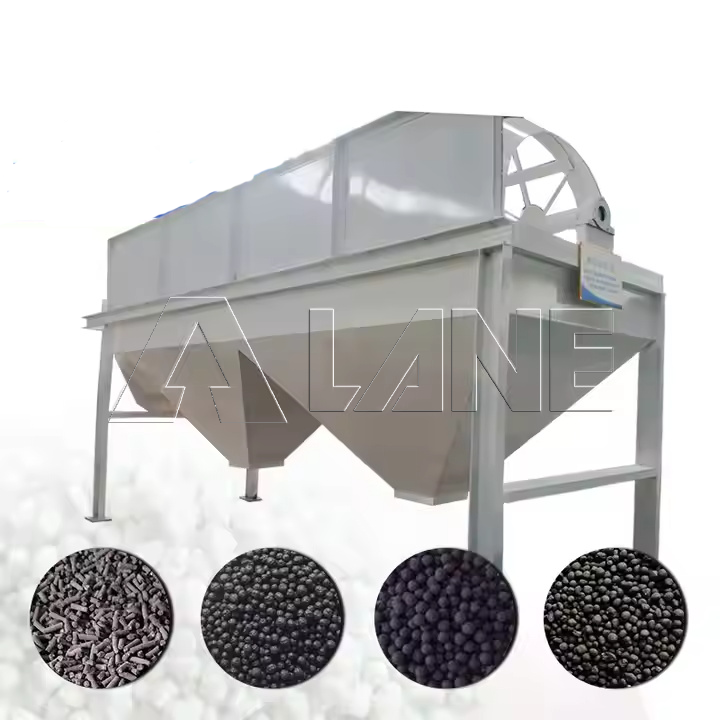
The rotary drum screen also known as trommel screener is one of the most used screening equipment for MAP and DAP fertilizer production. It is a rotating cylindrical drum equipped with perforated screen panels. As the granules travel through the rotating drum, particles pass through the screen opening depending on their size. Oversize granules are moved to the discharge outlet as the drum rotates.
The Pros:
Large Capacity: Rotary screening machine is suitable for large scale operations. If you are planning on building a plant for export-oriented production line than this is the best choice for you. It can screen huge volume of material without breaking a sweat.
Durability: This machine is doesn’t require much maintenance. It is very durable like a tank. It can operate continuously under demanding industrial conditions reliably.
Less Noice: This machine is quitter than most machine. This makes it more worker friendly.
The Cons:
Space: It is a large machine and requires lots of space. If you have less space than this might not be suitable for you.
Blinding: If the MAP or DAP is a bit damp, the holes in the drum can get clogged (we call this “blinding�). We customize and implement brushes to fix this problem.
Vibrating Screen
Vibrating screening is another most frequently used screening equipment for MAP and DAP fertilizer. It separates fertilizer particles through controlled mechanical vibration. This machine uses high frequency vibration to move the granules through the screen surface. Different size particles fall through the different stage of this screening. It provides excellent screening precision and used in where precision is required.
The Pros:
Accuracy: If you want extreme size control, a vibrating MAP Fertilizer Screening Machine is often the winner. Every granule has the chance to get measured in this system.
Compact Design: This machine is used in small to medium scale production line where machine size matters. Their small size also makes them easier to install into an existing production line.
Easy Cleaning: It is a easily cleanable machine. Manufacturers can easily swap out screens or clean a vibrating MAP Fertilizer Screening Machine than a drum-style one.
The Cons:
Maintenance: because of consistent vibration, the wearable parts like springs and bearings can wear out faster. Producers must pay extra attention at this.
Dust Generation: The continuous bouncing creates more dust. Proper dust control is necessary when you use vibrating screener.
The key to maximizing the performance and lifespan of screening equipment for MAP and DAP fertilizer is following the proper operational rules. By following the proper operational guideline, you can maintain stable product quality while reducing the maintenance costs.
Maintaining a consistent feed rate is essential. Uneven feeding rate will overload parts of screen and reduce efficiency. A stable material flow ensures better separation and reduces wear on components.
Moisture control is also very important. If MAP or DAP granules are wet, they might stick together, clog the screening, and create uneven screen. Proper drying is necessary before the screening stage to improve flow and classification accuracy.
Regular inspection of screen surfaces helps detect wear, damage, or clogging early. Timely replacement of worn parts ensures consistent performance. Operators should also prevent materials build-up inside the machine through routine cleaning. This helps maintain smooth operation and efficiency.
Proper maintenance will help extend the service life of screening equipment for MAP and DAP fertilizer. It will also help ensure stable operation.
Daily Maintenance: This include checking the motor performance, inspecting screen surfaces, ensuring lubrication, and removing any accumulated material in the machine. Operators should also observe vibration and Noice levels during operation.
Weekly maintenance: This involves tightening fasteners, checking the drive system, inspecting bearings, and verifying the screen tension.
Monthly maintenance: This is a more detailed and includes structural inspection, alignment checks, cleaning, and replacement of worn components. It is also suggested that manufacture should review the operating condition of the equipment. This will help you resolve issues before it occurs and help you improve the long-term performance of the machines.
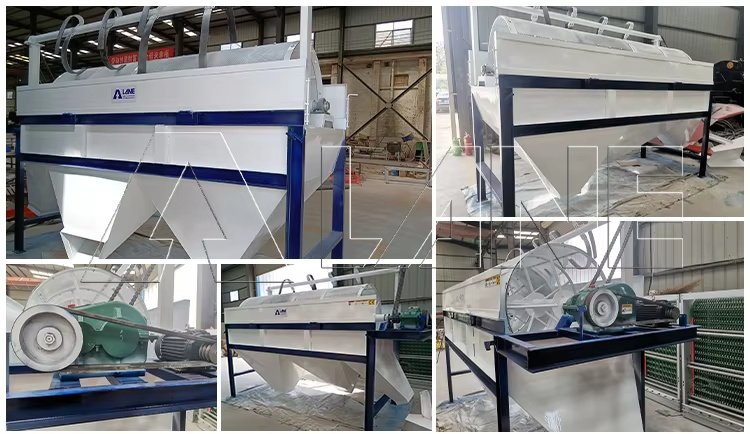
So, which one should you choose? Trommel or Vibrating? right screening equipment for MAP and DAP fertilizer depends mainly on your production scale, plant layout, and required product quality. Both of these machines can deliver effective performance but they are designed for different operating conditions.
If you are operating a large-scale MAP or DAP fertilizer production line and your priority is a high-volume, heavy-duty processing with low noise, a rotary Screening Machine is the best choice.
On the other hand, if your plant has limited space or focuses on medium-scale production with need the highest possible precision for your granules, you should consider vibrating screening machine.
The best choice of screening equipment for MAP and DAP fertilizer should be based on a careful evaluation of production goals, investment budget, and long-term operational requirements.
What is the main function of screening equipment in MAP and DAP fertilizer production?
The primary function of screening equipment is to separate qualified fertilizer granules from oversized and undersized particles, ensuring consistent product quality and market compliance.
Why is screening equipment for MAP and DAP fertilizer important?
Screening improves granule uniformity, enhances product appearance, increases production efficiency, and allows recycling of off-size materials back into the granulation process.
What type of screening equipment is most commonly used in phosphate fertilizer plants?
Rotary drum screens are the most widely used screening equipment for MAP and DAP fertilizer due to their high capacity, durability, and reliable continuous operation.
For more details, please feel free to contact us.
Henan Lane Heavy Industry Machinery Technology Co., Ltd.
Email: sales@lanesvc.com
Contact number: +86 13526470520
Whatsapp: +86 13526470520
Copyright © Henan Lane Heavy Industry Machinery Technology Co., Ltd.
