
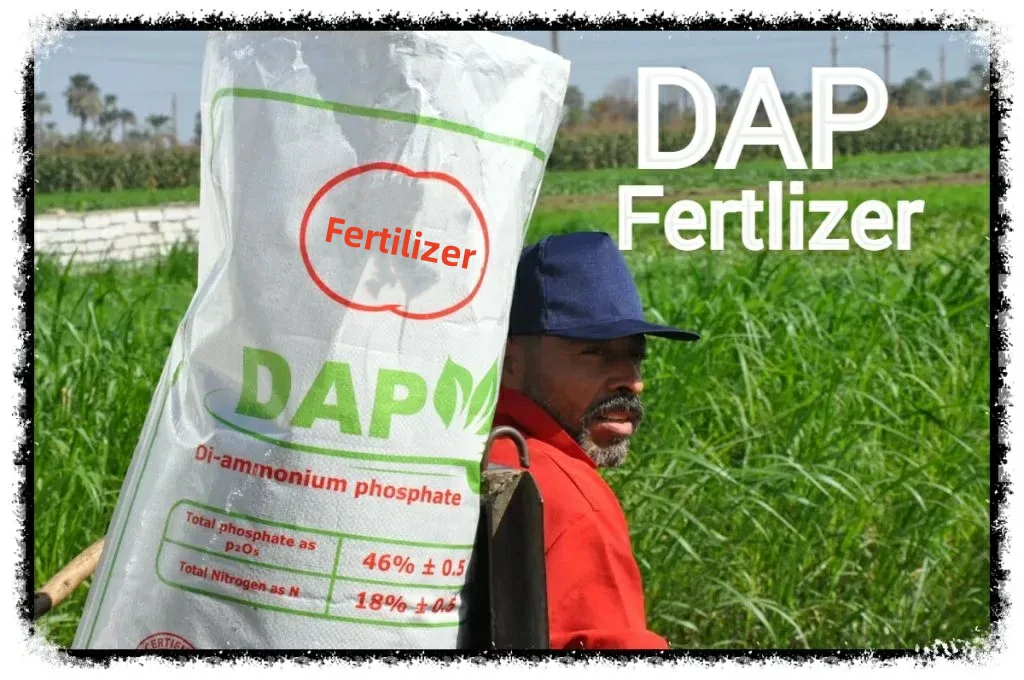
Di-ammonium Phosphate (DAP) is one of the world’s most vital and widely utilized phosphorus fertilizers. It provides nitrogen and highly soluble phosphate ions to accelerate crop root development and maximize agricultural yields. As the demand for this fertilizer increases, fertilizer manufacturers are exploring different production scales to match market needs. Among these options, the low capacity DAP plant has become popular for new investors, regional suppliers, and small-to-medium fertilizer producers.
Historically, the manufacturing of DAP has been dominated by massive, centralized chemical complexes operating continuous, capital-intensive assembly lines. But modern technology has advanced and created options for investors who want to set foot in the fertilizer industry without investing fortunes. This article compares a low capacity DAP plant with large-scale DAP production facilities using advanced fertilizer production line solutions from LANE Heavy Industry.
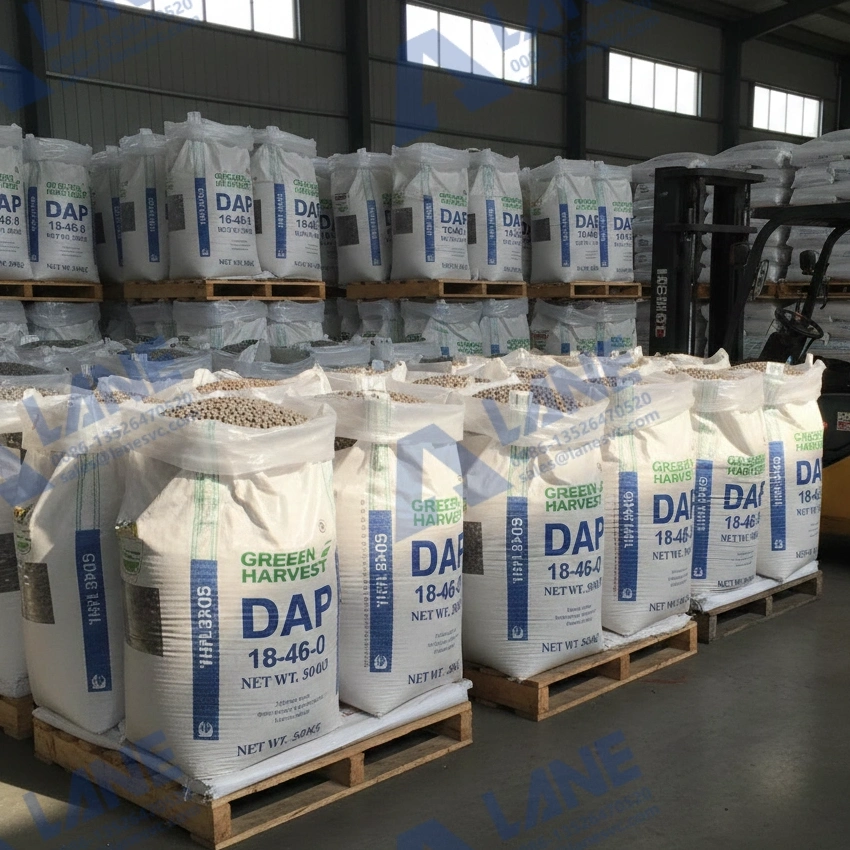
A low capacity DAP plant is a compact fertilizer production system designed for smaller output ranges. The system is engineered to generate between 1 to 10 tons of granulated fertilizer per hour, which translates roughly to an annual output of 5,000 to 30,000 tons. These types of facilities utilize a highly efficient solid-liquid or chemical-slurry granulation method adapted specifically for regional market demands. This plant is suitable for regional markets, pilot projects, or startups in the fertilizer industry.
Common production capacity:
A low capacity DAP plant is ideal for investors who want to enter the fertilizer market with controlled risk while maintaining product quality and production stability.
Large-scale DAP production facilities operate at capacities upwards of 30 to 100+ tons per hour and the yearly output exceeds 200,000 to 500,000 tons per year. These systems are designed for continuous uninterrupted 24/7 operations. This type of production facility is usually situated along maritime ports or directly adjacent to rock phosphate mines and ammonia terminals. This type of production line suffers from structural rigidity, massive environmental regulatory overhead, and high vulnerability to regional supply chain bottlenecks.
Key characteristics include:
While large-scale plants achieve economies of scale, they require significantly higher investment, technical expertise, and raw material supply stability.
When deciding between a low capacity DAP plant and a large-scale setup, manufacturers have to consider several operational metrics. The table below shows how these systems compare in real world applications:
| Feature | Low Capacity DAP Plant (LANE Heavy Industry) | Large-Scale Production Plant |
| Capital Investment (CAPEX) | Minimal; highly affordable for regional cooperatives and private enterprises. | Astronomical; requires institutional backing or state-level financing. |
| Footprint & Installation | Compact, modular design; setup can be completed in a few weeks. | Massive real estate needed; years of civil engineering and heavy site development. |
| Formula Flexibility | High; quick changeovers to customized NPK grades or organic-coated variants. | Very Low; changing formulations disrupts continuous chemical equilibria. More dependent on stable demand. |
| Supply Chain Dependency | Localized raw materials; immune to international freight spikes. | Dependent on bulk international shipments of ammonia and phosphoric acid. |
| Minimum Order Quantity (MOQ) | Highly flexible; caters to local niche distributors and specific regional farms. | Bulk only; relies exclusively on macro-distributors and international contracts. |
| Output | Suited to smaller regional demand | Built for bulk supply and wider distribution. |
| Automation | Can use simpler control systems. | Usually needs higher automation and tighter control. |
| Operating cost | Higher unit cost, but lower absolute risk | Better economies of scale and lower unit cost. |
| Site needs | Smaller footprint and simpler logistics. | Larger land, storage, and utility requirements. |
LANE Heavy Industry has engineered a DAP fertilizer production line to balance compact footprints with industrial-grade durability. Every step of the production line is optimized to ensure high-efficiency particle formation:
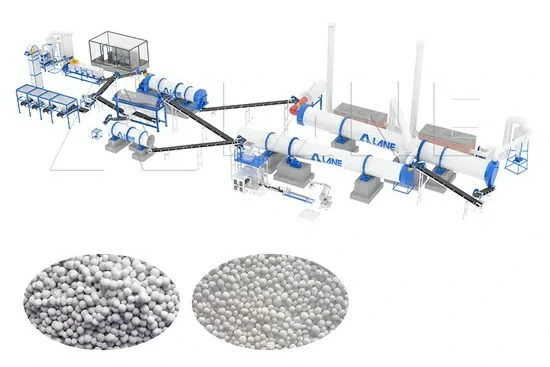
The performance and durability of the equipment determine the long-term success of any industrial plant. LANE Heavy Industry’s machinery offers distinct advantages for low capacity DAP plant setups:
These features directly translate into lower electricity bills, reduced maintenance downtime, and faster installation — all critical for small and medium enterprises entering the DAP market.
Both low and large-scale DAP production systems play important roles in the global fertilizer industry. While large-scale production facilities are always the baseline for global commodity demands, the low capacity DAP plant stands out as a flexible, cost-effective, and low-risk solution for new investors and regional manufacturers. With the help of LANE Heavy Industry’s rugged, precise, and modular machinery, regional producers can insulate themselves from global logistics crises, deliver custom agronomic formulas, and secure rapid, sustained profitability. For investors seeking a balanced entry into the fertilizer industry, the low capacity DAP plant offers the ideal combination of affordability, scalability, and performance.
A low capacity DAP plant is a small-scale fertilizer production system designed for limited output, usually between 5,000–30,000 tons per year.
Investment depends on configuration, but it is significantly lower than large-scale production facilities due to smaller equipment and infrastructure.
Yes, modular design from LANE Heavy Industry Machinery Technology Co., Ltd. allows easy capacity expansion.
No, with modern equipment, product quality can match large-scale production standards.
For more details, please feel free to contact us.
Henan Lane Heavy Industry Machinery Technology Co., Ltd.
Email: sales@lanesvc.com
Contact number: +86 13526470520
Whatsapp: +86 13526470520
Copyright © Henan Lane Heavy Industry Machinery Technology Co., Ltd.
