
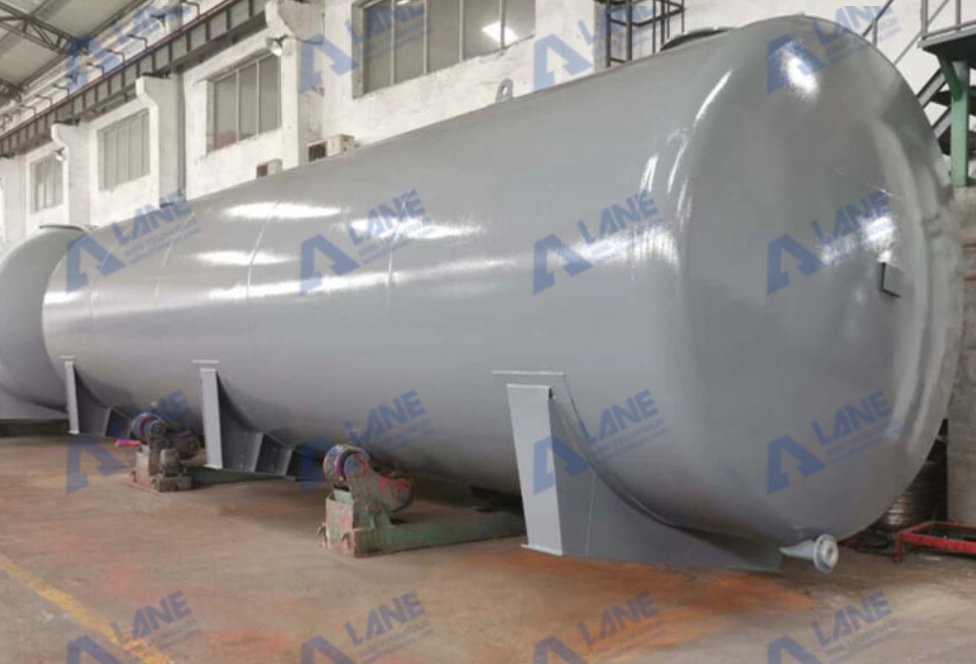
Phosphoric acid is one of the main raw materials used in diammonium phosphate (DAP) fertilizer production. Before entering the reaction system, it needs to be received, stored, and transferred to the production process at a controlled rate. For this reason, selecting a suitable phosphoric acid storage tank for fertilizer plant operations is an important part of DAP project planning.
A phosphoric acid storage tank does more than hold liquid raw materials. It helps maintain a stable supply of phosphoric acid when deliveries do not arrive every day. If the storage capacity is too small, the factory may need to interrupt production while waiting for the next shipment. If the tank material is unsuitable, corrosion can cause leakage, contamination, maintenance problems, and unexpected downtime.
In a typical DAP production process, phosphoric acid is transferred from the storage area to a metering system before entering the neutralization section. It then reacts with ammonia to produce ammonium phosphate slurry. Depending on the selected production technology, the material continues through granulation or crystallization, followed by drying, screening, cooling, and packaging.
The general process can be represented as:
Phosphoric Acid Storage → Acid Metering → Ammonia Neutralization → Granulation or Crystallization → Drying → Screening → Cooling → Packaging
Each section depends on a stable supply of raw materials. Therefore, the phosphoric acid storage tank and its supporting system should be considered together with the production capacity, process design, and factory layout rather than treated as an isolated piece of equipment.
Before purchasing a phosphoric acid storage tank, a fertilizer manufacturer should collect several basic operating parameters. These details help determine the appropriate storage volume, construction material, tank structure, and supporting equipment. A phosphoric acid storage tank for fertilizer plant applications should be selected according to actual operating conditions instead of price or nominal capacity alone.
Acid Concentration and Storage Temperature
Phosphoric acid concentration is one of the first factors to confirm when selecting a phosphoric acid storage tank. Commercial phosphoric acid may be supplied at different concentrations, while wet-process acid can contain impurities such as fluoride, chloride, sulfate, iron, and suspended solids.
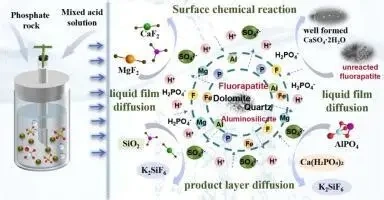
These components can significantly affect corrosion behavior. Temperature also matters because higher operating temperatures may increase corrosion rates or affect the performance of protective linings and resin systems.
For example, a tank designed for relatively clean merchant-grade phosphoric acid should not automatically be considered suitable for crude wet-process acid. The two materials may have different impurity levels and operating requirements.
Before selecting the tank material, ask the acid supplier for a chemical analysis and confirm the normal and maximum storage temperatures. The tank manufacturer or a qualified materials engineer should then evaluate the compatibility of the proposed material under those conditions.
Daily Consumption and Required Storage Capacity
The required capacity of a phosphoric acid storage tank should be calculated from the production schedule and raw material delivery cycle.
Consider a DAP factory that consumes 30 tonnes of phosphoric acid per day. If the supplier delivers acid once every five days, the phosphoric acid storage tank system needs to hold approximately 150 tonnes of working inventory between deliveries. However, this does not mean that a tank with exactly 150 tonnes of nominal capacity will be sufficient.
The actual design should also consider:
A practical calculation is:
Required working inventory = Daily acid consumption × Supply interval
The nominal tank volume can then be estimated by dividing the required mass by the acid density and adjusting for the permitted filling level and reserve capacity.
For example, if a factory consumes 30 tonnes per day and receives a delivery every five days, the basic working inventory is 150 tonnes. The final tank volume should be larger after considering reserve stock and safe operating limits.
Installation Space and Tank Layout
The available installation area influences the choice between vertical and horizontal phosphoric acid storage tank designs.
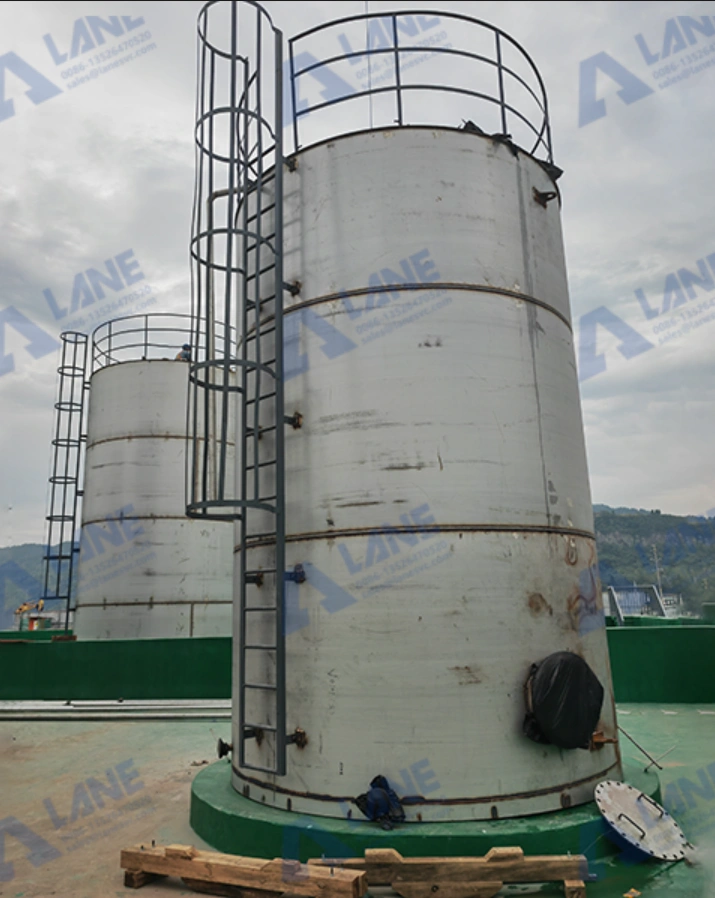
Vertical cylindrical tanks are commonly considered for larger storage requirements because they use less ground area for a given volume. They may be suitable for factories with sufficient installation height and properly designed foundations.
Horizontal tanks can be considered for smaller storage requirements or locations where the site layout favors a lower-profile structure. However, they usually require more ground space for the same storage volume, and their supports and foundations must be designed for the full operating load.
The decision should also account for tanker access, unloading connections, inspection space, maintenance routes, drainage, and secondary containment. A tank that fits the available footprint but blocks vehicle movement or maintenance access can create problems after the plant starts operating.
Loading and Unloading Requirements
The phosphoric acid storage tank system must match the way phosphoric acid is delivered and transferred. Check whether the plant receives acid by road tanker, rail tank car, or another transportation method.
The unloading pump, inlet pipeline, valves, and connections should be compatible with the acid and capable of handling the required transfer rate. The outlet system should also supply the downstream process consistently without causing excessive pressure loss.
For a phosphoric acid storage tank for fertilizer plant projects, it is important to evaluate the entire transfer route, from the delivery point to the metering and reaction sections. This avoids designing a tank with sufficient capacity but inadequate pumping or pipeline performance.
Material selection is one of the most important decisions when choosing a phosphoric acid storage tank. A tank may have the correct capacity and dimensions but still fail prematurely if its lining or construction material is not compatible with the actual acid.
The following materials may be considered, subject to detailed chemical compatibility checks.
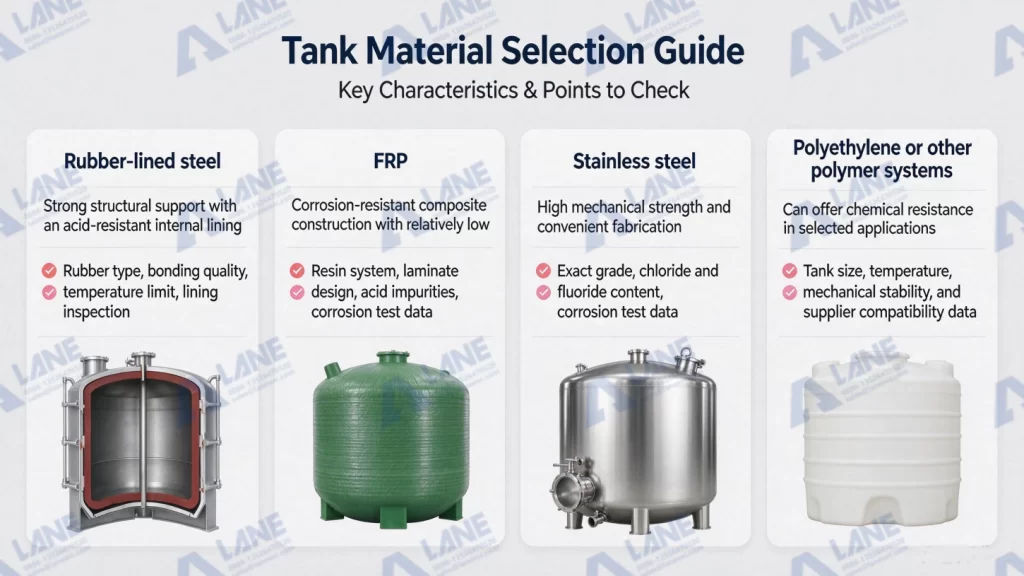
Rubber-Lined Steel Tanks
Rubber-lined steel tanks are used in some industrial phosphoric acid storage applications. This type of phosphoric acid storage tank uses a steel shell for mechanical strength, while the internal rubber lining separates the acid from the metal surface.
However, not all rubber linings perform equally. The lining compound, thickness, bonding process, curing quality, and maximum operating temperature should be specified. Regular inspection is also necessary because damage or separation of the lining can expose the steel substrate to acid.
FRP Tanks
Fiber-reinforced plastic (FRP) tanks are another option for phosphoric acid storage. An FRP phosphoric acid storage tank depends heavily on the selected resin system and the design of its corrosion barrier for reliable service.
Vinyl ester resin systems, for example, have been used in certain phosphoric acid services. Nevertheless, the presence of hydrofluoric acid, suspended solids, or other impurities can change the material requirements. The tank should therefore be designed around the actual acid composition rather than a general statement that FRP is acid-resistant.
Stainless Steel and Other Materials
Stainless steel should not be selected simply because it is commonly used in chemical equipment. Some grades can experience serious corrosion in wet-process phosphoric acid, particularly when chloride and fluoride impurities are present. Even 316 stainless steel should not be assumed suitable without supporting compatibility data.
Similarly, ordinary unlined carbon steel is generally not an appropriate choice for direct contact with phosphoric acid. Polyethylene and other polymer materials may be suitable for certain conditions, but their mechanical strength, temperature limits, and tank dimensions must be evaluated.
When comparing materials, request written compatibility confirmation for the specific acid composition and operating temperature. A lower initial purchase price does not necessarily mean a lower long-term operating cost.
A phosphoric acid storage tank is only one part of the complete acid handling system. Pumps, pipelines, valves, instruments, and safety facilities all influence whether phosphoric acid can be transferred reliably to the DAP production process.
Transfer Pumps
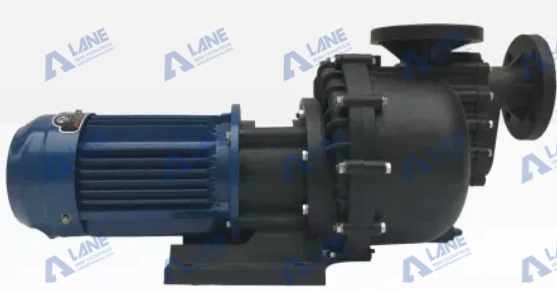
Transfer pumps move acid from delivery vehicles into the phosphoric acid storage tank or from the tank to the downstream process.Pump materials, seals, flow rate, and operating conditions should be selected according to the acid composition and temperature. The pump capacity should match the unloading schedule and the continuous consumption of the production line.
Level Sensors and Overfill Protection
Level instruments help operators monitor the quantity of acid inside the tank. High-level alarms and suitable overfill prevention measures are important when receiving bulk deliveries. The unloading procedure should include clear communication between the vehicle operator and the plant control room.
Temperature Monitoring
Temperature measurement helps operators identify abnormal operating conditions. It is particularly relevant when acid concentration, seasonal temperatures, or impurities may affect viscosity, corrosion, or precipitation behavior.
Agitation or Recirculation
Not every phosphoric acid tank needs an agitator. The requirement depends on whether the acid contains suspended solids and whether settling may affect the outlet or downstream process. Some applications may benefit from recirculation or a suitable tank-bottom arrangement, while unnecessary agitation can increase equipment wear and maintenance.
Pipelines, Valves, and Connections
All wetted components connected to the phosphoric acid storage tank should be checked for chemical compatibility. This includes pipes, flanges, gaskets, valves, pump casings, and instrument connections. A corrosion-resistant tank connected to an unsuitable pipeline does not provide a reliable storage system.
Ventilation and Secondary Containment
The tank design should include appropriate venting and overflow protection based on the process and applicable regulations. A bund or secondary containment area can help limit the spread of accidental leakage. Its capacity, drainage arrangement, and lining should be determined by local environmental and safety requirements.
Some phosphoric acid storage tank problems do not become obvious until the fertilizer plant has been operating for several months. Many of them can be avoided during the initial engineering stage.
Choosing Capacity Based Only on Daily Consumption
A factory may calculate its daily acid demand correctly but overlook delivery intervals. If the supplier cannot deliver every day, the tank needs enough working inventory to cover the supply cycle and a reasonable reserve.
Selecting Materials Mainly by Purchase Price
A cheaper tank may require more frequent lining repairs, corrosion inspections, or replacement. Material selection should consider the full chemical composition of the acid, not just its phosphoric acid concentration.
Ignoring Impurities and Temperature
Two acid supplies with the same nominal concentration may behave differently if their chloride, fluoride, sulfate, or suspended-solid contents are different. Temperature changes can also affect corrosion and material performance.
Overlooking Pump and Pipeline Compatibility
Tank selection and transfer-system design should be completed together. An undersized pump, unsuitable gasket, or incompatible pipe material can become a bottleneck or maintenance risk.
Leaving Too Little Space for Maintenance
Operators need safe access to valves, manholes, instruments, and inspection points. The layout should also allow delivery vehicles to approach and unload without interfering with other production activities.
Failing to Plan for Future Expansion
If the factory expects to increase DAP output, it should evaluate whether the storage area, foundations, transfer pumps, and pipelines can accommodate the additional demand. Expanding production without reviewing the acid supply system may create a new bottleneck.
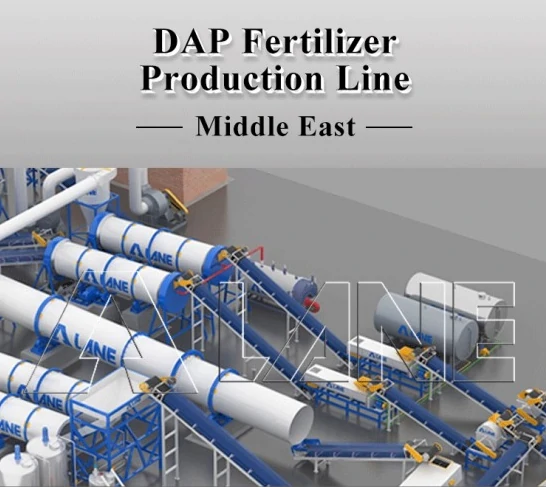
The phosphoric acid storage system should be planned as part of the complete DAP manufacturing process. Its capacity, outlet pressure, transfer rate, and control system must match the requirements of the reaction section and the overall production schedule.
A typical integration arrangement follows this sequence:
Step 1: Acid Receiving and Storage
Phosphoric acid arrives by tanker and is unloaded through a compatible transfer system. The storage tank provides a buffer between raw material deliveries and continuous factory consumption.
Step 2: Metering and Transfer
The acid is pumped from the storage tank to a metering or dosing system. Flow measurement and control help maintain the required acid feed rate for the selected DAP process.
Step 3: Neutralization and Reaction
Phosphoric acid reacts with ammonia in a neutralizer or pipe reactor, depending on the process design. The resulting ammonium phosphate slurry or reaction product then moves to the next production stage.
Step 4: Granulation or Crystallization
In a granular DAP process, the slurry is introduced into the granulation system, where particles are formed and grown. Other DAP production routes may use crystallization, depending on the final product and process configuration.
Step 5: Drying, Screening, and Packaging
The material is processed through the required drying, classification, cooling, and packaging equipment. The specific equipment arrangement depends on the selected production technology.
When planning a new DAP project, investors should evaluate the acid storage area, reaction equipment, granulation system, drying section, and material handling facilities as one connected production system. The storage tank should not be oversized without reason, but it should provide enough buffer to protect production from normal delivery delays.
The right equipment configuration depends on acid analysis, daily consumption, delivery frequency, production capacity, and available installation space. Before choosing a phosphoric acid storage tank for fertilizer plant projects, prepare these details and discuss them with the engineering team. This approach makes it easier to select compatible materials, calculate practical storage capacity, and coordinate the tank with the rest of the DAP production line.
Copyright © Henan Lane Heavy Industry Machinery Technology Co., Ltd.
