
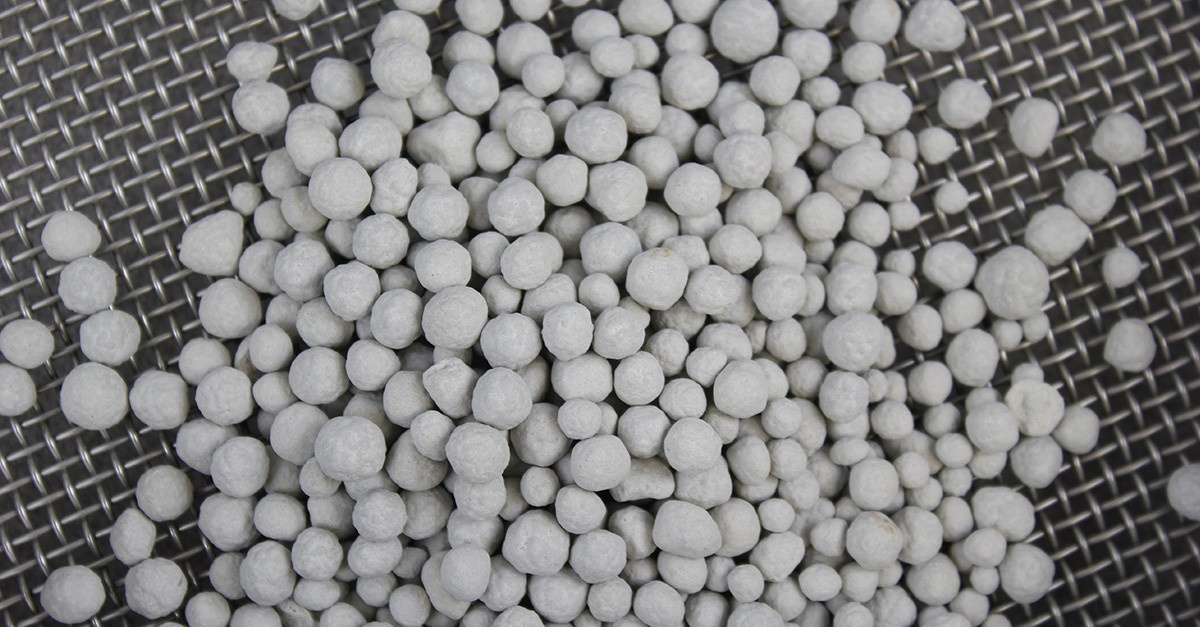
Diammonium phosphate (DAP) is the world’s most used phosphorus fertilizer. It delivers high-concentration nitrogen-phosphorus compound fertilizer at a standard grade of 18-46-0 (18% nitrogen and 46% phosphorus pentoxide). Behind every granule of DAP lies a sophisticated industrial process that depends entirely on three essential raw materials for DAP production: phosphate rock, sulfur, and ammonia. Mastering raw materials for DAP production is the primary prerequisite for fertilizer enterprises to control production cost, stabilize product quality, and achieve large-scale continuous operation.
This guide fully analyzes the core raw materials for DAP production and explains their roles in chemical reactions, industrial quality requirements, and unit consumption data. LANE Heavy Industry, a leader in fertilizer machinery, provides integrated production lines that transform these basic elements into high-grade granules.
The inputs required to produce one metric ton of DAP fertilizer are approximately 1.5 to 2 tons of phosphate rock, 0.4 tons of sulfur, and 0.2 tons of ammonia. These raw materials for DAP production represent the primary cost drivers in any manufacturing operation. Changes in the supply, quality, or price will directly impact DAP prices, quality, and availability. This makes the strategic sourcing and efficient utilization of raw materials for DAP production a top priority for fertilizer producers worldwide.
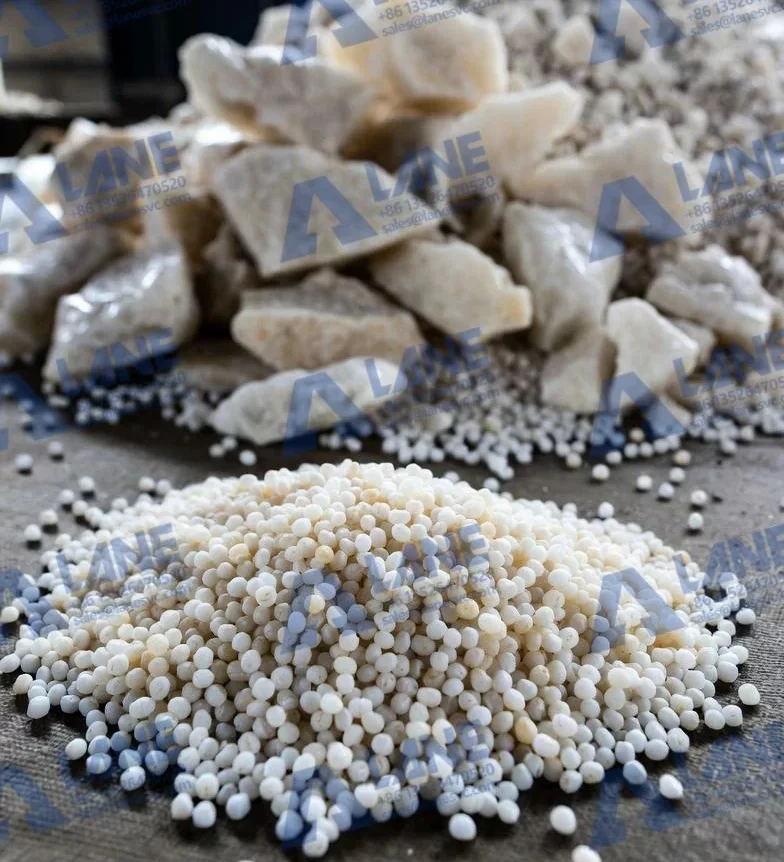
Phosphate rock is the primary source of phosphorus in the fertilizer industry and remains the most significant of all raw materials for DAP production. It is a natural mineral found in sedimentary or igneous deposits.
Quality and Grade
The quality of phosphate rock is measured by its phosphorus pentoxide (Pâ‚‚Oâ‚…) content. For efficient DAP manufacturing, the rock typically needs to be beneficiated to increase its concentration. Impurities such as magnesium, iron, and aluminum can complicate the chemical reaction. When selecting the raw materials for DAP production, manufacturers must ensure the phosphate rock is finely ground to increase the surface area for acidulation.
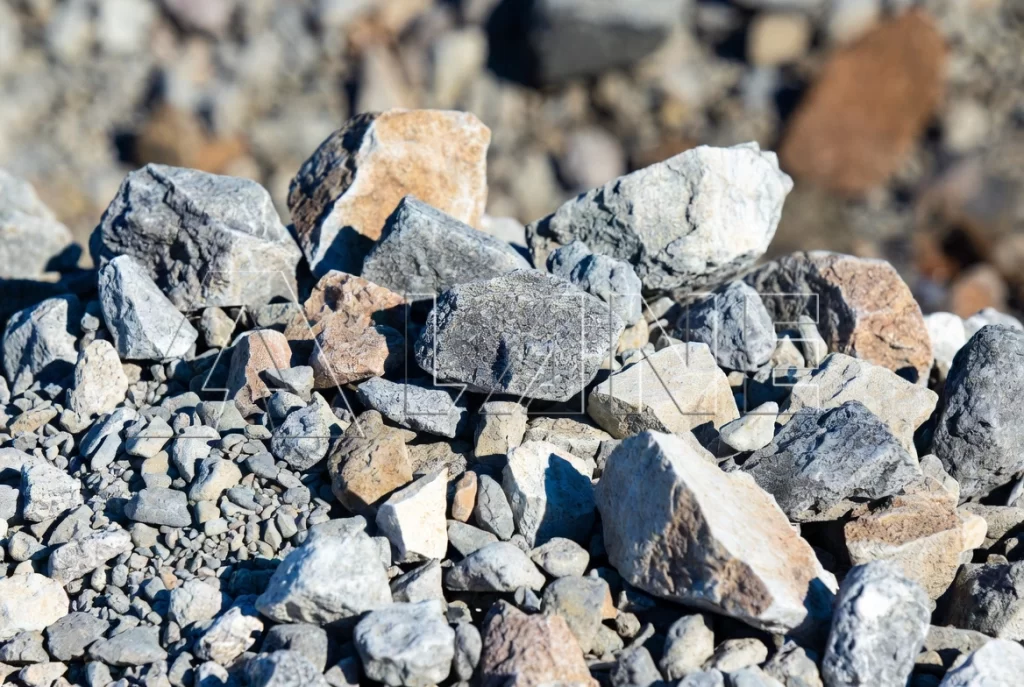
In a LANE Heavy Industry production line, the phosphate rock is first processed through a specialized crusher and grinding mill. This measure ensures that the rock reaches the optimal mesh size required for subsequent reaction with sulfuric acid.
While sulfur is not found in the final DAP molecule, it is one of the indirect raw materials for DAP production. Sulfur is often recovered as a byproduct of oil and gas refining or mined directly.
The Role of Sulfuric Acid
Sulfur is burned to create sulfur dioxide, which is then converted into sulfuric acid. This acid is used to react with the phosphate rock. This process produces phosphoric acid, which is the intermediate liquid required to make DAP. Without high-purity sulfur, the resulting phosphoric acid would contain excessive sludge. These sludges can clog the nozzles in the spray system. Therefore, it is necessary to maintain a steady supply of high-grade sulfur when you source raw materials for DAP production.
Ammonia provides the nitrogen in the DAP fertilizer. It is produced through the Haber-Bosch process. In this process, atmospheric nitrogen is combined with hydrogen (from natural gas) to create nitrogen.
The Neutralization Process
Ammonia is used in its anhydrous form or as an aqueous solution to neutralize the phosphoric acid. In the DAP production process, two molecules of ammonia are reacted with one molecule of phosphoric acid to achieve the chemical formula Ammonium sulfate (NHâ‚„)â‚‚SOâ‚„.
Because ammonia is a volatile gas, the precision of the feeding system is paramount. LANE Heavy Industry’s machinery utilizes advanced flow meters and automated control systems to ensure that the ratio of ammonia to acid remains perfect, preventing the waste of these expensive raw materials for DAP production.
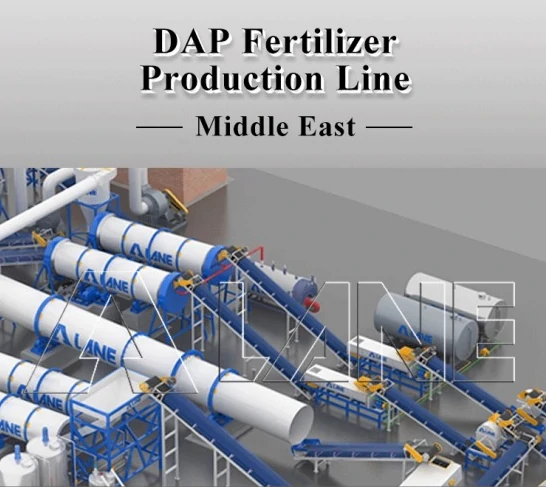
The transformation of raw materials for DAP production into finished fertilizer follows a multi-stage process. Phosphate rock first reacts with sulfuric acid to produce phosphoric acid and calcium sulfate as a byproduct. This phosphoric acid then enters a pre-neutralization tank, where it reacts with ammonia in a highly exothermic reaction that reaches temperatures of 150–180°C (302–356°F). The resulting hot slurry is then cooled and crushed into powder.
The Granulation Line: Shaping the Product
The powdered DAP is then sent to the granulator. A double roller granulator or rotary drum granulator is used to create uniform granules. LANE’s granulators are lined with special anti-corrosive materials to withstand the acidic environment. As the drum rotates, the DAP is made into the desired spherical shape.
Drying and Cooling
The moist granules move into the Rotary Dryer. Proper drying is essential because if the raw materials for DAP production retain too much moisture, the final product will cake in storage. LANE’s Rotary dryers use a counter-current or co-current airflow system to ensure uniform moisture removal. Following this, the Rotary Cooler brings the temperature down to prevent clumping during packaging.
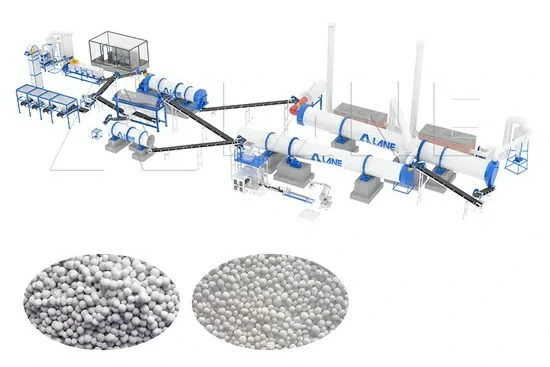
The raw materials for DAP production should be efficiently managed. It can make the difference between a profitable plant and one that struggles with overhead.
The chemical composition of your raw materials for DAP production directly dictates the “grade” of the fertilizer (typically 18-46-0). If the grade of phosphate rock is low, then you may end up with MAP (Monoammonium Phosphate) or a lower-analysis DAP.
By using LANE Heavy Industry’s state-of-the-art DAP production line, operators can adjust the flow of ammonia in real-time to compensate for slight variations in the quality of the raw materials for DAP production and ensure a consistent 18-46-0 output regardless of minor batch fluctuations.
Q1: What is the most expensive part of the raw materials for DAP production?
A: Typically, ammonia is the most price-volatile component as its cost is closely tied to natural gas prices.
Q2: Can I use low-grade phosphate rock for DAP?
A: Yes, but it requires more extensive beneficiation and may result in more phosphogypsum byproduct. LANE Heavy Industry machinery can be calibrated to handle various grades, but high-quality raw materials for DAP production always yield better results.
Q3: What is the standard N-P-K for DAP?
A: The standard grade for DAP produced from high-quality raw materials for DAP production is 18-46-0 (18% Nitrogen, 46% Phosphorus).
Q4: Why is sulfur necessary if it’s not in the final product?
A: Sulfur is used to create sulfuric acid, which is the only cost-effective way to extract phosphorus from phosphate rock during the initial stages of preparing raw materials for DAP production.
For more details, please feel free to contact us.
Henan Lane Heavy Industry Machinery Technology Co., Ltd.
Email: sales@lanesvc.com
Contact number: +86 13526470520
Whatsapp: +86 13526470520
Copyright © Henan Lane Heavy Industry Machinery Technology Co., Ltd.
